


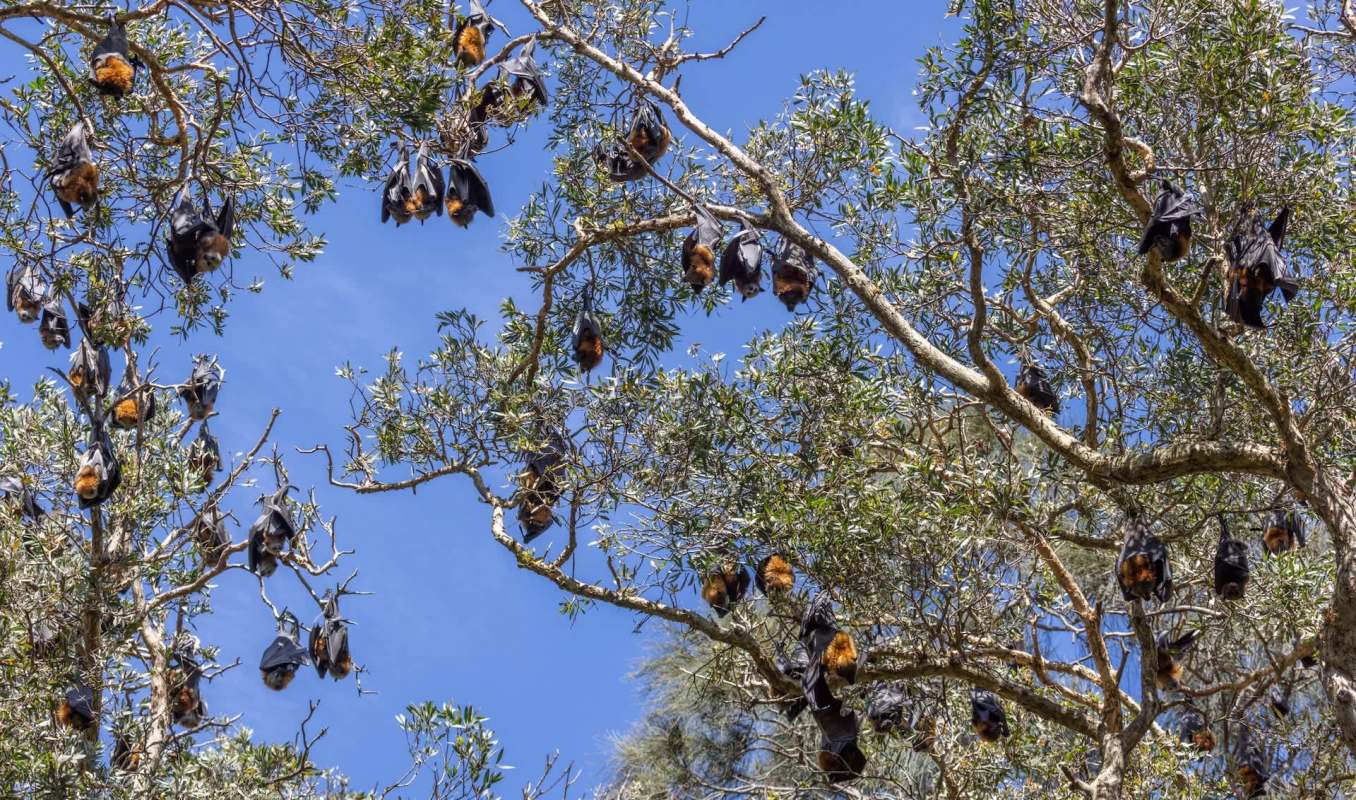
Vancouver Island's largest known bat maternity roost has undergone its first official population check of the season.
The results suggest that despite a slight dip from 2025, the colony remains resilient.
Here's what to know
According to the Comox Valley Record, volunteers at the North Oyster Community Centre recorded an average count of 1,936 bats on June 10. Of these 1,936, 1,810 were little brown myotis that emerged from the attic, and the other 126 were tallied in bat boxes around the building.
The building's attic was renovated to support the little brown myotis and now functions as the largest known maternity roost for the species in central Vancouver Island.
Kathy Doyle, treasurer with the North Oyster and Area Historical Society, told the publication that the slightly lower first count was not cause for concern.
"Our second count is down only about 36 bats from our second count last year, which was right up there," Doyle explained. "Everything is sort of in the ballpark for the different years. We're increasing slowly, it looks like, even though it shows a bit of a decrease for our first count."
TCD Picks » Quince Spotlight
💡These best-sellers from Quince deliver affordable, sustainable luxury for all




The site set a new high of 2,085 bats in 2025 after averaging 1,823 in 2024, per the Record.
More background
The little brown myotis, also called the little brown bat, is particularly susceptible to white-nose syndrome, a deadly fungal disease that has wiped out bat populations across North America.
Thankfully, Vancouver Island has not had a recorded case. But if the fungus does reach the Island, researchers could use this healthy baseline data being collected to compare against colonies affected in the future.
Maintaining strong bat populations is important because they can benefit nearby communities by naturally reducing insect numbers, including mosquitoes.
Where can I learn more?
Bats face mounting pressure from disease, pollution, and shifting environmental conditions. That's why it is so important to track Vancouver Island colonies.
• Across farm regions, dwindling bat populations are driving concerns about rising crop pests.
• In polluted communities, deaths of bats were linked to higher infant mortality.
• Around the world, bats are changing their feeding behavior to improve survival.
Counts at North Oyster provide a useful benchmark before bigger threats arrive.

Get TCD's free newsletters for easy tips, smart advice, and a chance to earn $5,000 toward home upgrades. To see more stories like this one, change your Google preferences here.






