


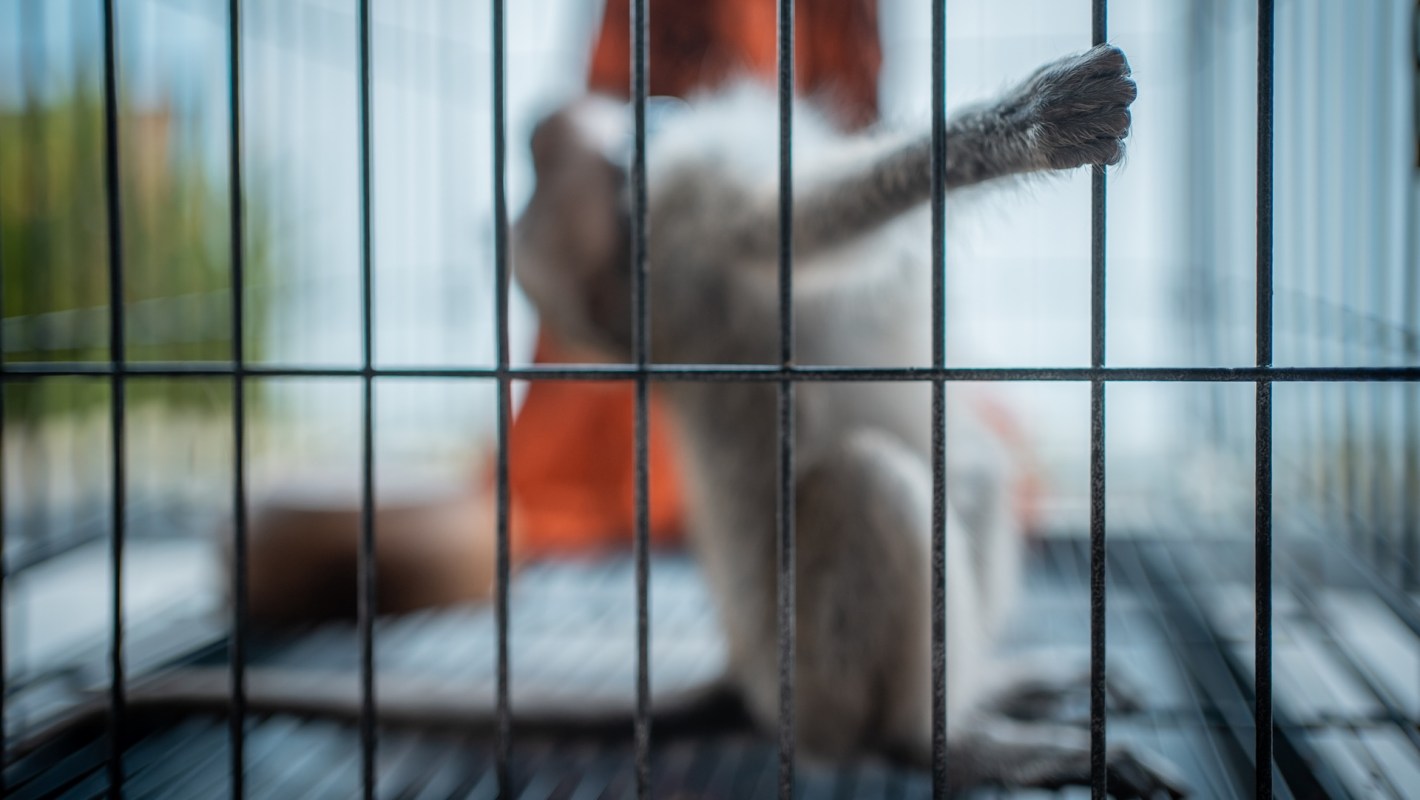
Eight monkeys were not given the proper pain medication after undergoing scientific experimentation. The University of Wisconsin, a repeat offender, received a written citation, but further punishment is unlikely.
Federal welfare records reviewed by the National Anti-Vivisection Society (NAVS) indicate that eight monkeys at UW-Madison's Wisconsin National Primate Research Center went without required pain medication after experiments.
Here's what to know
According to Wisconsin Public Radio, NAVS said its third annual Laboratory Animal Care Audit draws on animal welfare violations documented by the U.S. Department of Agriculture and found that eight monkeys at the University of Wisconsin-Madison were not given the required post-experiment pain relief.
Those same records also described other incidents involving injured animals. One group of monkeys was injured when an enclosure divider was left unlocked, a marmoset later needed surgery after injuring a finger in a gap in its cage, and a macaque was hurt after damage to its enclosure.
After a routine USDA inspection in February 2025 that examined animals, facilities, and related records across campus, the university received three citations, according to UW-Madison spokesperson Gillian Drummond.
The USDA enforces the Animal Welfare Act and routinely inspects animal facilities, including UW-Madison's primate center.
TCD Picks » Quince Spotlight
💡These best-sellers from Quince deliver affordable, sustainable luxury for all




More background
Funded by the National Institutes of Health since 1961, the National Primate Research Centers program includes the Wisconsin National Primate Research Center.
The Madison location has nearly 200 employees in scientific, research, animal services, administrative, and operations roles, along with UW-Madison veterinary, post-doc, graduate, undergraduate, and research trainees.
NIH figures show that the Madison location has about 1,500 primates: 1,120 rhesus macaques, 221 common marmosets, and 245 cynomolgus macaques. Its listed research areas include global infectious disease, regenerative and reproductive medicine, chronic disease and aging research, and neuroscience work involving Parkinson's disease, stress, anxiety, and depression.
Wisconsin Public Radio reported that research tied to UW-Madison's Harlow Lab and the Wisconsin National Primate Research Center has faced scrutiny, and that groups including PETA and the Animal Legal Defense Fund have repeatedly filed complaints with the USDA seeking charges over animal welfare concerns.
Meredith Blanchard, director of advocacy and sanctuary at NAVS, said, "The University of Wisconsin-Madison has popped up time and time again as a facility that violates the Animal Welfare Act in ways that really harm and hurt the animals in their care."
Blanchard also said the group documented 2025 violations at 92 animal-use laboratories across 28 states, including 45 facilities that had also appeared in NAVS audits, yet not one facility has been penalized for the violations documented in the report.
What's being done?
Drummond said, "The university takes all incidents seriously and corrective actions to prevent future occurrences were already in place by the time USDA inspectors made their unannounced visit."
Previous offenses from the university have led to penalties. Wisconsin Public Radio reported that a USDA investigation prompted by a PETA complaint ended with UW-Madison paying a $77,000 fine for incidents that occurred between August 2019 and June 2022.
In April 2020, the USDA fined the university $74,000 for primate center violations that occurred between March 2015 and April 2019.
NAVS says it will keep pressing labs through its annual audit, which relies on USDA-documented welfare violations.
Blanchard expressed her concern: "What we really see, especially with non-human primates, is they're just so smart and they're so intent on getting out of the laboratory environment that they're constantly looking for ways to escape," she said. "They're constantly harming themselves in an attempt to remove themselves from their current situation, which is just really sad."
Where can I learn more?
For more on primate welfare concerns, these stories look at issues ranging from lab oversight to pressures on wild macaques. They cover federal citations at UC Davis, the macaque trade, and threats facing wild monkeys.
• At UC Davis, citations hit the primate center as shutdown calls resurfaced.
• Across the wildlife trade, macaques were sold for a corrupt industry, fueling new poaching concerns.
• At Vietnam's Son Tra reserve, visitors and locals threatened monkeys through harmful behavior.

Get TCD's free newsletters for easy tips, smart advice, and a chance to earn $5,000 toward home upgrades. To see more stories like this one, change your Google preferences here.






