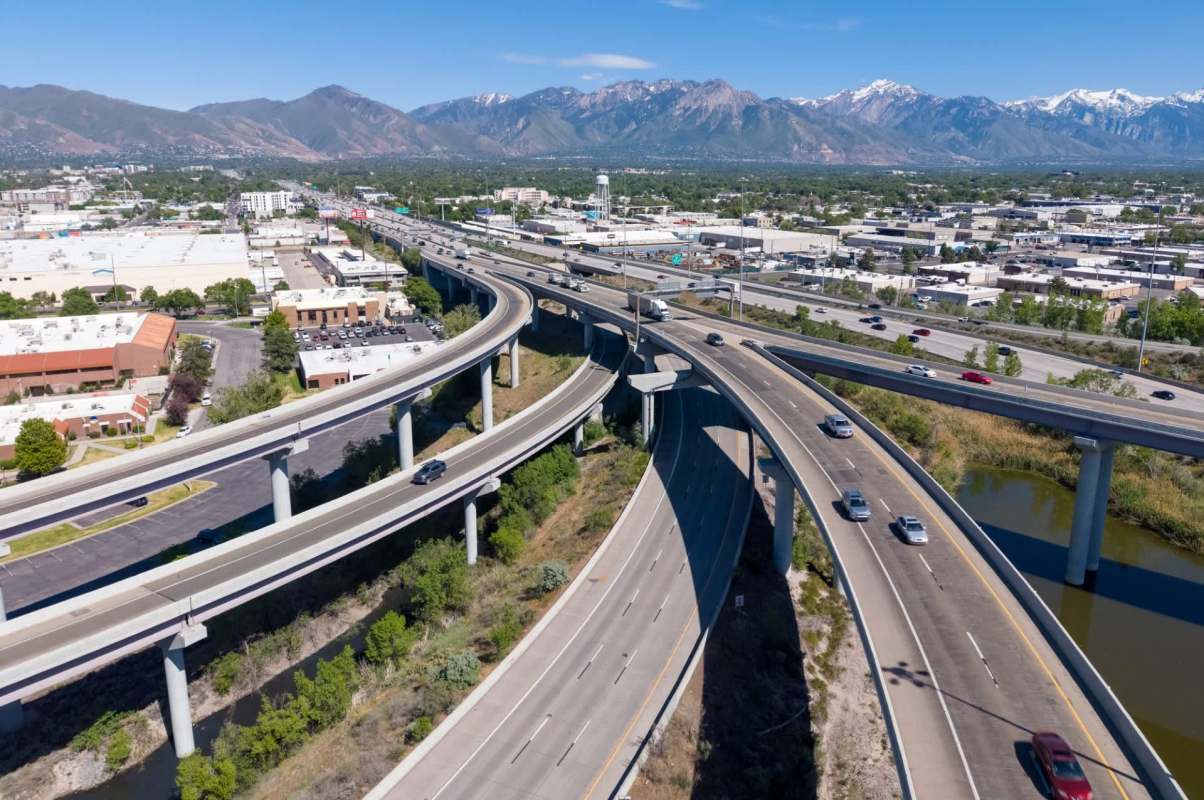
Despite an increase in drivers on the road and overall population in Utah over the last decade, the state's transportation pollution has dropped steeply — an unexpected development in a place often associated with dirty air.
Here's what to know
Since 2011, Utah's vehicle emissions have decreased by 73%, according to data cited by KUER. Over that same period, the state's population increased 20%, and vehicle travel climbed 30%.
Cleaner fuel standards and advances in vehicle design are among the explanations officials give for the drop.
According to KUER, state air-quality officials have singled out Tier 3 gasoline — the lower-sulfur fuel standard adopted by the U.S. Environmental Protection Agency in 2017 — as a major contributor.
"This is a lower sulfur content gasoline," Bryce Bird, director of the Utah Division of Air Quality, said to the outlet. "We saw the initial benefit of Tier 3 gasoline starting in 2017. We found that actually most of the benefit went to the older vehicles."
The gains came without a drop in car use: the state did not have fewer vehicles on the road, and over roughly 15 years it had more residents and more miles traveled.
TCD Picks » Quince Spotlight
💡These best-sellers from Quince deliver affordable, sustainable luxury for all




Tier 3 gasoline can significantly reduce tailpipe emissions in some vehicles, though KUER noted that its biggest effects are on pollutants that contribute to smog, including nitrogen oxides and VOCs, rather than carbon dioxide.
More background
That makes the decline especially notable in Utah, where air pollution has been a longstanding concern.
Officials said the data behind the findings comes from traffic counts, emissions testing data for older cars, and vehicle registration records.
"We take all those inputs, and then we put those through an emissions model to look at the daily, hourly, annual emissions from the transportation sector," Bird said to KUER.
Andrew Gruber, executive director of the Wasatch Front Regional Council, said the drop reflects a mix of forces beyond fuel standards alone, naming vehicle technology, public transportation, and urban planning as the three biggest drivers.
Fariba Soltani, a transportation analyst for the Wasatch Front Regional Council, said transit has also played a role. The Utah Transit Authority's TRAX light rail system logged nearly 13 million riders, while, as KUER reported, FrontRunner served more than 4 million passengers in 2025 on its Ogden-to-Provo route.
What's being done?
Utah continues to rely on multiple solutions rather than a single fix.
Cleaner fuels are already reducing pollution, and more drivers are switching to fuel-efficient hybrids and fully electric vehicles. At the same time, transit investments are expanding alternatives to driving.
FrontRunner is expected to receive major upgrades, including double-tracking that could improve both frequency and reliability.
Gruber said city design is changing, too.
"More cities have walkable centers that have hearts of communities where people can live, work, play, shop with a lower carbon footprint," he said to the outlet.
Officials cautioned against treating the progress as the finish line. Population growth and longer average trips could make future gains harder to achieve, even with cleaner vehicles, stronger transit options, and teleworking all helping reduce pollution.
"We shouldn't just declare victory," Gruber said. "Even though the air has gotten cleaner, we know more now about the negative impacts on human health from air pollution."

Get TCD's free newsletters for easy tips, smart advice, and a chance to earn $5,000 toward home upgrades. To see more stories like this one, change your Google preferences here.