


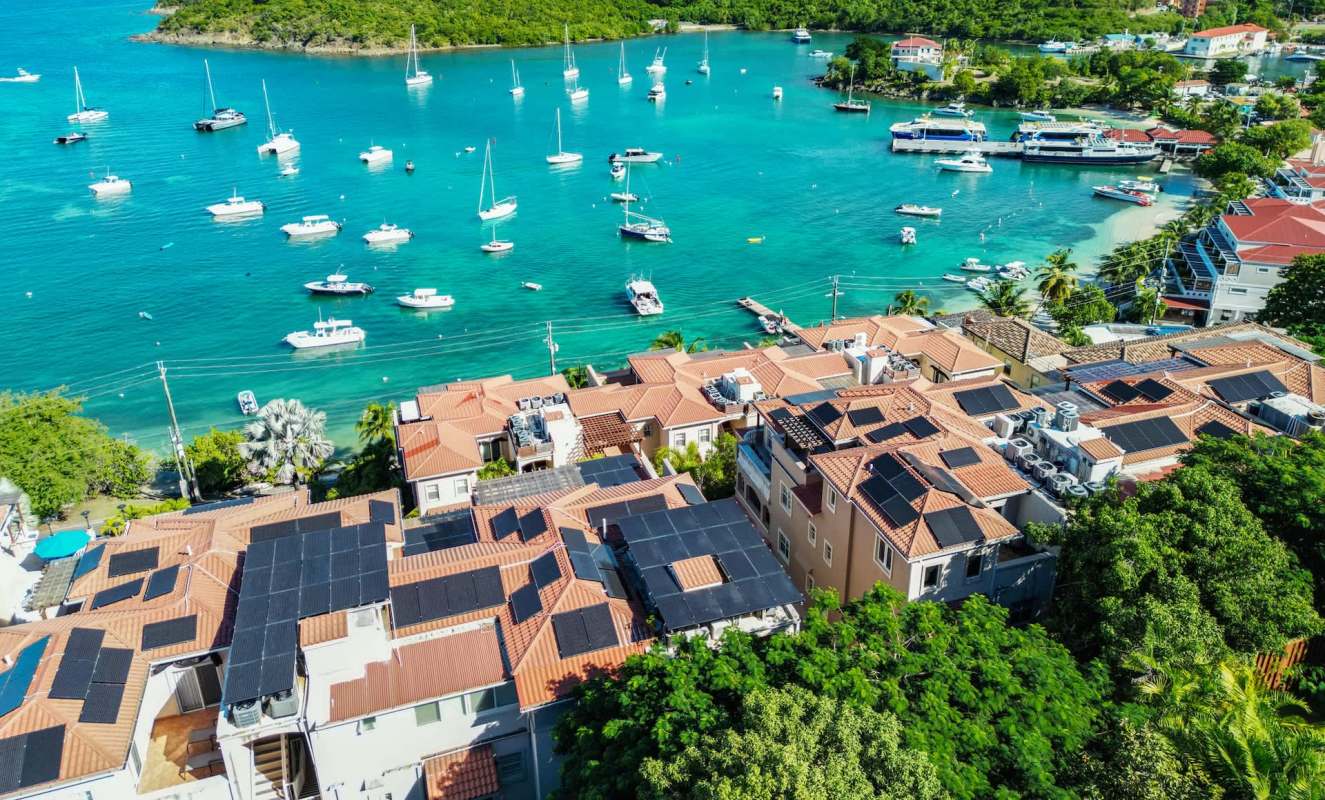
Nearly a decade after Hurricane Irma left many U.S. Virgin Islands residents without electricity for months, the territory is trying a different kind of backup plan: turning rooftop solar panels and home batteries into a shared resource to help keep the grid stable.
What's happening?
RMI reported that the Virgin Islands Energy Office launched VIBES 2.0 in March 2026 as a virtual power plant pilot meant to tap electricity already stored in households, instead of relying solely on traditional centralized generation.
RMI said the pilot itself does not produce electricity. Instead, it links residential battery systems to work together so they can answer utility needs in sub-seconds, helping steady the grid without requiring new generation or power lines to be created.
The territory's push for this kind of system is rooted in the aftermath of Hurricane Irma. RMI reported that restoring full grid service in 2017 took from three to six months in some areas, prompting many residents and businesses that could afford it to install solar panels and battery backups of their own.
Those private installations now amount to a significant energy pool. RMI said the islands have about 30 megawatts of solar PV and more than 50 megawatt-hours of battery storage, with roughly one in eight homes now equipped with solar.
Why does it matter?
A stronger, more responsive grid can mean fewer disruptions to refrigeration, internet service, air conditioning, medical devices, and daily work.
TCD Picks » Quince Spotlight
💡These best-sellers from Quince deliver affordable, sustainable luxury for all




This type of virtual power plant technology can provide tangible benefits for people, as relying solely on the grid can be fickle especially in times of unprecedented natural disasters like hurricanes. For business owners such as Don Schnell, a St. Thomas artisan and business owner, reliable power from using a solar and battery setup also means fewer costly interruptions and less lost productivity.
The pilot could also help address an equity issue. People who invested in solar and batteries have had more protection from outages, while residents who depend entirely on the grid remain exposed when service fails. A virtual power plant creates a way for some of that privately owned backup power to benefit the wider community.
There is also a financial benefit. Island grids are especially vulnerable to fuel price swings and supply disruptions. Using batteries that are already installed can reduce strain on the system and potentially limit the need for expensive infrastructure upgrades.
What's being done?
RMI said it first outlined the approach in a study that recommended pairing a virtual power plant pilot with a Distributed Energy Resource Management System, or DERMS. Now, two years later, that proposal is being carried forward under Kyle Fleming, director of the Virgin Islands Energy Office.
The hardware is already in place. Homes and businesses have installed solar panels and batteries; what comes next is software and coordination. That means the territory can strengthen resilience faster than if it had to wait for a brand-new plant or a major grid buildout.
The pilot could also offer a model for other Caribbean islands that may face similar challenges. RMI pointed to Puerto Rico, which is already running a two-year virtual power plant trial with more than 67,000 participants.
As RMI put it, "They don't need to build a power plant; they just need to connect the Wi-Fi." They also pointed out the accessibility of this technology: "It proves that you don't need a wealthy government or a well-capitalized utility to build a resilient grid; you need a motivated community and electro-tech orchestration."

Get TCD's free newsletters for easy tips, smart advice, and a chance to earn $5,000 toward home upgrades. To see more stories like this one, change your Google preferences here.






