


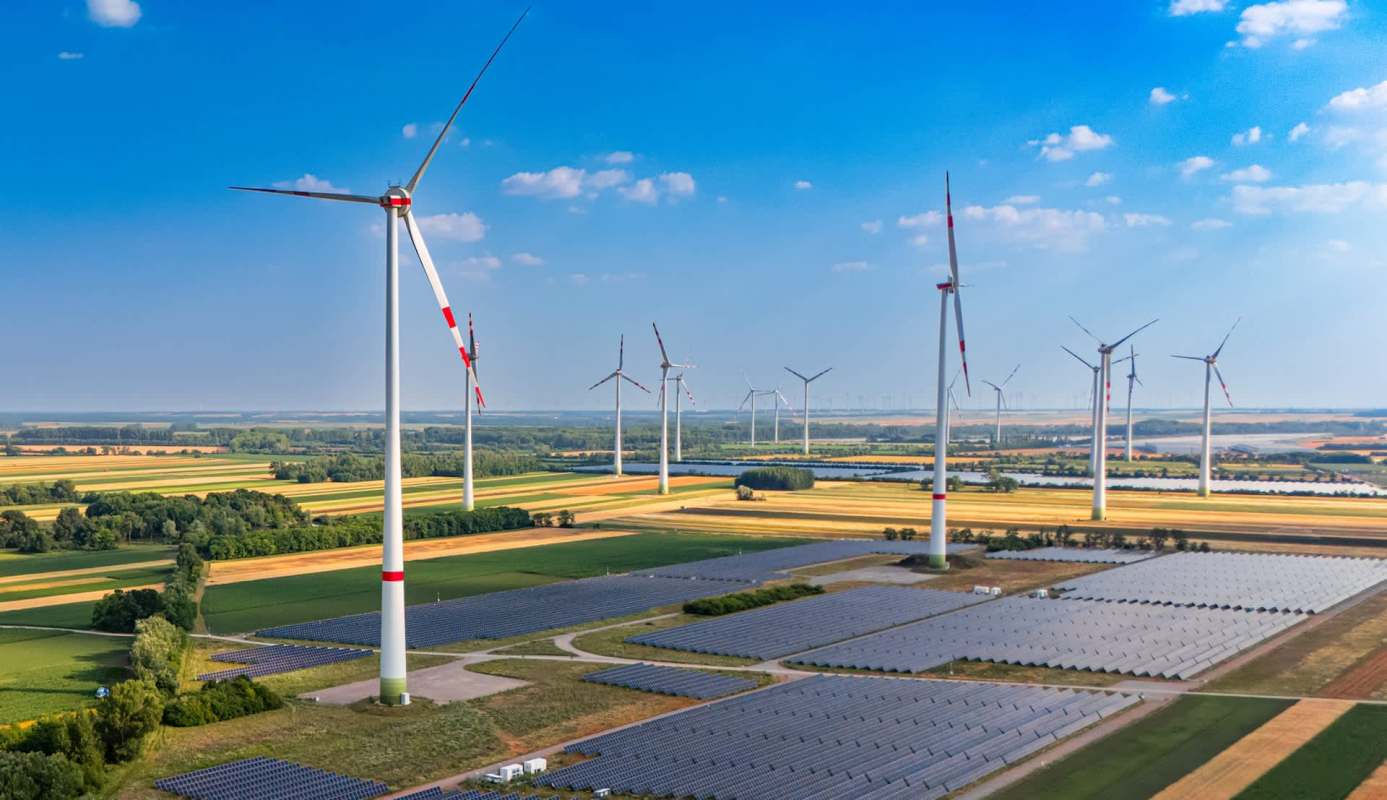
American electricity systems built around solar could save on both battery storage and power costs by also incorporating wind power.
A system without wind would need storage equal to 20 hours of electricity use to meet 90% of demand; Ember estimates it falls to 12 hours when wind is included, Electrek reported.
Here's what to know
Energy think tank Ember, working with the Global Wind Energy Council, estimates a nearly 20% drop in the median price of supplying 90% of electricity demand when wind, solar, and batteries are used in concert.
With that combination, the price falls from $105 to $86 per megawatt-hour.
Differences in daily and seasonal output allow wind to compensate for weaker solar generation, and vice versa.
Adding wind cuts storage needs and the expense of saving enough solar electricity to cover a long period of weak output.
TCD Picks » Quince Spotlight
💡These best-sellers from Quince deliver affordable, sustainable luxury for all




More background
Ember defines a lull as seven consecutive days when a source produces less than half its average output.
Its researchers examined these extended periods of low renewable generation.
Ember puts the global, demand-weighted frequency of simultaneous weeklong wind and solar shortfalls at about once every four years. The comparable figure for solar generation is about four times a year, Ember determined.
Ember found that wind, solar, and batteries could supply 90% of electricity needs for less than $100 per megawatt-hour in regions accounting for three-quarters of global demand.
That share drops to 50% of global demand when the system relies on solar and batteries alone.
What's being done?
Ember's figures estimated the storage requirement at 12 hours of electricity use in both Europe and China, down from 20 hours and 18 hours, respectively.
Electrek noted the implications for developers weighing new fossil fuel power plants: The researchers calculated a median cost of $89 per megawatt-hour to meet all electricity demand with solar, wind, batteries, and a small amount of backup.
Daan Walter, principal at Ember, commented on the think tank's findings.
"We already know that solar and wind are cheap. By combining solar, wind, and batteries, we can deliver reliable power at remarkably low costs almost everywhere in the world," he stated.
"That's a pretty fundamental shift in the economics of energy," Walter added.

Get TCD's free newsletters for easy tips, smart advice, and a chance to earn $5,000 toward home upgrades. To see more stories like this one, change your Google preferences here.






