


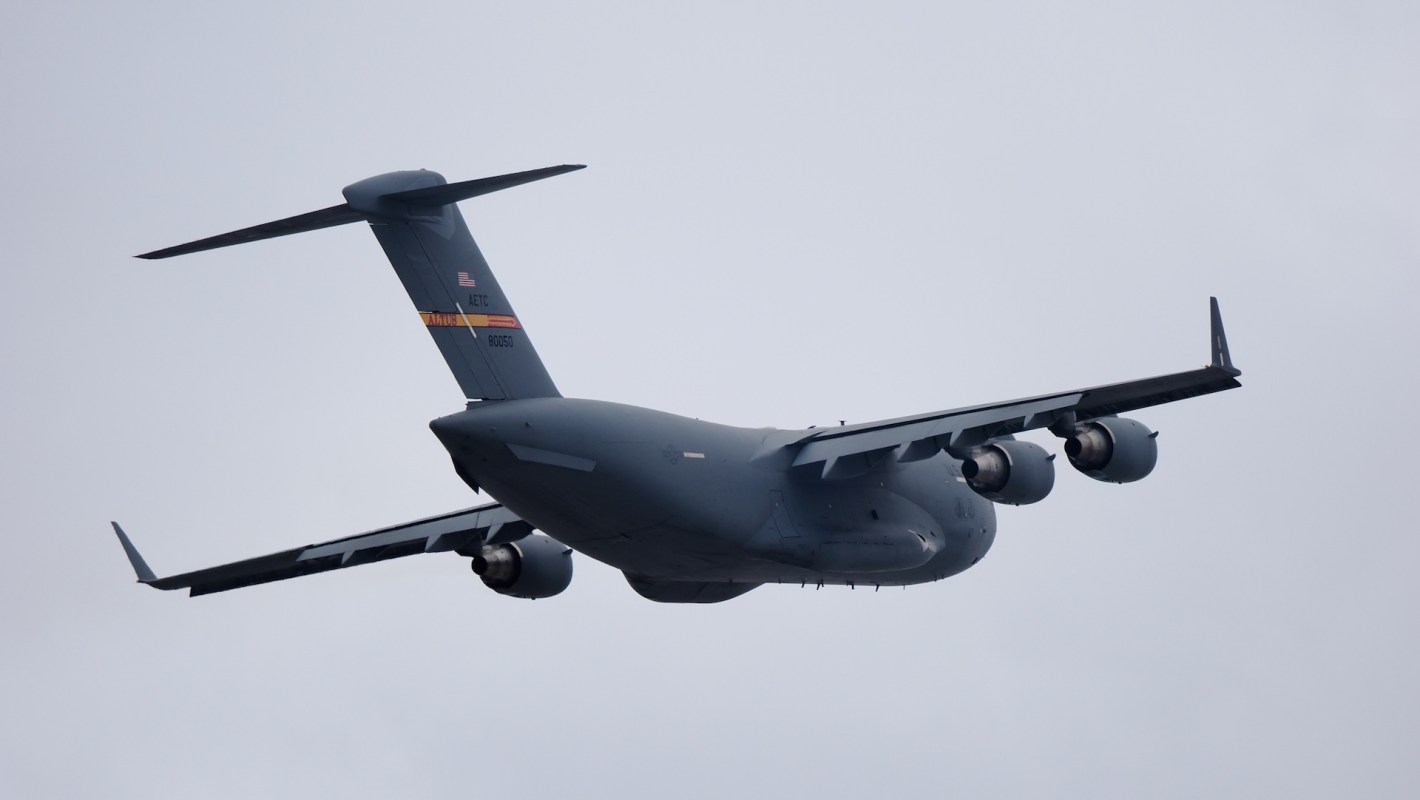
A U.S. Air Force cargo flight traveling from New Zealand to Antarctica unexpectedly turned around after a warning about Russian space activity raised concerns regarding possible debris over the southern Indian Ocean, according to Space.com.
Here's what to know
A Federal Aviation Administration Notice to Airmen, or NOTAM, was issued on Aug. 10 for the Melbourne Flight Information Region, a broad expanse of airspace over Australia and the Indian Ocean.
It warned that, beginning on Aug. 14, "Russian aerospace activities will take place" and that there would be "possible debris" in multiple areas.
In that context, Space.com reported that a U.S. Air Force C-17 Globemaster departed Christchurch Airport on Aug. 18 for McMurdo Station, then headed back after about two hours in the air.
New Zealand's Civil Aviation Authority told the news outlet Stuff that the aircraft reversed course after a notice from the Russian Air Traffic Management Corporation warned of "space activity, potentially hazardous to aviation en route to Antarctica."
Officials did not specify what the space activity involved.
TCD Picks » Quince Spotlight
💡These best-sellers from Quince deliver affordable, sustainable luxury for all




The U.S. Air Force had not publicly explained the turnaround.
More background
This kind of precaution has precedents, because falling rocket or spacecraft debris has disrupted aviation in the past.
In November 2022, an uncontrolled reentry by a Chinese Long March 5B core stage led to multiple airspace closures over Spain.
Then, in January 2025, SpaceX's Starship broke apart during its seventh test flight, scattering debris over the Atlantic near the Turks and Caicos Islands.
Researchers say the problem could become more common as launch activity rises.
A January 2025 paper in Scientific Reports, cited by Space.com, estimated a 26% chance of "an uncontrolled space debris reentry in busy airspaces."
That can mean delays, rerouted flights, and added costs, particularly when missions involve time-sensitive deliveries to remote destinations such as Antarctica.
What's being done?
Notices like the FAA's NOTAM are intended to give pilots and operators enough information to avoid danger before a hazard becomes an emergency.
Because officials identified the risk area, the crew was able to turn back rather than continue into potentially unsafe airspace.
Experts and regulators are increasingly focused on improving space traffic coordination and debris management.
That can include more controlled reentries, clearer international communication, and stronger oversight as launch activity grows.
Where can I learn more?
The Antarctica-bound flight's turnaround is a reminder that aviation crews sometimes have to respond to risks well outside typical weather and traffic issues.
These articles explore aircraft safety, satellite monitoring, and aerospace tools that can detect issues before they escalate.
• Engineers are testing deicing plane wings with vibrations to reduce weather-related risks during flight operations.
• In India, officials are deploying satellite tech to battle major floods before disasters intensify.
• Researchers are using technology pioneered by NASA to track plastic pollution swirling through oceans.
They also show how aerospace and aviation tools increasingly shape high-stakes operational decisions. That helps explain why a single warning over the southern Indian Ocean was enough to disrupt a mission bound for Antarctica.

Get TCD's free newsletters for easy tips, smart advice, and a chance to earn $5,000 toward home upgrades. To see more stories like this one, change your Google preferences here.






