


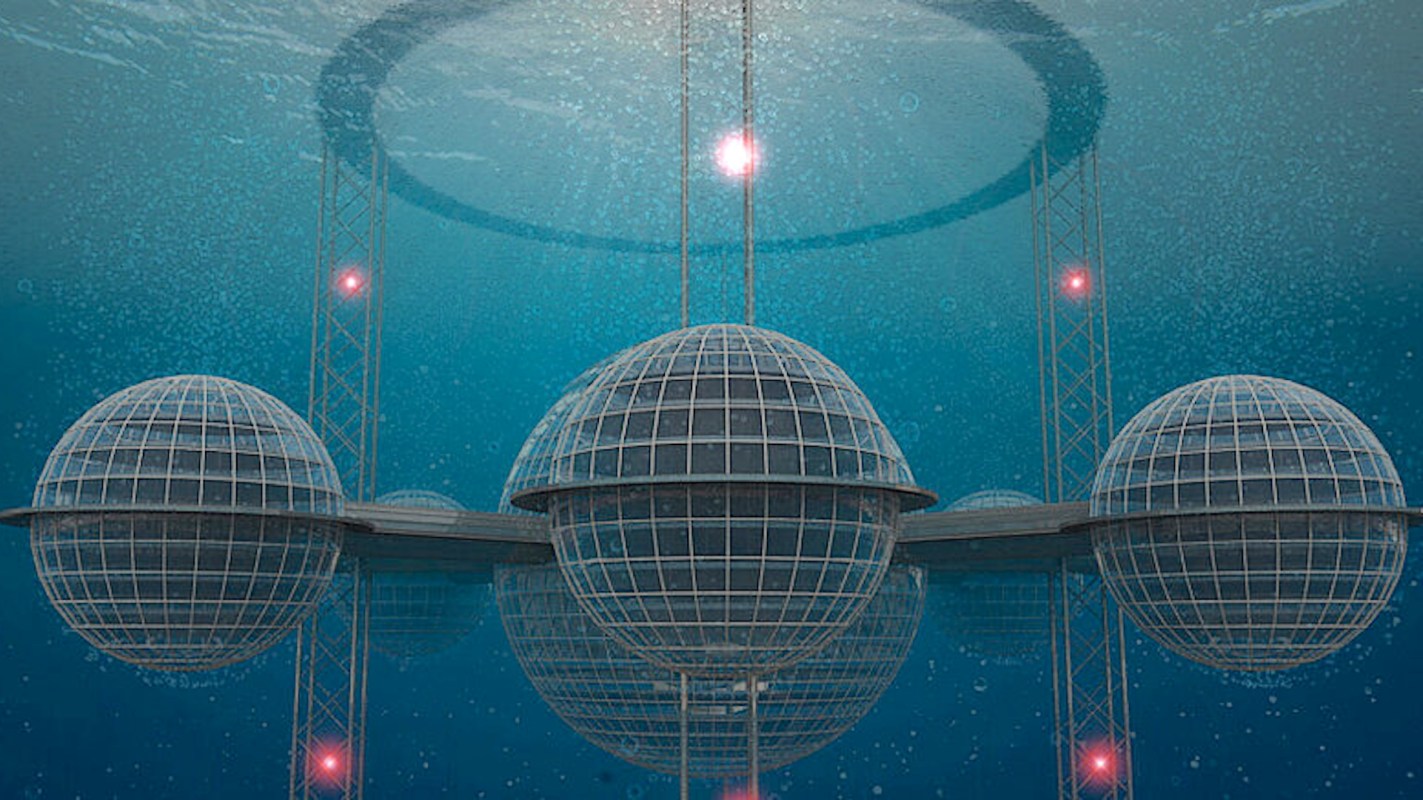
As another period of dangerous summer heat approaches in the United Kingdom, British designer Philip Pauley is drawing attention for a very different survival plan: forget Mars for now and head underground on Earth.
The idea is spreading online as climate anxiety, heat-wave coverage, and space-colonization talk all converge.
What happened?
In a recent interview circulating as Britain issues heat alerts, Pauley, a British resilience architect and futurist, said humanity would be better served by building self-sustaining habitats beneath the Earth than by focusing on escape to another planet.
As the Daily Express reported, Pauley said these sealed environments could one day help people withstand extreme heat, conflict, pandemics, and other major disruptions.
The proposal relies on "closed-loop" underground habitats — evoking sci-fi like "Silo," "Fallout," and "The Penultimate Truth" — that would manage core needs internally by recycling water, generating oxygen, and producing food with minimal outside input.
To argue that this kind of long-term life support is "closer than most people realise," as he put it, Pauley pointed to submarines, Antarctic research stations, and other sealed environments that already sustain people for extended periods in limited conditions.
TCD Picks » Quince Spotlight
💡These best-sellers from Quince deliver affordable, sustainable luxury for all




Why does it matter?
Pauley is right on one major point: extreme heat is becoming an increasing challenge for public health and infrastructure. Climate scientists have repeatedly found that human-caused warming is making heat waves more frequent and more intense in many parts of the world. That has consequences for everyday life, from rising cooling costs and water strain to school closures and unsafe working conditions.
There is also legitimate science behind parts of his proposal. Underground spaces tend to stay cooler and more temperature-stable than above-ground buildings, which is one reason earth-sheltered design can reduce energy demand. Closed-loop technologies such as water recycling, controlled-environment agriculture, and advanced ventilation are also very real and already used in specialized settings.
In the near term, the most practical climate protections are still above ground: better-insulated homes, more efficient cooling, urban shade, emergency planning, and faster cuts to planet-warming pollution.
What are people saying?
For Pauley, the threat begins with climate itself: "Climate change is the biggest threat humanity has ever faced, the biggest threat to our civilisation."
He also stressed that engineering alone would not make such habitats successful, warning: "If your habitat keeps people breathing but breaks them mentally, it has failed."
He argued that the real obstacle is public agreement rather than engineering limits: "The biggest hurdle is not the technology, it is the consensus."

Get TCD's free newsletters for easy tips, smart advice, and a chance to earn $5,000 toward home upgrades. To see more stories like this one, change your Google preferences here.






