


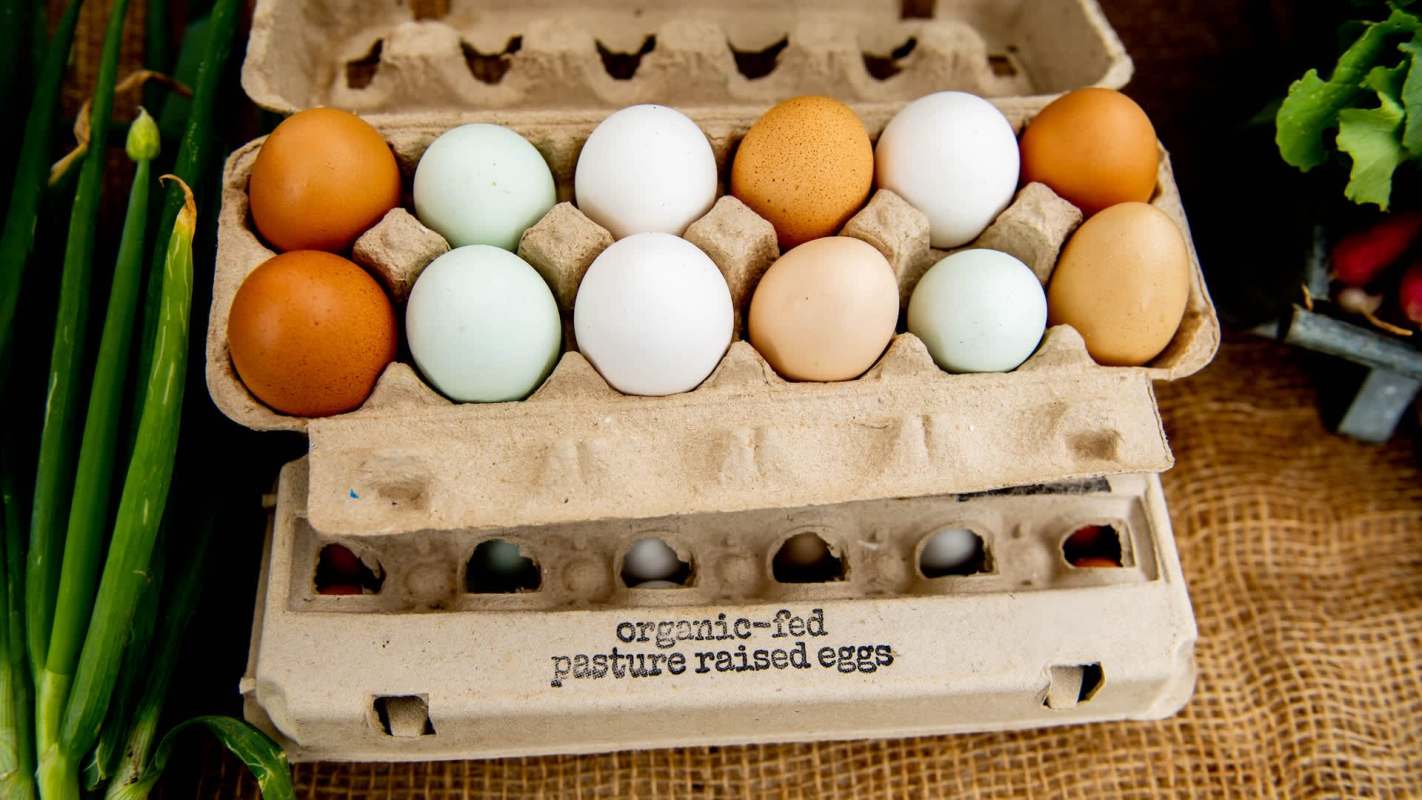
A new study from the United Kingdom is challenging a common assumption about sustainable food choices: Eggs from organic, free-range systems may offer some animal welfare benefits, but they can also carry a much larger climate footprint than eggs produced in caged systems.
Researchers said the findings highlight a difficult balance between cutting pollution and improving living conditions for hens.
What's happening?
A study published in Royal Society Open Science found that a full shift of the U.K. egg industry to an organic free-range model would generate an estimated 2,553,000 tons of carbon dioxide equivalent. By comparison, planet-warming pollution would total 1,305,000 tons under a fully caged system.
As The Guardian reported, the researchers also estimated that the U.K.'s current mix of egg production methods emits around 1,586,000 tons of CO2 equivalent.
Dr. Harriet Bartlett, a senior research associate at Oxford University's Smith School of Enterprise and the Environment and one of the study's authors, said the main reason is efficiency. Hens in caged systems tend to lay more eggs per bird, while organic free-range systems require more birds to produce the same output.
Beyond planet-heating pollution, organic free-range production performed worst on land use, acidification, and water eutrophication, and it also had the highest chicken mortality.
TCD Picks » Quince Spotlight
💡These best-sellers from Quince deliver affordable, sustainable luxury for all




The authors also flagged key caveats. Their analysis relied on farm data from 2009 to 2010 and left out some environmental factors, such as pesticide use and biodiversity effects.
Why does it matter?
Eggs are a staple in millions of households, meaning the way they are produced can have major consequences for climate pollution, land use, and water systems. As egg consumption rises worldwide, even modest differences per egg can add up at scale.
The findings do not point to a simple good-versus-bad conclusion.
Bartlett said, "We found an important trade-off," noting that systems "generally regarded as being better for animal welfare, like organic and free-range, can actually require more birds to produce the same amount of eggs because they're less efficient and they can have higher environmental impacts."
Labels such as organic, free-range, and cage-free may point to one benefit while leaving out other information.
She also said sustainability conversations tend to spend more time on meat and dairy than on eggs. "Meat and dairy get a bit more attention, talking about environmental sustainability, whereas [egg production] hasn't been as researched," Bartlett said.
What's being done?
Bartlett stressed that the paper does not capture the full environmental picture of intensive farming.
"Organic could come out better on pesticide toxicity, maybe biodiversity on farm as well," she said, adding that future research using newer data could provide a more complete assessment.
Lee Holdstock, Soil Association Certification's head of regulatory and trade affairs, who was not part of the study, said the research "highlights some important trade-offs" but offers an "incomplete picture of environmental impact."
He pointed to broader concerns such as soil health, water quality, synthetic inputs, and effects on nature.
As The Guardian noted, Soil Association standards for organic eggs say chickens should have continuous and easy daytime access to an outdoor range covered with suitable vegetation — a welfare-based measure that does not automatically reflect every environmental outcome.
Holdstock said, "A truly sustainable food system must also consider impacts on nature, soil health, water quality, the use of synthetic inputs, and animal welfare."

Get TCD's free newsletters for easy tips, smart advice, and a chance to earn $5,000 toward home upgrades. To see more stories like this one, change your Google preferences here.






