


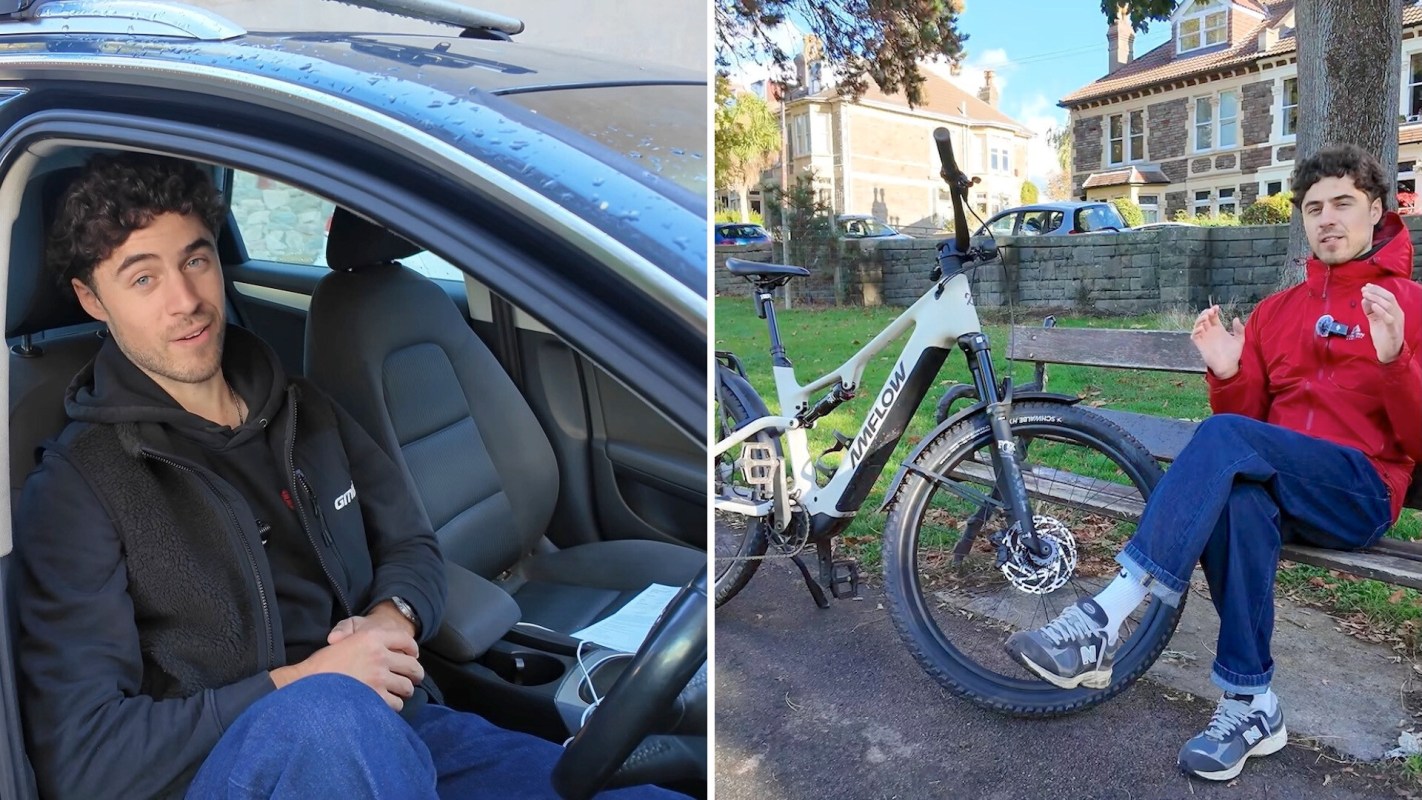
A U.K. rider set out to replace his car with an e-bike for seven days, only to face a challenge on day three: transporting three bicycles for a filming assignment requiring a 66-mile round trip.
The experiment did not eliminate his need for a car, but it changed how he approached everyday trips.
Here's what to know
In a YouTube video, James from the Electric Mountain Bike Network (@EMBN) tested an Amflow PL "SUV e-bike" for commuting, shopping, and errands, tracking journey times, battery use, and expenses.
James said the journey took an extra five to 10 minutes compared with his usual road-bike ride but required substantially less effort. His first commute to the office in Bath covered about 13 miles (nearly 21 kilometers) in 53 minutes, including stops.
His heart rate averaged 115 beats per minute, compared with roughly 150 on his road bike.
A grocery trip also proved manageable, although a couple of eggs broke in his bag. The round-trip commute used about 48% of the battery.
TCD Picks » Quince Spotlight
💡These best-sellers from Quince deliver affordable, sustainable luxury for all




On day three, James needed to transport three bikes to the Forest of Dean for filming, a load the e-bike's luggage rack could not reasonably accommodate.
More background
His diesel Audi, a 2008 model with roughly 160,000 miles according to his account in the video, had cost nearly £1,300 (around $1,700) for servicing and work to keep it road legal. That expense prompted James to begin the comparison.
James cautioned that a typical driver's annual expenses should not be judged by his unusually high bill.
For his commute, James estimated that diesel cost £6.70 to £8 (around $9 to $11) for the return journey, with another £4 (about $5) for the park-and-ride bus. That brought the daily cost of getting to work to roughly £10 to £12 (around $13 to $16).
James estimated that a full bike service would cost around £150 (approximately $200). The e-bike cost £3,199 ($4,291.75) upfront.
After riding approximately 93 miles (150 kilometers) during the challenge, including three work commutes, he estimated weekly charging expenses of roughly £2 (about $3). However, he also charged at work, so the figure did not provide a complete, independently measured comparison of ownership costs.
What can be done?
While longer travel and filming assignments involving heavy equipment remained reasons to use the car, short shopping trips and errands around town are perfect for an e-bike.
Range did not meaningfully worry James during the test. Workplace charging also offered extra flexibility for commuting, although his roughly 25-mile (40-kilometer) round trip used less than half the battery. For shopping, he suggested adding proper pannier bags to carry more groceries than his initial setup allowed.
One commenter recalled how leaving work essentials at the workplace had eliminated the need to carry them daily during a yearlong cycling challenge.
"Now today with e-bikes, it's a total game changer," the commenter wrote.
As for James, he had his own conclusion.
"But, for the most part, the bike is actually way more convenient for most of the journeys I do," he said. "Those short nip sort of runs that I do to the shop, errands around town, it's actually become my go-to. And often, I find that I don't even think about taking the car now. So, yeah, my behavior has definitely changed."
Where can I learn more?
James's experience, along with these other reports, shows how much everyday e-bike use depends on the trips you need to make.
• San Antonio riders say $1,000 e-bike vouchers helped replace short car trips.
• A lifelong cyclist ditched subway stress for a $1,300 e-bike and regained daily freedom.
• Massachusetts residents can borrow cargo bikes free for a week before buying.

Get TCD's free newsletters for easy tips, smart advice, and a chance to earn $5,000 toward home upgrades. To see more stories like this one, change your Google preferences here.






