


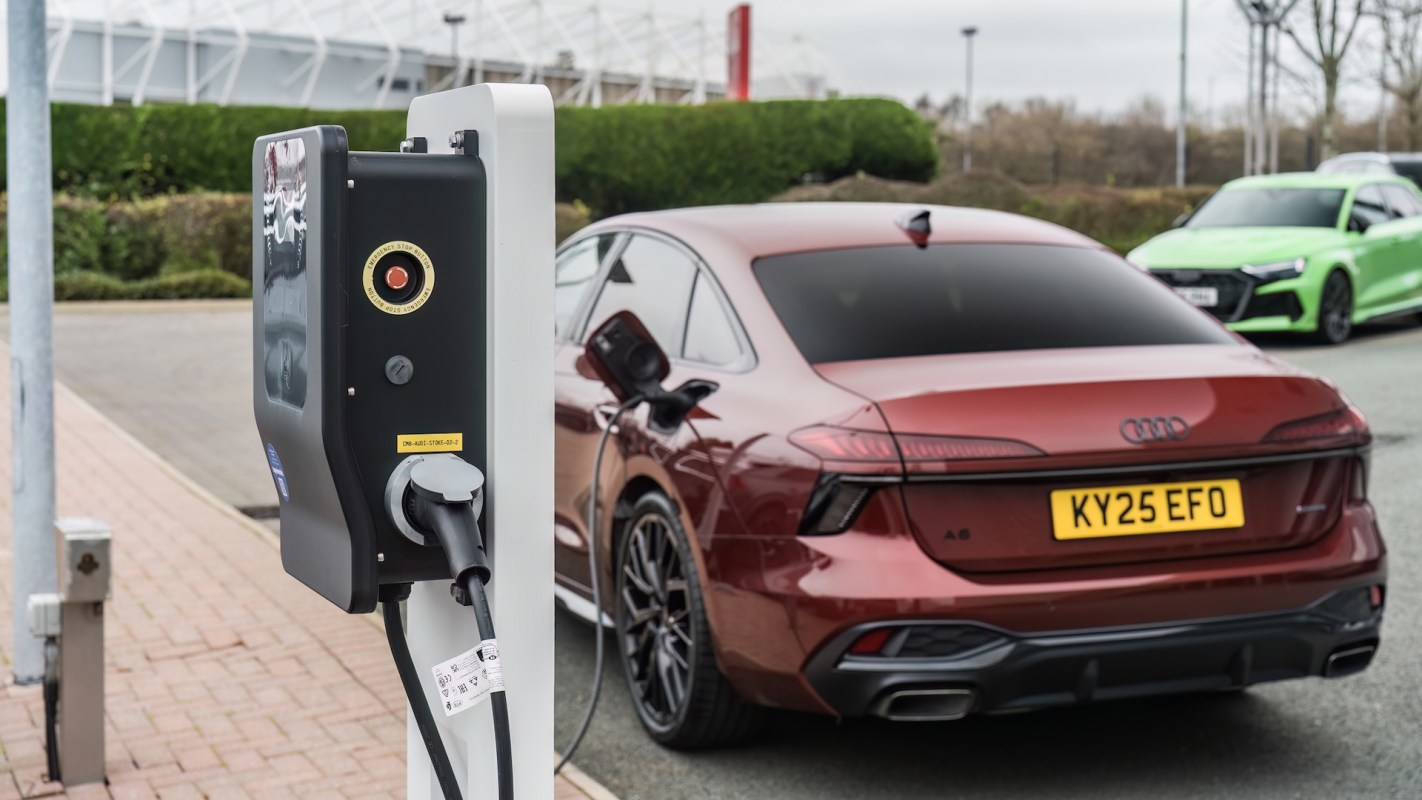
Rising network fees could push the cost of charging a 60-kilowatt-hour electric vehicle's battery from 10% to 80% to £43.26 (~$57.16 USD) for UK drivers by 2027
Here's what to know
That figure comes before VAT and operating costs, as a new impact assessment revealed.
Charging company Zest worked with The Fast Charge newsletter on "Reverse the Charge." The report highlights the rising costs of public charging, as Auto Express detailed.
Average weekly standing charges for operators are projected to reach £541.73 (~$715.77) in 2027, according to the assessment. They stood at £61.47 (~$81.22) in 2021 and rose to £440.13 (~$81.53) in 2026.
Quieter charging locations face substantial fixed bills regardless of how few drivers use them. Under energy regulator Ofgem's Targeted Charging Review, operators' daily standing charges depend on each chargepoint's maximum capacity.
For a rapid charger dispensing 3,000 kilowatt-hours a month, the assessment puts the combined cost of electricity and standing charges at £1.03 (~$1.36) per kilowatt-hour by 2027. Using that rate is how the assessment arrived at the £43.26 figure for a fill-up.
TCD Picks » Quince Spotlight
💡These best-sellers from Quince deliver affordable, sustainable luxury for all




More background
The same charging session costs £33.18 (~$43.84) at the average rapid-charging rate of 79 pence (~$1.04) per kilowatt-hour, according to charging information service ZapMap.
Zest puts operating expenses at an additional 6–10 pence (8-13 cents) per kilowatt-hour, depending on the location. Neither those expenses nor the government's 20% VAT is included in the assessment's £1.03 estimate.
Capacity-based standing charges could bring chargers rated at 350 kilowatts or above to the £1 threshold sooner, the report warns.
"As a largely pre-profit sector, this means that operators increasingly do not have the option to swallow further cost," Jarrod Birch, head of policy at industry trade body ChargeUK, told Auto Express.
What's being done?
The government announced £100 million (~$132 million) in its 2026 Autumn Budget to help low-speed local chargers operate at lower cost.
The government's "Cost of Public Electric Vehicle Charging Review" also called on the government to "urgently address [the] tension" between its plans for the electric vehicle transition and the rules currently in place.
Documents secured by the Reverse the Charge campaign showed that the government was aware of the policy's negative impact.
One proposed change would allow quieter rapid-charging locations to move into lower standing-charge bands, Auto Express noted. The proposal has yet to be implemented. Right now, operators are in a tough spot.
"The unfavourable options they have are to increase prices or scale back investment, which are made even more pressing in the face of potential reduced customer demand if the Government goes ahead with weakening EV sales targets," Birch relayed to the publication.
Zest founder and CEO Robin Heap emphasized the consequences for both drivers' bills and access to charging.
"The switch to capacity-based network charges was never intended to put the brakes on EV adoption," Heap told Auto Express. "For public charging, however, it has created an egregious cost burden that pushes up prices for drivers and means many otherwise investable charging projects are delayed or shelved."
Where can I learn more?
Public charging prices are only part of the debate over UK EV running costs. Other coverage examines charging prices, VAT differences, supermarket competition, and comparisons with petrol costs.
• A public charging operator's 92p charging rate prompted one EV driver to compare costs with petrol.
• Britain cut home electricity VAT to zero, but renters still face 20% VAT for EV charging.
• Lidl's £10 million UK charging push could spark a supermarket price war at 59p per kilowatt-hour.
• Soaring UK fuel prices make EVs up to nine times cheaper to drive.

Get TCD's free newsletters for easy tips, smart advice, and a chance to earn $5,000 toward home upgrades. To see more stories like this one, change your Google preferences here.






