


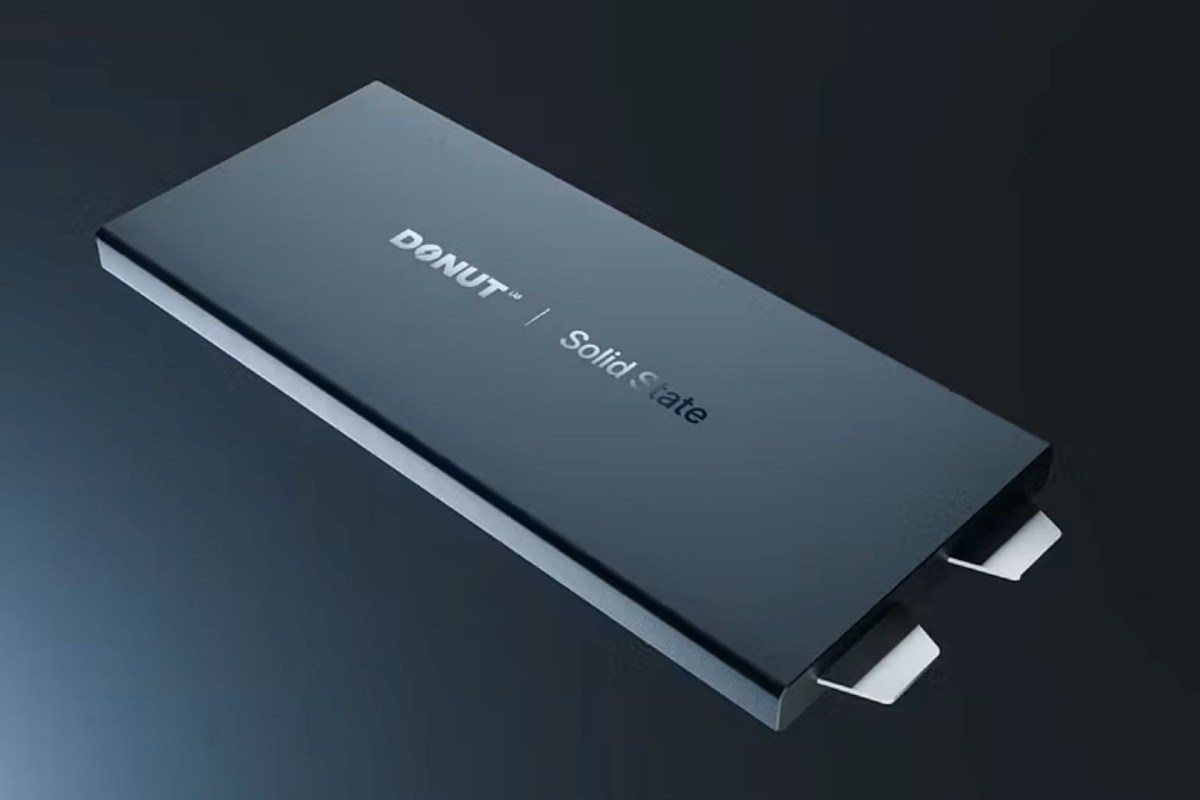
A U.K. lab test detected only trace lithium in battery material provided by Finnish startup Donut Lab, and the company has cited the result as support for its argument that the much-discussed cell is not lithium-ion.
Even so, the test left major questions unanswered — Donut Lab disassembled the sample before analysis, and, as Electrek reported on Sept. 23, no production vehicle used the battery.
Here's what to know
Intertek's lab in Wilton, U.K., reported 3.4 ppm lithium by weight and 632 ppm sodium in a small amount of material identified as the anode, cathode, and current collector, per Electrek.
"We wanted to put this speculation to rest with an independent test demonstrating that it is neither a lithium-ion nor a sodium battery," Donut Lab CEO Marko Lehtimäki explained.
Lithium-ion cells typically contain lithium at much higher levels.
If the tested material truly came from a functioning Donut Lab cell, the result would seem to rule out the battery chemistry most commonly used in the market.
TCD Picks » Quince Spotlight
💡These best-sellers from Quince deliver affordable, sustainable luxury for all




Intertek did not attempt to determine the battery's complete chemistry and was asked only to measure lithium and sodium. The material also reached the lab in "tear down condition" from Donut Lab, so Intertek was not the party that opened a sealed cell.
Electrek noted that the published report labeled the material only as "Pouchcell – Cell 1."
It said nothing in the document clearly connected that sample to the Donut "V1.5" unit VTT used in energy-density testing.
More background
Better batteries can help cut EV charging time, extend driving range, strengthen backup power during blackouts and storms, and eventually lower costs for drivers, fleets, and cities transitioning away from fuel-burning vehicles.
That promise helped Donut Lab attract significant attention at CES in January, when it said it had the "world's first solid state battery that is ready for use in OEM vehicle manufacturing."
But the company's timeline has since come under greater scrutiny as independent testing has slowly emerged.
Questions about Donut Lab's claims intensified in June, when Electrek reported that battery researcher Ziroth and more than 20 experts reviewed the voltage curve and swelling data from a Donut Lab cell sent to VTT.
They said it behaved like a high-nickel lithium-ion battery with a graphite anode.
VTT also measured 185.7 watt-hours per pound (409.3 watt-hours per kilogram) on a Donut cell cycled between 2.3 and 4.25 volts — numbers that fit familiar lithium-ion territory.
What's being done?
Companies including Toyota, Samsung SDI, Factorial, and QuantumScape have solid-state cells working in lab settings and prototype vehicles, even if large-scale production remains a difficult step.
Lehtimäki admitted that the battery was "already in production," but also acknowledged that the 185.5 watt-hours per pound (409 Wh/kg) cell "is not even the cell that's going to be shipped to customers."
Where can I learn more?
Questions about Donut Lab's battery underscore a broader push to improve chemistry, safety, and real-world EV performance. These stories explore battery advances aimed at extending range and reducing reliance on conventional materials.
• Researchers found lithium titanium phosphate could ease range limits that still worry EV buyers.
• Engineers are testing long-range lithium-ion batteries with potential for EVs and airplanes.
• At the University of Hong Kong, a high-temperature design could open new battery paths.

Get TCD's free newsletters for easy tips, smart advice, and a chance to earn $5,000 toward home upgrades. To see more stories like this one, change your Google preferences here.






