


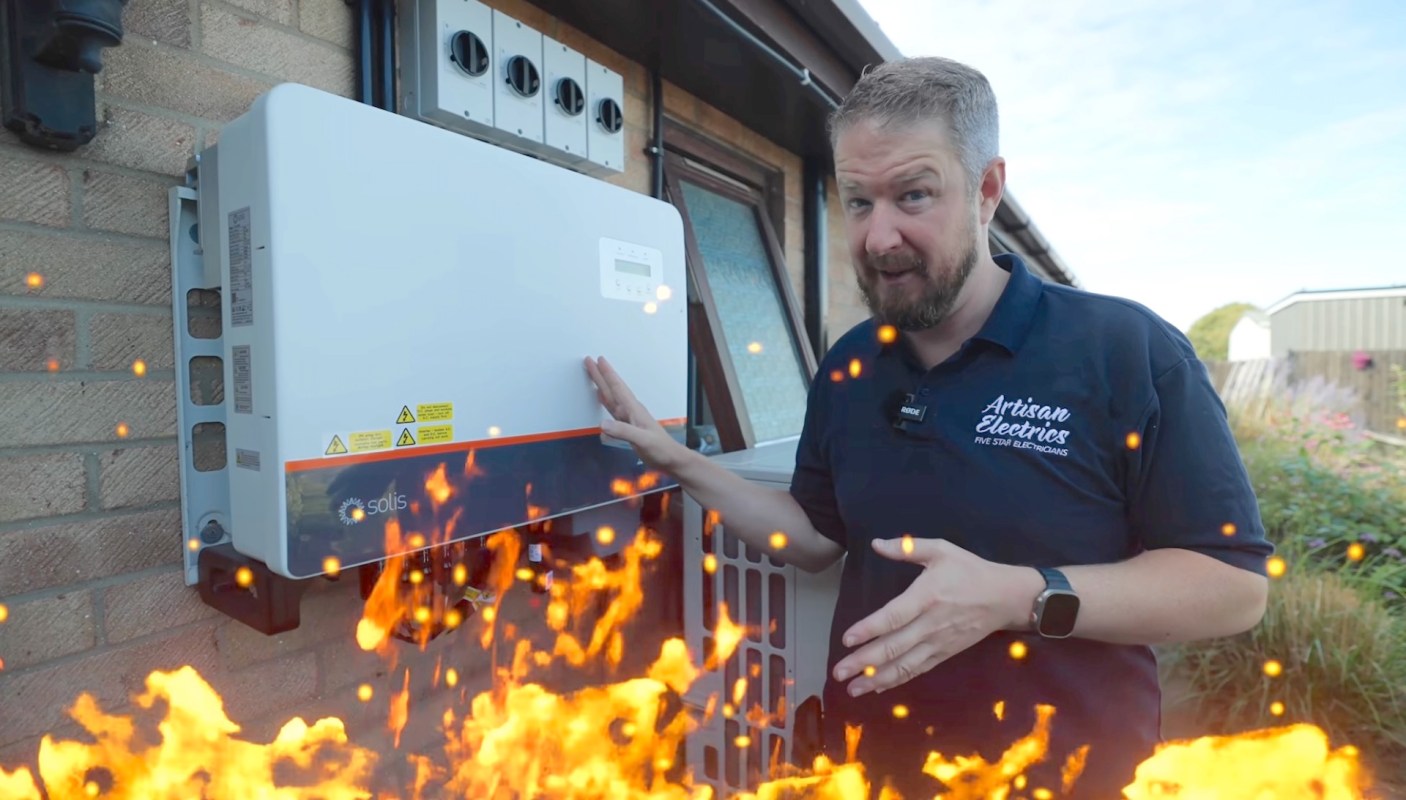
The trouble at a United Kingdom care home's solar installation extended well beyond a malfunctioning inverter. After one unit caught fire twice, electricians who examined the system said the site's costly attempt to reduce energy bills was marred by a range of installation flaws that raised serious safety concerns.
Here's what to know
The inspection pointed to several possible problem areas, not a single failed piece of equipment. In a YouTube video, U.K. electricians from Artisan Electrics (@artisanelectrics) said they were brought in after the care home experienced two inverter fires and found loose MC4 connectors, missing DC isolators on two of the three inverters, poor cable labeling, and other defects that could make servicing harder and increase danger.
Although the array is large — 228 panels at 445 watts each, for roughly 101 kilowatts peak, along with three 30-kilowatt inverters — it has not erased the facility's steep electricity costs. Artisan Electrics said the care home's heavy use of power for heating, cooling, lighting, and appliances still leaves it paying thousands per month.
One of the biggest concerns was handling DC electricity during the inverter replacement. The electricians said the unit that burned was swapped out before proper DC isolation was available, so workers reportedly had to cut live cables while arcing was visible. They also said the replacement inverter was never fully commissioned, which meant the customer could not effectively monitor system performance.
Going solar is still one of the best ways to save money on home energy over time. If you're considering panels for your home, you can explore EnergySage to get free solar installation estimates and compare quotes from vetted installers.
More background
Poor workmanship can undermine both the financial and environmental benefits of a system that should otherwise reduce utility bills and lower pollution.
The electricians also reviewed an older feed-in tariff-era solar system on the care home property, which they said had produced about 159,000 kilowatt-hours over its lifetime. In their view, that earlier installation appeared to include safety measures missing from the newer one, showing that newer equipment is not automatically better when the work itself is poorly done.
Artisan Electrics said the owner is also weighing an expansion that could include solar over carports, battery storage, and possibly a solar fence on south-facing land. For a property with high electricity use day and night, those additions could store more daytime generation for overnight use and reduce power drawn from the grid.
Save $10,000 on solar panels without even sharing your phone number Want to go solar but not sure who to trust? EnergySage has your back with free and transparent quotes from fully vetted providers that can help you save as much as $10k on installation. To get started, just answer a few questions about your home — no phone number required. Within a day or two, EnergySage will email you the best local options for your needs, and their expert advisers can help you compare quotes and pick a winner. |

What can be done?
Solar can be a smart investment, but vetting installers, getting multiple quotes, and making sure systems are properly labeled, monitored, and safely isolated is essential.
If a system is already in place, periodic professional inspections can help catch wear, loose connections, and other hazards before they become costly or dangerous.
Adding battery storage to a solar setup is one of the best ways to protect your home during outages and save on energy costs. It can also help households go off-grid for longer by storing extra power for when the sun isn't shining. To compare home battery storage options, you can explore EnergySage for information, including competitive installation estimates.
EnergySage's free services can also make buying solar much easier to navigate. With EnergySage's help, the average person can save up to $10,000 on solar purchases and installations. EnergySage's solar map shows the average cost of a home solar panel system by state, along with details on solar panel incentives for each state, helping consumers get the best price for rooftop solar panels and access available incentives.
More From EnergySage
💡Go deep on the latest news and trends shaping the residential solar landscape




As one electrician said while inspecting a loose connector on the care home's system, "This should not be spinning like that," then later added, "This is why you should really get a solar PV system checked regularly."
Where can I learn more?
The care home's fire and installation problems are part of a broader set of solar issues, from misleading sales pitches to neighborhood fights and confusion about how the technology works. They also raise a bigger question about how projects are planned and installed so they deliver savings safely while serving other community goals.
• Across Australia, homeowners were targeted with bogus "free" solar panel ads online.
• In Nebraska, homeowners faced a battle with their HOA over rooftop solar panels.
• Across Europe, developers are pursuing nature-inclusive solar parks that can also support biodiversity.

Get TCD's free newsletters for easy tips, smart advice, and a chance to earn $5,000 toward home upgrades. To see more stories like this one, change your Google preferences here.






