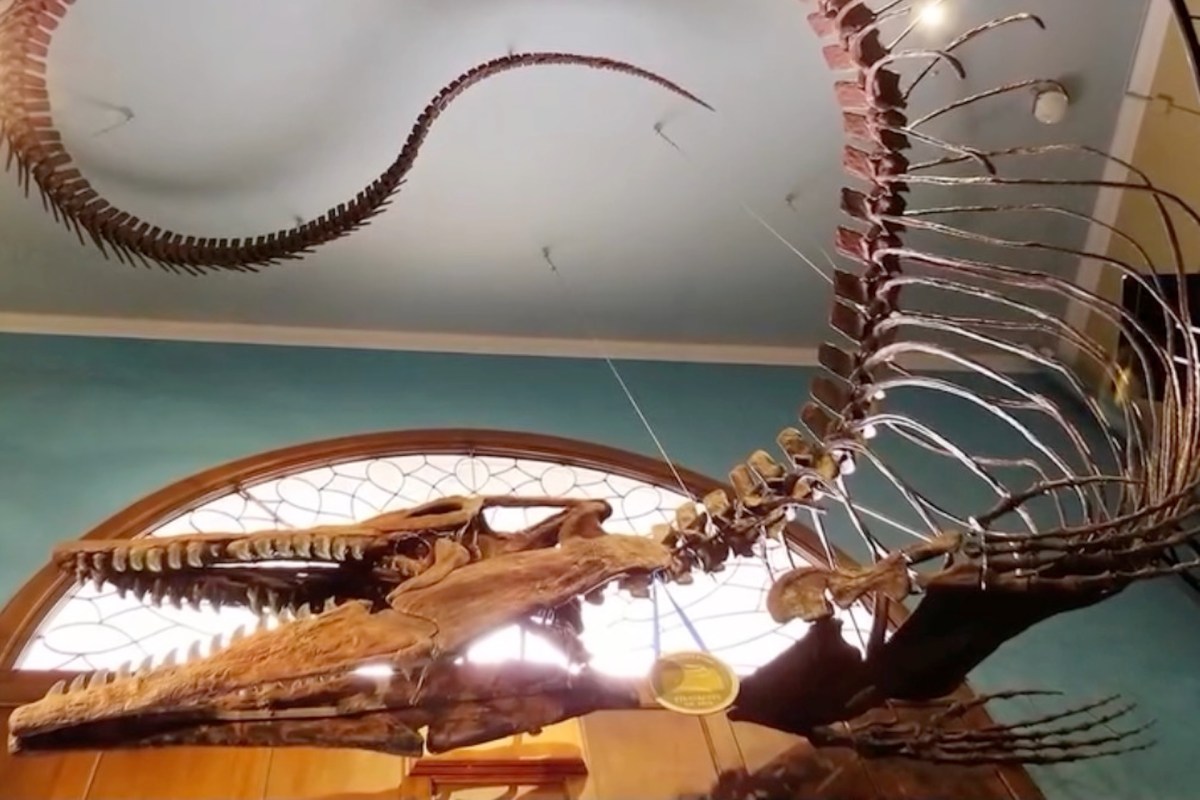
A newly recognized "king" of the ancient seas is making waves after scientists revisited old fossils and realized they belonged to a predator that was larger and more formidable than previously believed.
The animal, now named Tylosaurus rex, once cruised through the warm inland sea that covered much of what is now Texas — and it may have reached up to 43 feet long.
What happened?
Recently, paleontologists said that a fresh look at several giant mosasaur fossils showed they had been misidentified as Tylosaurus proriger when they actually represented a separate species, according to TheTravel.
That species is Tylosaurus rex, a marine reptile from about 80 million years ago in the Late Cretaceous that likely stood among the top predators of the Western Interior Seaway.
Mosasaurs were not dinosaurs but giant sea-going lizards more closely related to modern monitor lizards and snakes.
Researchers concluded that these fossils belonged to a distinct species because the largest specimens consistently exhibited heavier jaws, sturdier skull and neck anatomy, and finely serrated teeth.
TCD Picks » EDF Spotlight
💡EDF's Vital Signs newsletter delivers stories about game-changing solutions close to home and around the world




The fossils were not newly unearthed. Instead, scientists reexamined museum specimens that had been sitting in collections for years — and in some cases, decades.
One of the most important examples is the Heath Mosasaur, housed at the Perot Museum of Nature and Science in Dallas.
Why does it matter?
Tylosaurus rex appears to have been one of the dominant hunters in its marine world, likely using its streamlined body and powerful bite to prey on fish and smaller marine reptiles.
At the time, North America was split by the Western Interior Seaway, a vast inland ocean that stretched from the Gulf of Mexico to the Arctic and supported a rich marine ecosystem.
The finding also gives scientists a clearer picture of how giant predators evolved in prehistoric oceans.
Researchers found that the Texas fossils came from layers dated about 4 million years later than T. proriger remains, helping confirm that this was not simply an older or unusually large individual of a known species.
What's behind the name?
Researchers involved in the work said the animal's sheer size and anatomy indicate it was one of the most formidable hunters in its ecosystem. Its name — Tylosaurus rex, or "king of the Tylosaurs" — is intended to reflect that.
Researchers also said a specimen nicknamed "The Black Knight" preserves damage to the jaw and snout that appears to have been caused by another Tylosaurus, hinting that these predators may have fought one another.

Get TCD's free newsletters for easy tips, smart advice, and a chance to earn $5,000 toward home upgrades. To see more stories like this one, change your Google preferences here.
Cool Picks