


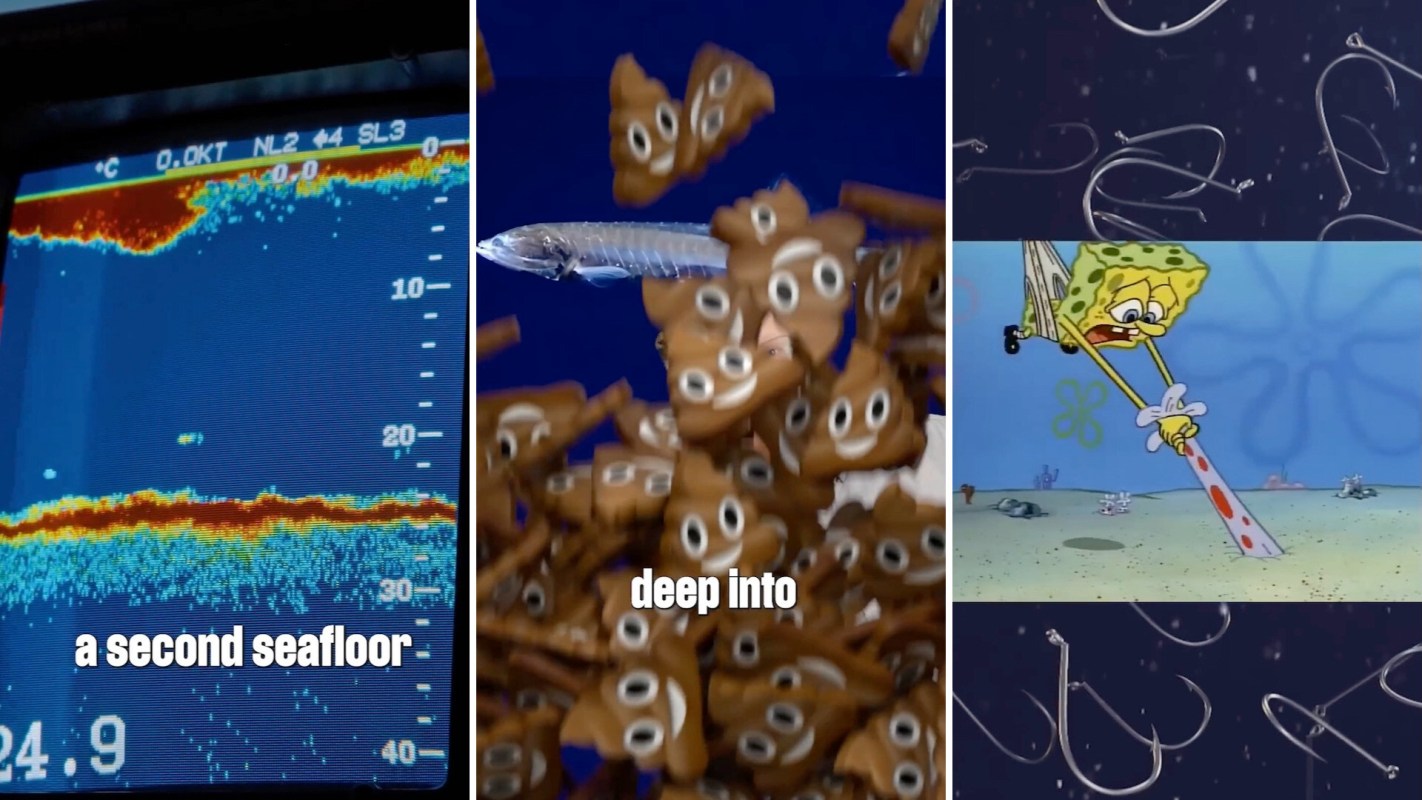
A nightly movement involving billions of fish carries them up from deeper water to feed near the surface before they drop back down again.
According to EcoBits (@EcoBitsOfficial), the routine that includes pooping may do more than just sustain marine life. It may also help store carbon deep in the sea.
Here's what to know
What sonar first picked up in 1942 as a strange layer about 984 feet (300 meters) below the surface turned out to be huge schools of fish. In the creator's explanation, those animals move together through what the YouTube Short calls the "fish twilight zone."
Their role in carbon storage comes after they head back down. The carbon-rich poop they excrete can sink deeper into the ocean, potentially keeping some of that carbon out of the atmosphere for longer periods. That carbon starts with the food the fish eat near the surface and then is carried downward in their bodies.
The video says scientists estimate the twilight-zone fish community at about 10 billion tons total and say it accounts for close to 90% of ocean fish biomass, making it a potentially major force in the planet's natural carbon cycle.
One commenter noted, "That's so much poop."
TCD Picks » Quince Spotlight
💡These best-sellers from Quince deliver affordable, sustainable luxury for all




More background
Even with its possible importance in moving carbon from surface waters into the deep ocean, this ecosystem remains poorly understood.
"While we still don't know a lot about this ecosystem, it's already under threat," EcoBits noted.
Rather than looking at them as food for people, commercial fisheries are exploring whether to catch these fish for animal-feed production. The fish in this zone are already drawing industrial interest.
If that type of fishing expands before researchers understand the climate function of these species, it could disrupt a natural system that may already be doing critical work. The concern raised in the video is not only about marine biodiversity, but also about interfering with a vast, poorly understood carbon transport mechanism.
Before human activity changes the ecosystem in ways that may be difficult to undo, researchers are trying to learn more about it. Humans' role in the change drew debate on YouTube.
"Let's remember human activity is natural too," a user argued. "Everyone seems to forget we are just the apex predator."
A different commenter countered: "Yes we do have natural activity, but not this."
What's being done?
"Scientists are racing to try to learn as much as we can about this ecosystem before human activity starts to steamroll all over it," EcoBits said.
That work appears to be focused on understanding both the fish themselves and the broader carbon pathway created by their nightly migration.
The video also points to a practical reason for that research. Better information could help shape decisions about whether and how commercial fisheries target twilight-zone fish for animal feed. The immediate priority is understanding what could be lost before extraction increases.
Where can I learn more?
The science behind twilight-zone fish and ocean carbon storage is a well-studied topic.
• Across the ocean, trillions rise nightly from the twilight zone and sink massive carbon loads.
• Off California, elephant seals map the twilight zone, revealing hidden carbon pathways below.
• Scientists found marine snow sweeps carbon, nutrients, and plastics through the ocean's conveyor belt.
• Microplastics may be reducing the ocean's ability to absorb and store planet-warming carbon.

Get TCD's free newsletters for easy tips, smart advice, and a chance to earn $5,000 toward home upgrades. To see more stories like this one, change your Google preferences here.






