


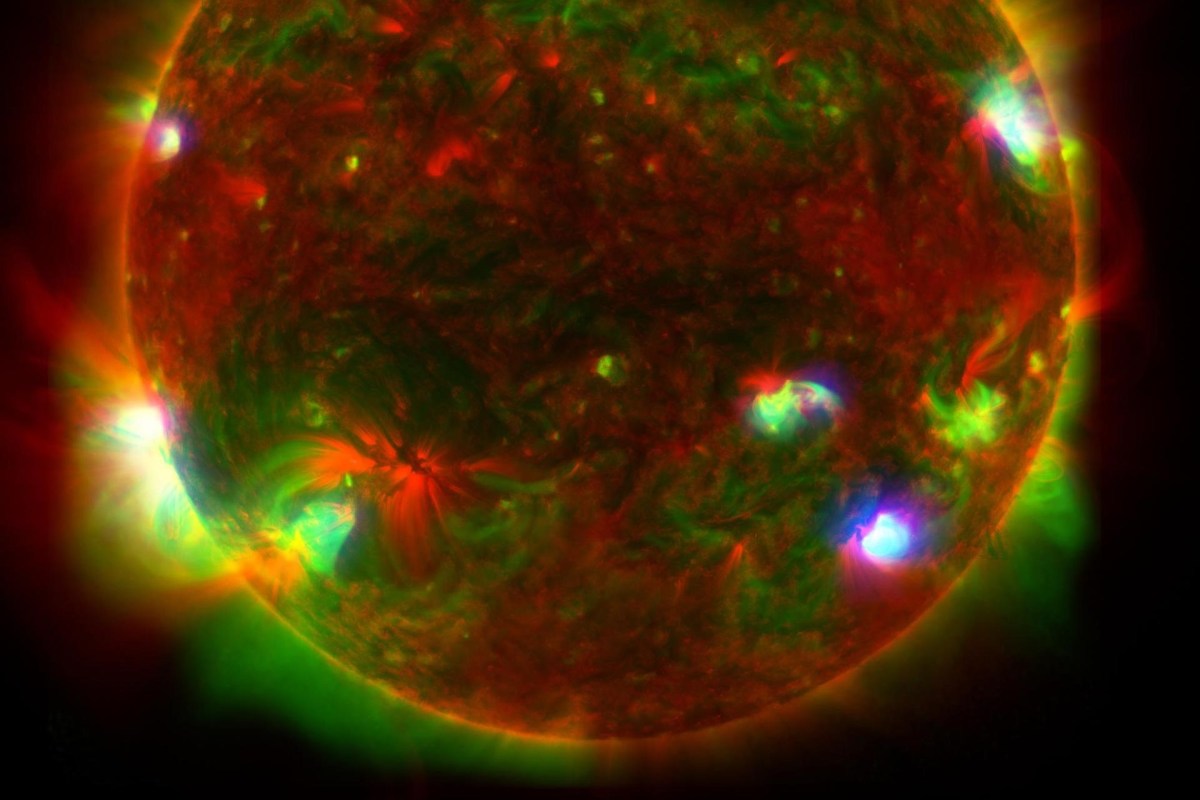
Astronomers in Turkey say the sun may still carry chemical traces of an extraordinary event from its earliest days: swallowing a rocky planet several times more massive than Earth, according to Futurism.
Researchers are not saying they found direct proof of a lost world, only that a new model offers one plausible explanation for quirks scientists have long observed inside our star.
Here's what to know
The paper, published in Monthly Notices of the Royal Astronomical Society, argues that the young sun may have consumed a super-Earth about 5–10 times Earth's mass.
One clue the team examined was the sun's relatively low lithium abundance.
This matters because lithium is easily destroyed at high temperatures and can therefore reveal something about a star's early history.
They also investigated subtle, long-running mismatches between observations of the solar interior and what standard solar models predict.
TCD Picks » Quince Spotlight
💡These best-sellers from Quince deliver affordable, sustainable luxury for all




Mutlu Yildiz, a professor at Ege University in Turkey and a co-author of the study, addressed the findings in a statement.
"By modeling the sun's evolution and comparing the results with precise observations of its interior, we find that the ingestion of a super-Earth could help explain long-standing differences between standard solar models and observations, including subtle changes in the sun's internal structure and its depleted lithium abundance."
More background
To test the idea, the researchers used MESA — short for Modules for Experiments in Stellar Astrophysics — to build solar evolution scenarios shaped by different versions of the sun's accretion history.
They then checked those models against helioseismology, which uses acoustic observations to study the sun's interior.
A model can strengthen a hypothesis without proving it, especially when scientists are trying to reconstruct events from the solar system's earliest stages.
Understanding how stars interact with planets during formation can help researchers better interpret other planetary systems, including those with tightly packed rocky worlds and so-called hot super-Earths that orbit close to their stars.
What's being done?
Researchers can continue refining solar models and comparing them with increasingly precise measurements of the sun's interior and chemistry.
Future observations and improved modeling could help determine whether the sun really absorbed a large rocky world, or whether another process better explains the lithium mismatch.
Either outcome would teach astronomers something important about star and planet formation.
"Young stars are surrounded by protoplanetary disks, where substantial amounts of material can move between the disk and the star," Yildiz explained.
"Since planets are made of material that is chemically different from the gas in the disk," he added, "we wondered whether the early engulfment of a planet could have left a chemical signature inside the young sun."
Where can I learn more?
Each of these articles addresses the same core question: how scientists weigh evidence, test rival explanations, and avoid stretching conclusions beyond what the data support.
That makes them a good match for this solar hypothesis, where the headline-grabbing idea matters only if the models and measurements hold up.
• Scientists used striking evidence to debunk a common myth about global warming.
• A scientist produced an undeniable climate graph to correct a widely misread trend.
• An expert debunked a ridiculous argument about the Earth's past on TikTok.
Different subject, same lesson: big claims depend on careful reading of the evidence. That's the standard astronomers are using as they explore whether the young sun may have swallowed a super-Earth.

Get TCD's free newsletters for easy tips, smart advice, and a chance to earn $5,000 toward home upgrades. To see more stories like this one, change your Google preferences here.






