


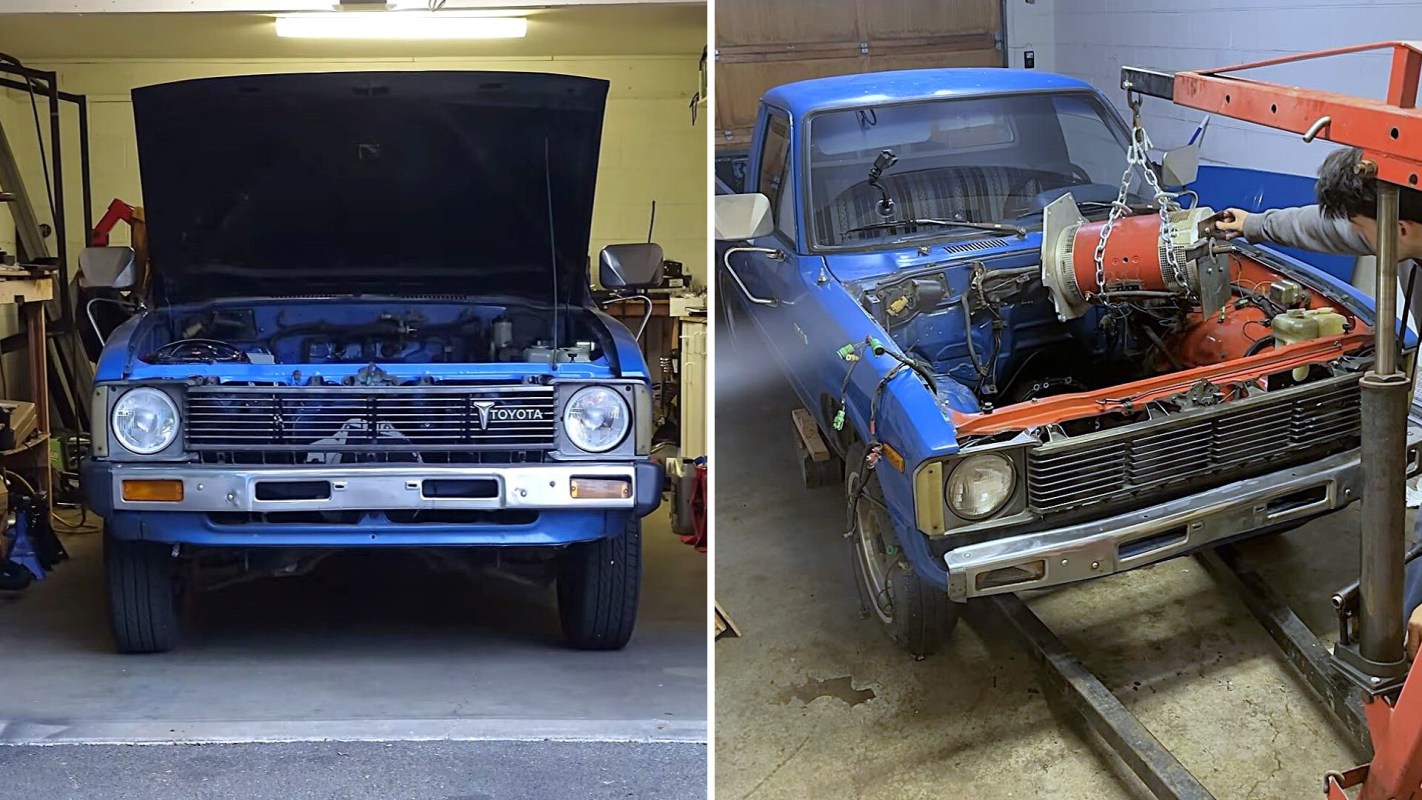
A Seattle-area creator used a non-running 1982 Toyota pickup as the base for an electric conversion that came to $7,785 in parts, giving viewers a concrete example of what a do-it-yourself EV project can cost.
Here's what to know
In a YouTube video, B_Serious (@B_Serious_YT) said the project took about a year to piece together, with most components sourced used from Facebook Marketplace, Craigslist, eBay, and EV Mechanics, while safety-sensitive parts were bought new.
Major expenses included the $1,800 donor truck, five used Tesla Model S battery modules for $1,500, a Zilla 1K controller package for $700, and a NetGain Warp 9 motor setup — including the adapter plate and motor mount — for $700.
Instead of aiming for a fast or especially advanced EV, he wanted a practical local truck that still looked mostly original, could keep pace with everyday traffic on surface streets, and had enough range for regular short trips.
That setup suits his own routine, since he lives about five minutes from work and not far from stores, restaurants, and friends.
He also stressed that the truck has clear limits. For drivers facing a 50-mile commute each way, he said, "Do not build this truck."
TCD Picks » Quince Spotlight
💡These best-sellers from Quince deliver affordable, sustainable luxury for all




One commenter wrote, "This build is 100% a win from all directions you analyze it. Thank you for sharing it with us."
More background
Other costs included roughly $1,550 for the battery enclosure and related safety hardware, about $500 for the battery management system, $450 for chargers, $180 for wiring, and around $300 for hardware and other consumables.
He put the value proposition plainly: "Is it dramatically less expensive than buying a brand new electric truck? Yes, it is."
The truck could also save money for someone using it for short local drives.
It charges on 120-volt power, and replacing a tired gasoline engine can ease some of the upkeep associated with an older combustion powertrain, though the creator did not offer a precise estimate for operating costs.
What can be done?
More than anything else, the project highlighted the importance of patience.
He said the budget worked largely because he bought used parts, especially pricier items like the battery pack, motor, and controller. He also warned viewers against overpaying for battery modules, saying, "Waiting a few weeks can easily save hundreds, sometimes even thousands of dollars."
At the same time, he emphasized that some savings are not worth chasing.
That includes the battery management system, disconnects, contactors, and proper wiring protection. As he put it, the BMS is "basically cheap insurance for one of the most expensive parts of the truck."
"I had so much fun putting this thing together, and I can honestly say I don't think I've ever learned so much in such a short amount of time than just jumping into this and making it work," the creator said.
Where can I learn more?
These stories take a closer look at some of the same issues raised by this Toyota pickup build, including EV costs, everyday practicality, and truck-focused tech.
• Worksport has unveiled solar truck-bed technology that can help power vehicles on the go.
• Drivers across Reddit said cheap daily driving and home charging pushed them toward EVs.
• Persistent confusion around EV costs and carbon still shapes how many shoppers see electrics.

Get TCD's free newsletters for easy tips, smart advice, and a chance to earn $5,000 toward home upgrades. To see more stories like this one, change your Google preferences here.






