


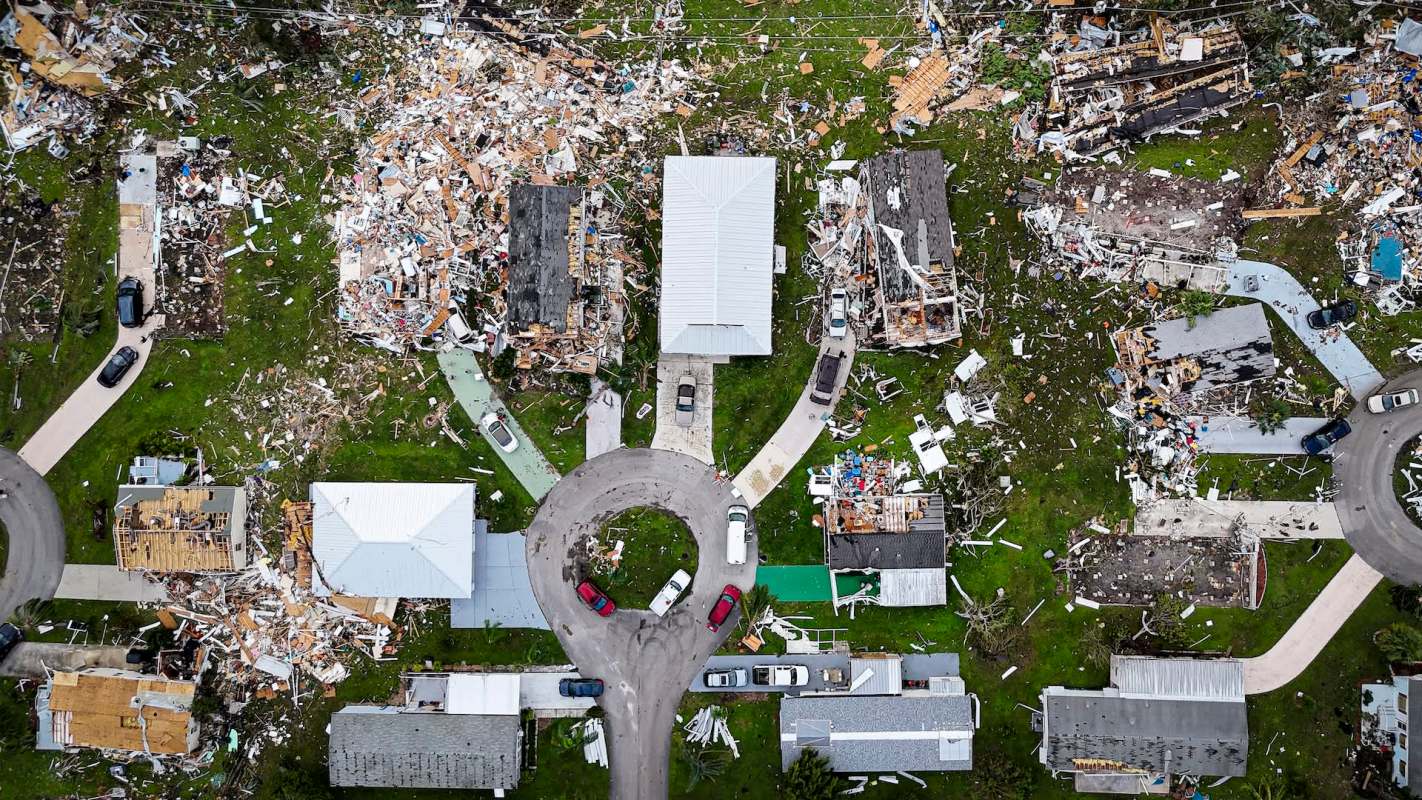
Tornado warnings are supposed to give people at least a brief window to take cover, but in Port St. Lucie, Florida, some residents said an alert reached their phones only after an EF-0 tornado had already passed through part of the city.
The storm damaged homes and scattered debris, raising difficult questions about how people can protect themselves when dangerous weather develops faster than alert systems can respond.
Here's what to know
According to the National Weather Service, the tornado was on the ground for roughly 15 minutes after touching down around 6:10 p.m. on Aug. 23, covering a little more than two miles.
After crossing the St. Lucie River as a waterspout, it moved back onto land near the Bay St. Lucie community at around 6:20 p.m.
CBS12 reported that the confirmed EF-0 tornado brought winds of up to 75 miles per hour and damaged several homes in Port St. Lucie.
A tornado warning was not issued until 6:28 p.m., about 18 minutes after the storm first touched down.
TCD Picks » Quince Spotlight
💡These best-sellers from Quince deliver affordable, sustainable luxury for all




Before she understood what was happening, Port St. Lucie resident Carol Cadotte recalled that the storm announced itself with an unusual sound.
"I just felt like a suction and a really strange noise," Cadotte told the outlet.
More background
Greg Rule, chief meteorologist for CBS12 News StormTrac, said radar did not show a clear enough signal in time to support an earlier alert.
"Basically the radar beam was flying up and over the storm system, so it didn't really have a clear defined rotation," Rule explained.
Forecasters face a basic problem with storms like this: tornadoes can form quickly, and the radar signals they depend on do not always look alarming right away.
"When we were looking at it on radar [the day prior], it didn't scream out, 'Hey, this has potential for a tornado,'" Rule noted.
Despite its relatively low rating on the Enhanced Fujita scale, the tornado still caused serious damage in Port St. Lucie, peeling roofs off homes and damaging fences, boats, and a pool gazebo.
Even a weaker tornado can leave residents facing expensive repairs and lingering stress as they recover.
What can be done?
Meteorologists warned the public not to rely on a single source for alerts. Because tornadoes can develop rapidly, consulting multiple warning systems can improve the chances of getting timely information.
Among the steps Rule recommended were leaving Wireless Emergency Alerts enabled on your phone, keeping a NOAA Weather Radio set for your county, and, when available, downloading a localized app for additional weather information and alerts.
Meteorologists advised people to act quickly when a warning is issued rather than wait to confirm the danger themselves. If threatening conditions are unfolding, getting indoors and taking shelter immediately can make a crucial difference.
For residents like Cadotte, the delay was unnerving.
"Our phones went off and we looked at each other like, you're kidding me, right?" she said.
Where can I learn more?
The delayed warning in Port St. Lucie was a reminder that a storm's impact doesn't end when winds die down.
• Across Florida, staggering losses for agriculture followed Hurricane Milton as growers counted the damage.
• After major weather disasters, death rates can climb when healthcare systems struggle for weeks.
• Survivors often carry psychological injuries after disasters, with PTSD lingering well beyond cleanup.

Get TCD's free newsletters for easy tips, smart advice, and a chance to earn $5,000 toward home upgrades. To see more stories like this one, change your Google preferences here.






