


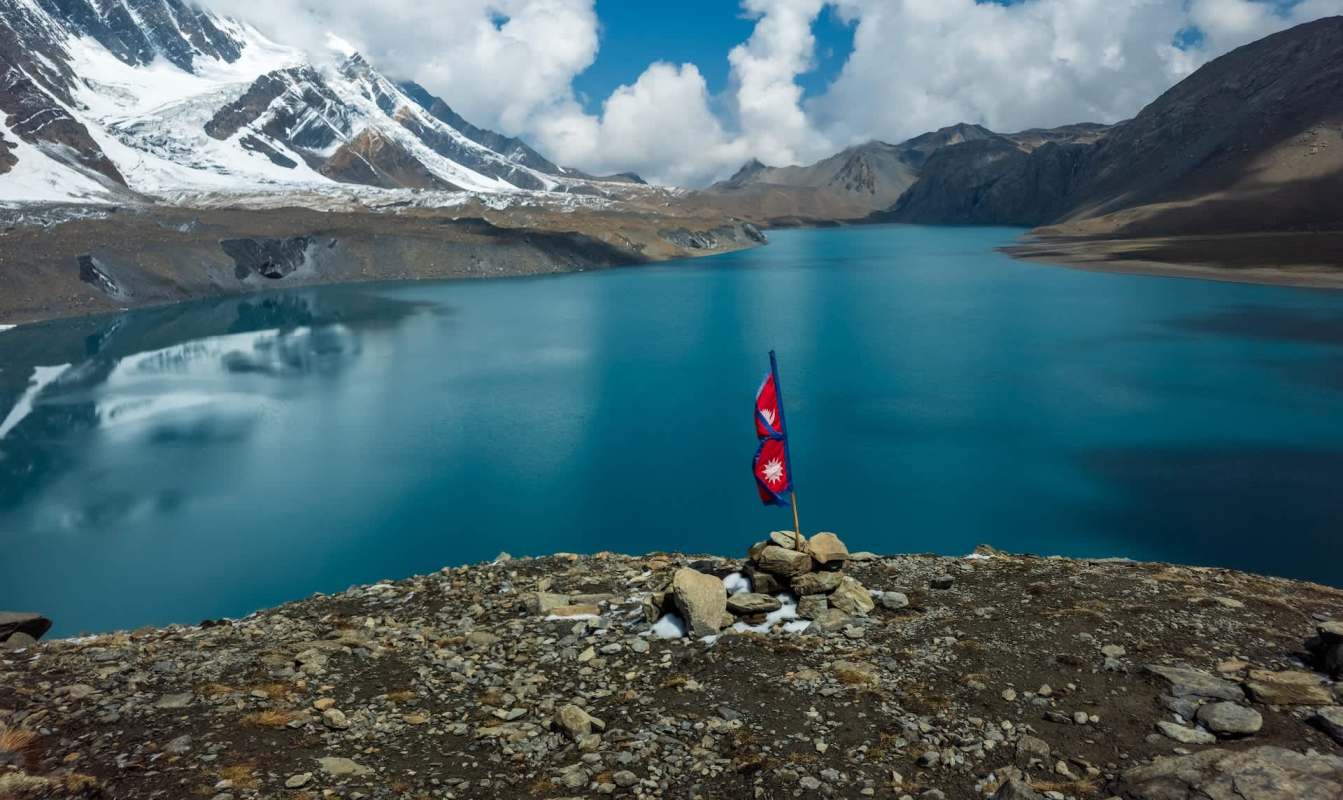
Even some of the world's most breathtaking high-altitude getaways are not immune to plastic pollution.
Researchers say Tilicho Lake, one of Nepal's highest snow-fed lakes, has a microplastic problem, with the most polluted shoreline areas tending to be the ones tourists can reach most easily.
What happened?
At Tilicho Lake in Nepal's Himalayas, scientists measured roughly 42 microplastic particles in each liter of water they sampled, and the highest levels showed up along the more accessible stretches of shore, according to Eos.
The plastic fingerprint also hinted at a likely source. After environmental researcher Sahil Shrestha's team collected water from six shoreline sites using stainless steel bottles and multiple contamination controls, they found mostly polyester, polyethylene, and polypropylene, plastics commonly used in trekking items such as jackets, tents, bags, and bottles, Eos reported.
Rising 4,917 meters (16,132 feet) above sea level, Tilicho Lake is among the highest lakes in Nepal.
Microplastics have already been reported near Everest Base Camp, but scientists have done far less work on high-altitude lakes, even though those waters can hold onto pollution for years or decades.
TCD Picks » Quince Spotlight
💡These best-sellers from Quince deliver affordable, sustainable luxury for all




Why does it matter?
Many Himalayan lakes eventually flow into rivers that support downstream communities, meaning pollution at the source can spread far beyond the lake itself.
While researchers are still studying the full effects on human health, concern continues to grow over how microplastics move through water, wildlife, and food systems.
Water scientist Tista Prasai Joshi, who was not involved in the research, said, "It is yet another piece of evidence that our massive consumption of plastic in countries across the Global South is coming back to harm us. We are basically hitting an axe on our own foot."
In regions that depend on fragile mountain ecosystems, that can put even more pressure on conservation efforts and tourism-reliant communities.

Get TCD's free newsletters for easy tips, smart advice, and a chance to earn $5,000 toward home upgrades. To see more stories like this one, change your Google preferences here.






