A viral TikTok is drawing attention to a messy but important reality of climate science: Sometimes the tools used to estimate emissions need to be corrected.
What's happening?
In this case, the issue is not that global warming somehow disappeared. Instead, one high-profile tracking model appears to have missed local vehicle-pollution numbers by a wide margin.
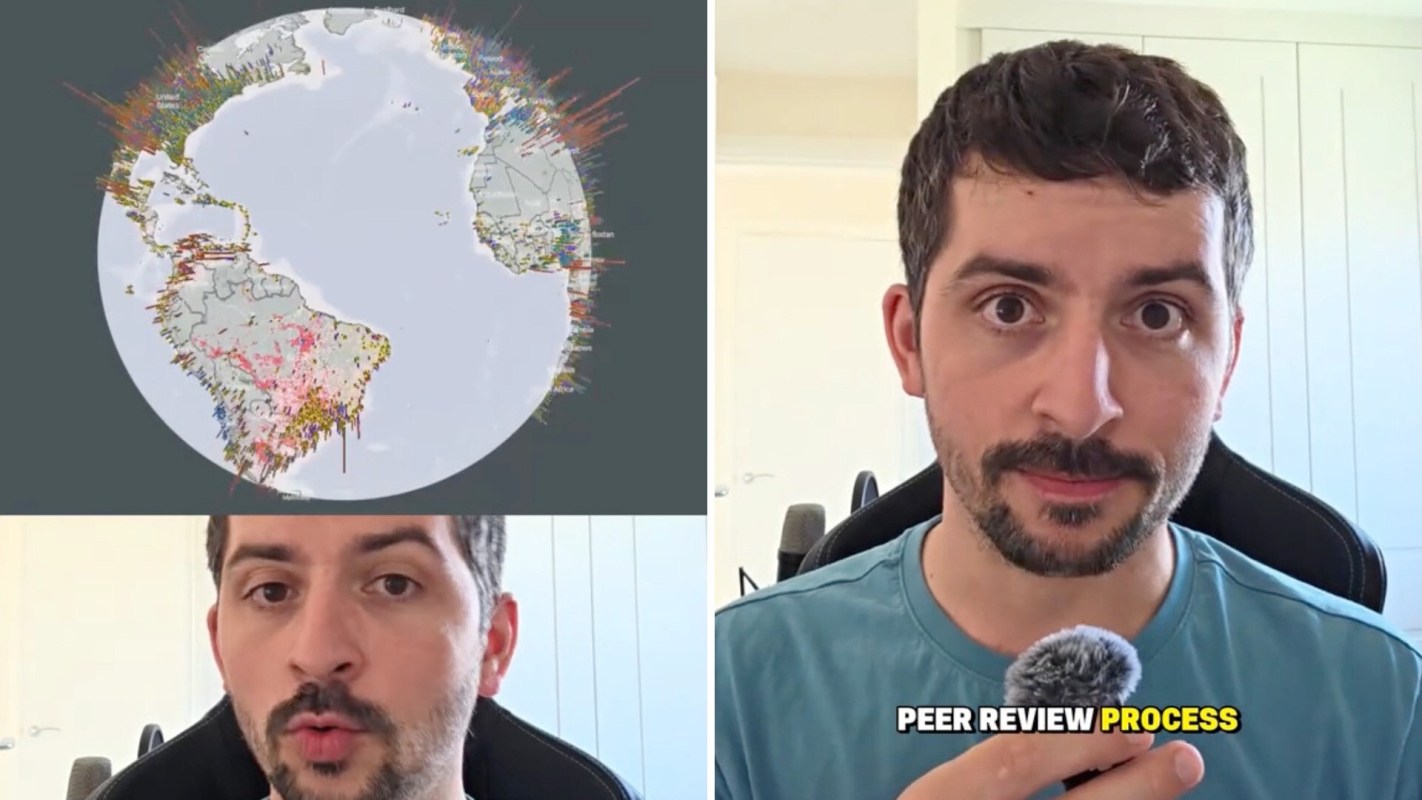
According to @mrearthguy on TikTok, Climate TRACE is an AI-assisted emissions platform that combines satellite data with hundreds of other data inputs to estimate greenhouse gas emissions from major sources worldwide.
@mrearthguy Climate change models were wrong and we now know why #science #climatechange #geology #learnontiktok ♬ original sound - MrEarthGuy
He said researchers at Northern Arizona University checked those vehicle-emissions estimates across 260 U.S. cities against the Vulcan Project, another dataset that has also been validated using EPA records, atmospheric sampling, and radiocarbon measurements.
The comparison showed a gap of about 70%. An earlier Climate TRACE version appears to have overestimated emissions, while a newer version underestimated them by nearly the same scale.
In his explanation, the most strongly verified figures fell between those two results, and "that middle is still enormous."
TCD Picks » Quince Spotlight
💡These best-sellers from Quince deliver affordable, sustainable luxury for all




For what it's worth, a Climate Trace representative told The Cool Down that the issue, now fixed, affected only city-level statistics pertaining to vehicles and that the organization stands behind the remainder of its 67 subsectors of data points.
"We identified, corrected, and disclosed the issue months before this paper was submitted and nearly a year before the paper's revisions were completed," the representative added of the NAU report.
"When the authors' city-level comparison is re-run with any Climate TRACE version released between June 2025 and today, the difference between the two data sets is ~10%. It's important to note that the bug that caused the discrepancy between our two datasets was limited to our city-level aggregation. It did not impact the underlying methodology Climate TRACE uses to estimate road transportation emissions, which was unchanged by the fix. The difference between our data set and Vulcan's at the county-level averages less than 20% and at the national level is ~4%."
Why does it matter?
Climate data is increasingly used by companies, governments, and researchers to make decisions about transportation, pollution, and decarbonization. If local emissions estimates are off, that can influence where funding and effort go.
The video argues that a flaw in one model should not be taken as evidence that climate science overall cannot be trusted.
To make that point, the creator said the Vulcan dataset matches validated EPA national totals within about 2.2%, state-level figures within about 4.4%, and atmospheric carbon measurements within about 1.4%.
In other words, a correction to one tool is not the same thing as overturning the larger body of science.
More accurate emissions tracking can shape local transit investments and clean-air strategies. Better numbers help communities target pollution cuts more effectively and show whether policies are actually working.
What's being done?
The apparent causes of the mismatch sound fixable.
One reason, the creator said, is that Climate TRACE relied on fuel-economy assumptions from 2016 even though vehicles have become more efficient since then.
He also said the system used a single national average for vehicle types rather than city-specific mixes, and that a later scaling adjustment intended to better match a global dataset changed the totals by tens of millions of tons.
He framed that as a modeling limitation rather than wrongdoing, saying, "This isn't a conspiracy, it's not fraud. It's just what happens when you build a model."
He added that newer systems are still being checked by longer-standing scientific methods, "It's called the peer review process."
Editor's note: This article was updated to include context from a Climate TRACE representative.

Get TCD's free newsletters for easy tips, smart advice, and a chance to earn $5,000 toward home upgrades. To see more stories like this one, change your Google preferences here.