


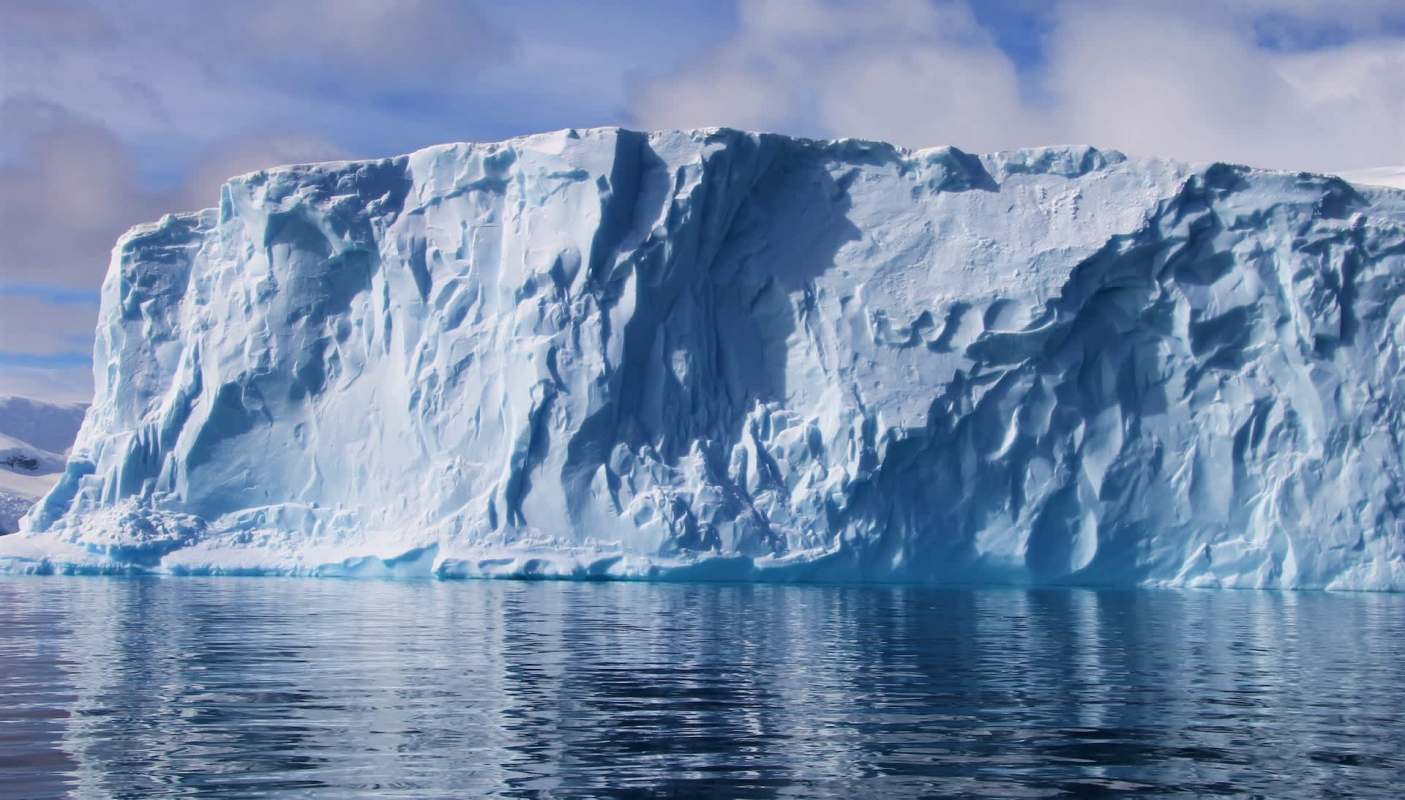
By 2100, West Antarctica's Thwaites Glacier — widely nicknamed the "Doomsday Glacier" — could raise global sea levels by up to 1.2 inches, even without further warming.
That estimate points to a bigger coastal flooding threat from one of the glaciers scientists watch most closely.
Here's what to know
In research published in the journal Nature Communications, glaciologists from the University of California and NASA's Jet Propulsion Laboratory used a new ice-sheet model to estimate how much Thwaites Glacier might raise sea levels by century's end. As Gizmodo noted, that could be up to 1.2 inches (30 millimeters).
The study focused on the grounding line, the zone where ice resting on bedrock starts to float on the ocean. Rather than acting as the relatively narrow, stable boundary assumed in many older models, this area appeared much more active in the new analysis.
Satellite radar from Finland's ICEYE constellation allowed the team to monitor the grounding zone along Thwaites' main trunk. The measurements suggest seawater can reach several miles beneath grounded ice and lift it with the tides.
Seawater can carry ocean heat farther inland, increasing melt at the glacier's base and helping it retreat more quickly toward the sea.
TCD Picks » Quince Spotlight
💡These best-sellers from Quince deliver affordable, sustainable luxury for all




More background
For decades, warm ocean water has been wearing away Thwaites' floating ice shelves from below, while the glacier itself has thinned, sped up, and retreated inland. Scientists see added danger in the fact that much of its ice sits on bedrock that slopes deeper inland, a configuration that can accelerate retreat once it starts.
The paper also took on a long-running mismatch between computer simulations and satellite observations of Antarctic ice change. That gap has fueled concern that earlier projections may have missed important processes happening beneath the ice.
Rising seas can worsen coastal flooding, intensify storm surge during hurricanes and other severe weather, and damage roads, homes, ports, and drinking water systems.
As extreme weather disasters become more destructive, the impacts can also threaten lives through evacuation failures, contamination, and injury, while disrupting jobs, insurance markets, and local economies that depend on stable coastlines.
The study suggested that what is happening beneath Thwaites could increase the likelihood of those real-world consequences by pushing sea-level rise higher than expected.
What's being done?
Scientists are trying to narrow the gap between forecasts and observations by building glacier models that capture more of the grounding-zone physics. For this study, the team tested its model against two decades of observations.
That effort depended heavily on ICEYE radar data, which recorded tidal motion in the grounding zone and indicated that pressurized seawater can move beneath grounded ice. That gives scientists a clearer understanding of how ocean heat reaches vulnerable parts of the glacier.
The updated model also suggests Thwaites is retreating from stabilizing ridges beneath the ice, a shift that could allow it to flow more rapidly into the ocean. Better detection of that process could improve future sea-level projections for communities planning for flood risk.
As Eric Rignot, professor of Earth system science at the University of California, Irvine, and co-author of the study, said in a statement: "We have documented and quantified the impacts of climate change on our planet's sensitive ice sheets for decades, but a mounting realization gained in recent years of what is happening on the undersides of glaciers like Thwaites is leading to an even greater sense of alarm. Our new model with more complete physics is able to match the record and then produces projections that are twice as large as before."
Where can I learn more?
Rising global temperatures, warmer oceans, and more unpredictable extreme weather are changing how scientists predict glacial melting.
• At Thwaites, scientists warn its critical ice shelf could disappear within a decade.
• If Thwaites collapses, coastal communities worldwide would face sharper flooding and displacement.
• Deep in West Antarctica, unusual winds over Thwaites revealed another force shaping the glacier.

Get TCD's free newsletters for easy tips, smart advice, and a chance to earn $5,000 toward home upgrades. To see more stories like this one, change your Google preferences here.






