


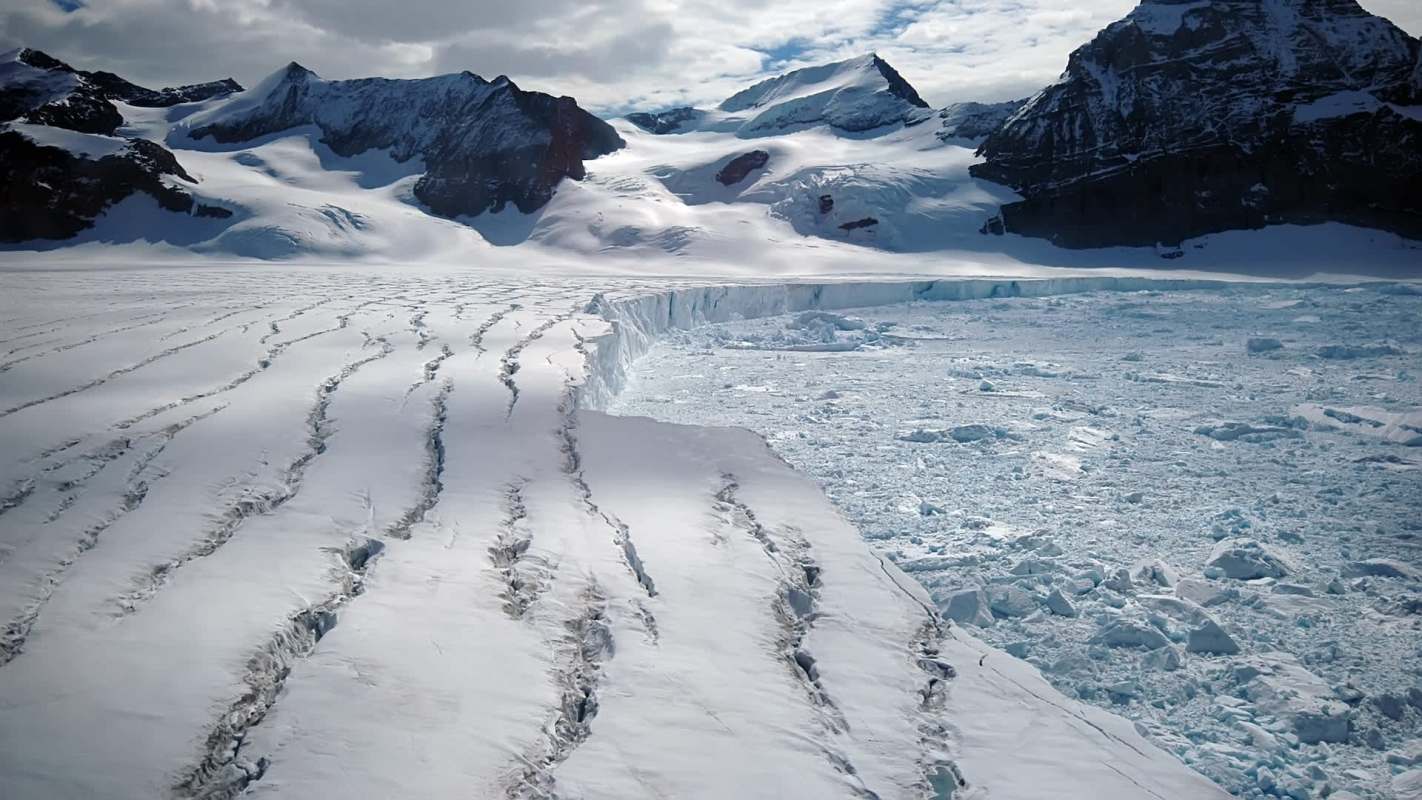
A new study points to hundreds of rare glacial earthquakes linked to Antarctica's Thwaites Glacier, often called the "Doomsday Glacier," offering a new clue to how one of the planet's most closely watched ice masses is changing.
The findings could help scientists better understand how ocean conditions and shifting ice dynamics may shape future sea-level rise.
Here's what to know
According to the research in Geophysical Research Letters, as described by The Conversation, scientists recorded more than 360 ice-related seismic events across Antarctica between 2010 and 2023. Of those, 245 were concentrated near the ocean-facing end of Thwaites Glacier.
These quakes differ from the tectonic earthquakes most people know. They can be triggered when thin icebergs break off into the ocean, flip over, and strike the glacier they came from, sending seismic energy through the ground. Because they do not show the high-frequency signals common in many other seismic events, they can be tougher to identify.
That may help explain why they have been so hard to find in Antarctica. Scientists have documented similar events in Greenland for more than 20 years, but the Antarctic versions may be smaller and less likely to be picked up by global monitoring systems.
The study found that the strongest cluster of events came from Thwaites during the 2018-2020 period. That spike also coincided with a period of faster flow in the glacier's floating ice tongue, as seen in satellite observations.
TCD Picks » Quince Spotlight
💡These best-sellers from Quince deliver affordable, sustainable luxury for all




More background
Thwaites has earned its dramatic nickname because of what could happen if it destabilizes further. A full breakup could add about 10 feet (3 meters) to global sea levels, and scientists have long warned that parts of the glacier could change rapidly under the right conditions.
Rising seas can worsen coastal flooding, threaten homes and roads, drive up insurance costs, and put added pressure on ports, drinking water systems, and local economies. Even slower, more gradual shifts in the ice sheet can affect planning near coastlines.
The study also identified a second cluster of seismic events near Pine Island Glacier, another major contributor to Antarctic sea-level rise. However, those signals were located 37 to 50 miles (60 to 80 kilometers) inland from the coast, making capsizing icebergs an unlikely explanation.
What's being done?
One of the biggest advances in the study was methodological. Instead of relying mainly on seismic stations around the world, the researcher used instruments located in Antarctica itself. That local approach appears to have uncovered many events that standard earthquake catalogs missed.
Scientists are also pairing ground-based seismic records with satellite observations to better track how glaciers move and interact with ocean water. In Thwaites' case, that combination helped connect the burst of quake activity to a period of accelerated ice flow.
The next step is determining exactly what ocean conditions may have triggered that speed-up. Researchers say the interaction among ocean water, glacier ice, and the solid ground beneath the ice remains a key unknown — and one that could sharpen future sea-level forecasts.
Studies like this can help inform coastal planning, flood preparedness, and infrastructure decisions as governments and planners work to adapt to changing risks.
A better understanding of these unusual ice quakes could help answer a major question about future sea-level rise: "Better understanding may hold the key to resolving the current large uncertainty in the projected sea-level rise over the next couple of centuries."
Where can I learn more?
Research on Thwaites is moving on several fronts as scientists work to understand why one of Antarctica's most fragile glaciers is changing so fast. The articles here look at the forces beneath, around, and within the "Doomsday Glacier" that could influence future sea-level rise.
• Over West Antarctica, researchers identified low-level jets of wind that may be affecting Thwaites.
• At Thwaites, scientists warn its critical ice shelf could be lost within a decade.
• In Antarctica, a precise new tool to study Thwaites is revealing more complex ice behavior.
• Across Antarctica, AI helped uncover 500 hidden quakes beneath the ice, widening the seismic picture.
Each piece adds to a fuller picture of Thwaites. Ice quakes, winds, ocean changes, and the geology below the glacier all help determine how quickly this part of Antarctica could shift.

Get TCD's free newsletters for easy tips, smart advice, and a chance to earn $5,000 toward home upgrades. To see more stories like this one, change your Google preferences here.






