


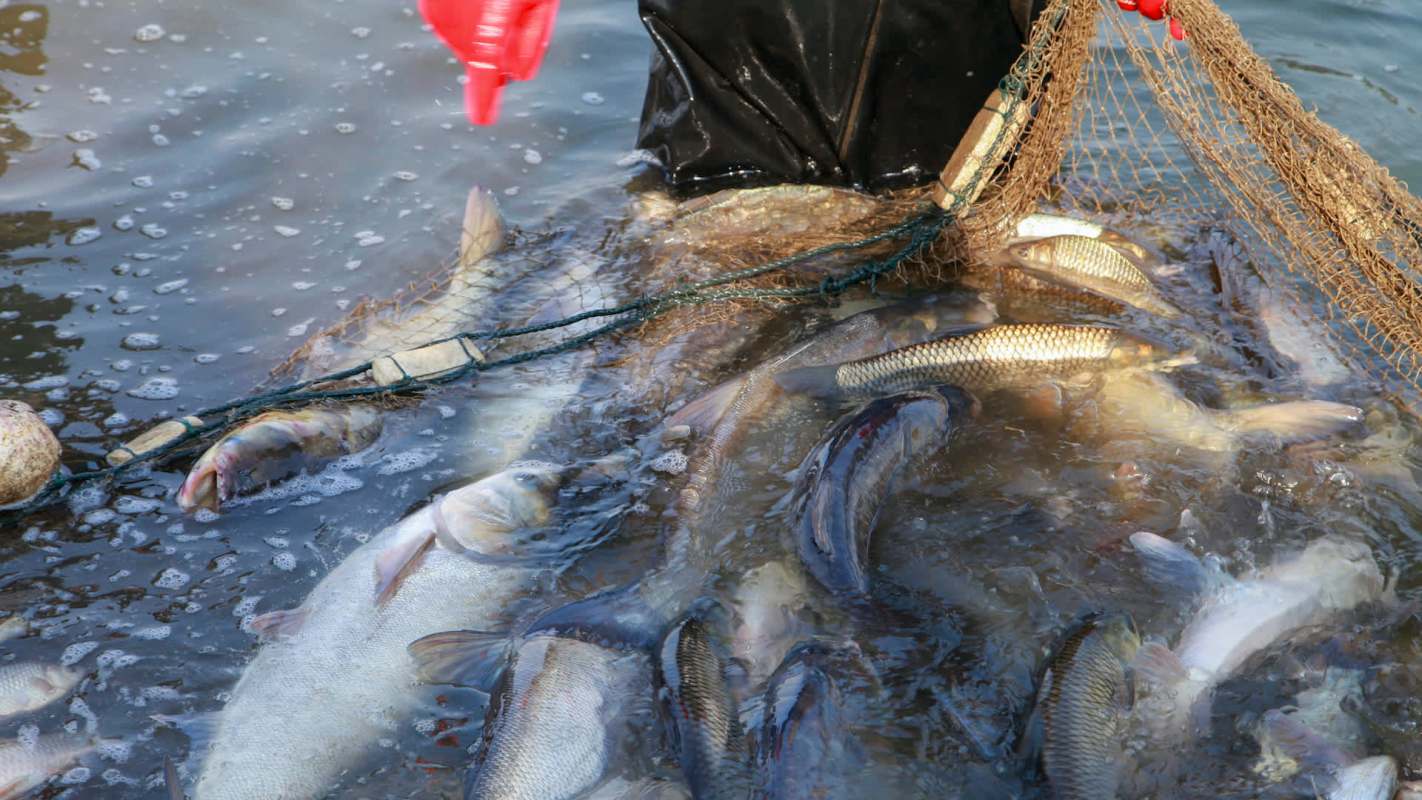
"Zombie fish" is what residents along Thailand's Mekong River have called fish with swollen blisters and sores. The affected animals are raising concerns locally.
An environmental activist is seeking answers about whether heavy-metal pollution could be behind the abnormalities, with potential consequences for communities that depend on the river.
Here's what to know
Environmental activist Aombun Thipsuna and local fishermen collected close to 60 fish for examination by Naresuan University, according to The Thaiger.
Aombun said about six had conspicuous sores and blisters, while 30 to 40 others showed early signs, including small blisters and redness on their fins and tails.
Local fishermen's accounts of similar abnormalities extend back to the period after the COVID-19 pandemic, Aombun told Ejan. She posted images of affected pla khae, a type of catfish, on November 14.
No cause has been confirmed for the fish's symptoms. One possibility Aombun has raised is that heavy metals leave them less able to fight disease by weakening their immune defenses.
TCD Picks » Quince Spotlight
💡These best-sellers from Quince deliver affordable, sustainable luxury for all




Aombun also pointed to monitoring by the Udon Thani-based Region 9 office of the Pollution Control Department, which she said indicated rising heavy-metal levels in the Mekong since 2023.
More background
Communities rely on the Mekong for water to grow food.
According to Aombun, nearly 2,500 pumping stations draw water for agriculture from the river across seven northeastern provinces, The Thaiger reported. Talad Thai and Si Mum Mueang Market are among the major markets supplied with produce grown using that river water.
She also reported that some community water supplies in Nong Khai's Sangkhom and Phon Phisai districts had failed quality tests. Aombun said arsenic measurements taken in August in parts of Loei and Nong Khai provinces were three to four times the standard limit of 0.00000134 ounces per gallon (0.01 milligrams per liter).
Local fishermen also have an economic stake in the affected species. Pla khae can grow to about 132 pounds (60 kilograms), but Aombun said some were becoming severely ill or dying before reaching maturity.
What's being done?
Findings from the sampling effort are being shared online. Environmental groups have teamed up with Naresuan University and students at 14 schools along the Mekong to examine fish, water, and soil samples, according to The Thaiger.
For northeastern Thai communities using Mekong water at home and on farms, Aombun warned that pollution carried from upstream could have consequences. The groups are calling for a coordinated response from governors across seven northeastern provinces.
Aombun identified tributaries outside Thailand, including the Ngum and Sang rivers, when alleging that nearby mining operations were contributing heavy-metal waste. She linked those operations to interests from China, Myanmar, and Laos.
However, those allegations do not establish the source of contamination or explain the fish's symptoms. The university examinations and environmental sampling are intended to help investigate those concerns.
According to Aombun, an arsenic test costs roughly 1,200 baht per sample. Funding remains an obstacle to that work.

Get TCD's free newsletters for easy tips, smart advice, and a chance to earn $5,000 toward home upgrades. To see more stories like this one, change your Google preferences here.






