


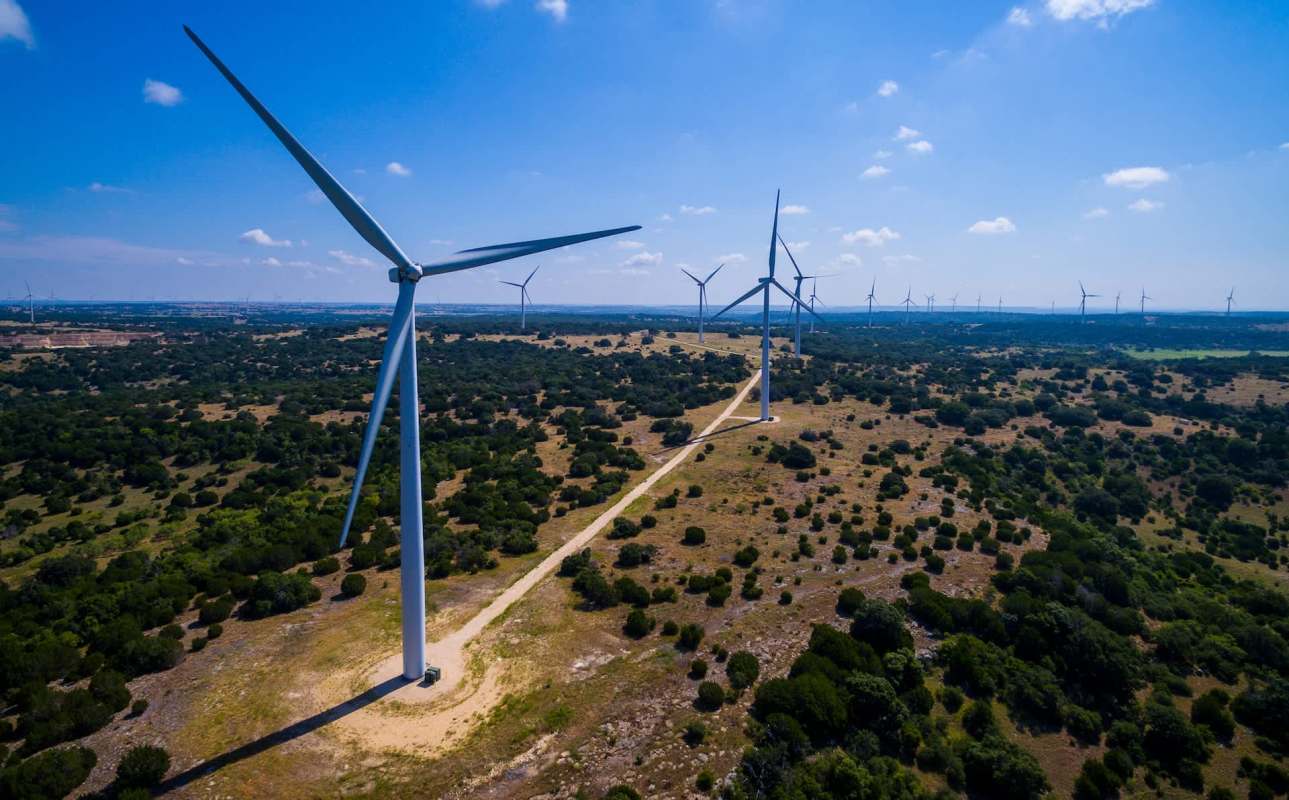
Texas environmentalists are urging lawmakers to put smarter renewable energy guardrails in place instead of general restrictions, Inside Climate News reported.
They argue that Texas can protect wildlife, farmland, and private property while continuing to expand wind power, solar energy, and battery storage. Nominal efforts to block those projects in the name of conservation could ultimately push the state backward.
What's happening?
A new report from the Environment Texas Research & Policy Center and the Frontier Group has found that Texas needs science-based statewide standards to define where renewable projects can go and what requirements they must meet, according to Inside Climate News.
The report's authors argue that without these clear standards, opponents of renewable energy have used conservation issues to stymy clean energy development. The topic has previously come into focus at the legislative level.
For example, state Sen. Lois Kolkhorst introduced one proposal that would have required renewable projects to secure permits that other energy projects do not need, while also requiring wind farms to be farther away from property lines.
Separate bills backed by lawmakers including state Rep. Jared Patterson and state Sen. Kevin Sparks would have "sought to force existing wind and solar companies to buy fossil fuel-based power or connect to a battery storage resource to cover the hours the energy plants are not operating," Inside Climate News reported.
TCD Picks » Quince Spotlight
💡These best-sellers from Quince deliver affordable, sustainable luxury for all




Luke Metzger, executive director of the Environment Texas Research & Policy Center, told the news outlet that the better approach is to require best practices that reduce harm to land and wildlife — not to prohibit renewable projects or make them virtually impossible to advance.
Why is this important?
Supporters of developing more clean, sustainable energy systems say the issue is about more than electricity. Ensuring that the application of conservation measures makes good sense also affects air quality, water supplies, and whether ranching and farming families can keep land that's been in their families for generations.
Texas is already the nation's top state for wind and utility-scale solar, and Sierra Club Lone Star Chapter conservation director Cyrus Reed told Inside Climate News that wind, solar, and storage now supply nearly half of the state's electricity on most days.
The outlet also spoke with Quentin Good, a Frontier Group policy analyst and one of the report's authors, who said Texas consumed more electricity between 2018 and 2023 even as power-plant sulfur dioxide emissions fell 50% and greenhouse gas emissions dropped 11%, with renewable growth helping drive that decline.
"The massive amount of renewable energy and battery storage in Texas is really helping deliver cleaner air and water," Good said.
Environmental advocates say stopping renewable projects could also pose financial pressures for rural families and food systems. Without lease income from wind and solar developments, farmers may not be able to afford to keep properties that have been cultivated over generations.
What's being done?
The report proposes statewide siting standards that would be science-based, predictable, and timely instead of relying on blanket restrictions.
That approach would establish baseline local rules, including setbacks, so cities and counties could not use them to effectively block projects altogether.
The report's authors also called for a tiered review process, with tougher scrutiny for projects in environmentally sensitive areas and a quicker path for lower-impact developments.
Garrett Bader, the American Farmland Trust's smart solar specialist in Texas, told Inside Climate News that could mean directing more solar projects to already developed places such as rooftops and carports instead of prime agricultural land.
Lisa Gonzalez, Audubon Texas' vice president and executive director, told the outlet that developers should work with state and federal wildlife agencies before construction begins, adding that responsible developers already use advanced mapping to avoid sensitive habitats.
"Banning renewables doesn't protect our environment," Metzger told Inside Climate News. "It means more pollution, more water strain, and it undermines those landowners that depend on that income to keep their land intact."

Get TCD's free newsletters for easy tips, smart advice, and a chance to earn $5,000 toward home upgrades. To see more stories like this one, change your Google preferences here.






