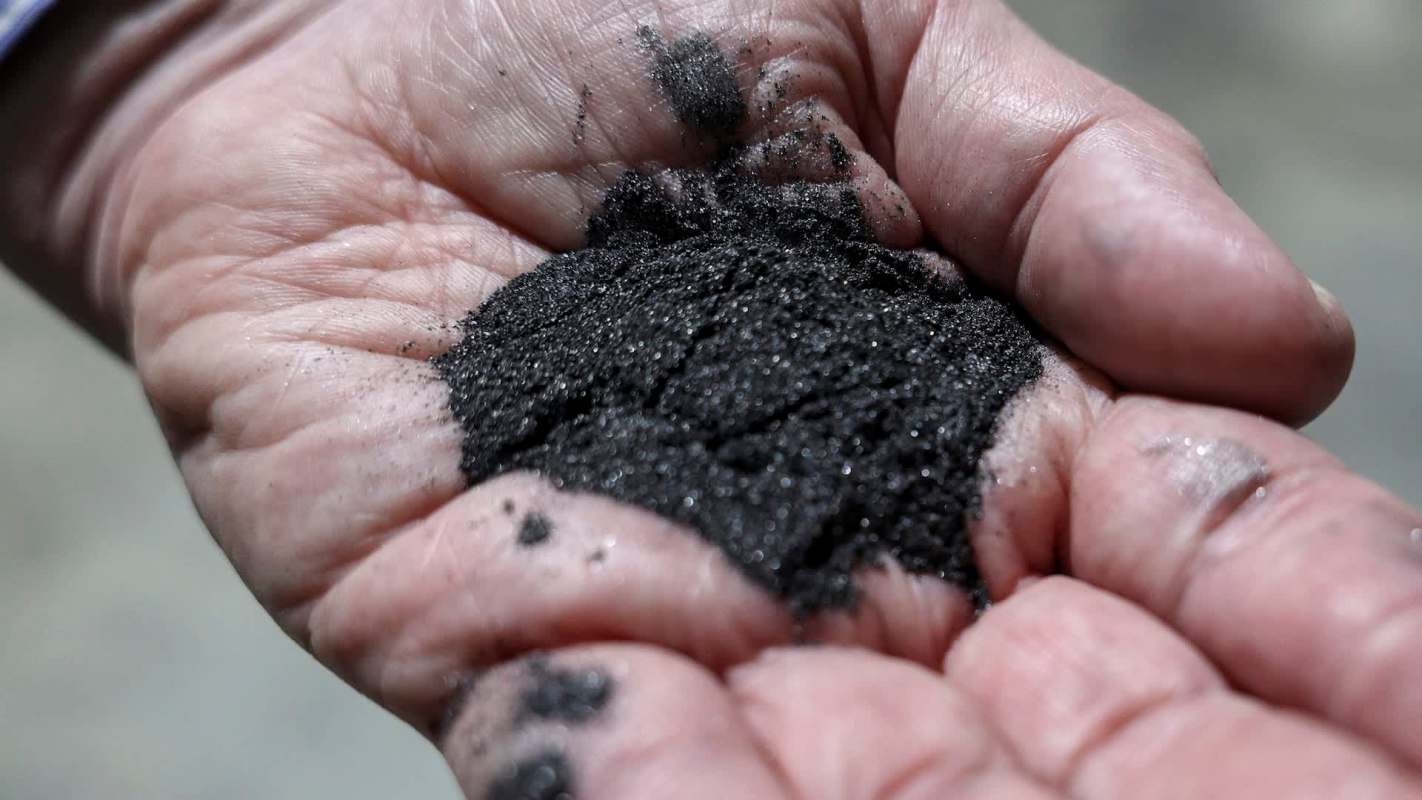
Researchers in Texas transformed a low-cost residue from oil refining into battery-grade graphite in just 0.2 seconds, offering hope for faster electric vehicle charging and less energy-intensive battery manufacturing.
Here's what to know
Petroleum coke, a carbon residue from oil refining, served as the starting material for the Rice University team's work, according to Rice News.
The researchers mixed in a small amount of a nickel-based additive.
The mixture rapidly became highly ordered graphite when a powerful electrical pulse heated it to about 2,500 degrees Celsius (4,532 degrees Fahrenheit). The study, published in the journal Advanced Materials, detailed the material's performance as an anode in lithium-ion batteries.
In testing, the nickel-formed graphite handled charging speeds equivalent to a full charge in four minutes and retained 80% of its capacity after 1,000 charge-discharge cycles.
"This method addresses two major challenges simultaneously: improving battery fast-charging performance and simplifying the production of a key battery material," James Tour, Rice's T.T. and W.F. Chao Professor of Chemistry and the study's corresponding author, explained. "Imagine charging your battery in four minutes."
TCD Picks » Quince Spotlight
💡These best-sellers from Quince deliver affordable, sustainable luxury for all




More background
The rate at which lithium ions enter graphite during charging helps determine how quickly a battery can recharge.
Graphite anodes are common in lithium-ion batteries used in cameras, cellphones, and cars.
Carbon atoms form hexagonal patterns within graphite's stacked layers, each just one atom thick.
By slightly increasing the gap between graphite layers, nickel gave lithium ions greater access during charging. Its tiny particles also helped carbon atoms form orderly layers with few defects in the process.
Along with the potential for faster charging, the process could reduce the energy needed to manufacture graphite, which typically requires sustained exposure to intense heat.
"This method could help make future electric vehicle batteries charge faster while reducing the cost and environmental impact of battery manufacturing," Tour said. "Our analysis suggests it could reduce energy consumption and greenhouse gas emissions by more than 80% compared with conventional graphite production."
What's being done?
To better understand why the process worked, the researchers removed over 99% of the nickel left behind in the material.
The performance benefits remained, suggesting that the improved charging performance came from the structure the nickel helped create, not the nickel itself.
The team also examined the role of temperature. Too little heat produced less orderly graphite, while excessive temperatures caused much of the nickel to disappear.
The research received funding from the Air Force Office of Scientific Research, the Army Corps of Engineers, the Department of Energy's National Energy Research Scientific Computing Center award, and the Welch Foundation.
"What I find especially exciting is that a process lasting just 0.2 seconds can produce graphite with such impressive fast-charging performance," Haojie Zhu, a postdoctoral associate and the paper's first author, said. "Making better materials is not always about using more energy or processing them for longer but about applying the right conditions at exactly the right moment."
Where can I learn more?
The Rice team's approach is part of a broader effort to turn waste into useful materials and cut the energy needed to make them.
• Other Rice researchers used rapid heat to reclaim scarce metal from e-waste while limiting toxic byproducts.
• Oak Ridge scientists turned shopping bag plastic into gasoline at temperatures comparable to those used to cook chicken nuggets.
• Eden Energy built solar storage using 112 used e-scooter batteries, and most retained 90% of their capacity.

Get TCD's free newsletters for easy tips, smart advice, and a chance to earn $5,000 toward home upgrades. To see more stories like this one, change your Google preferences here.