


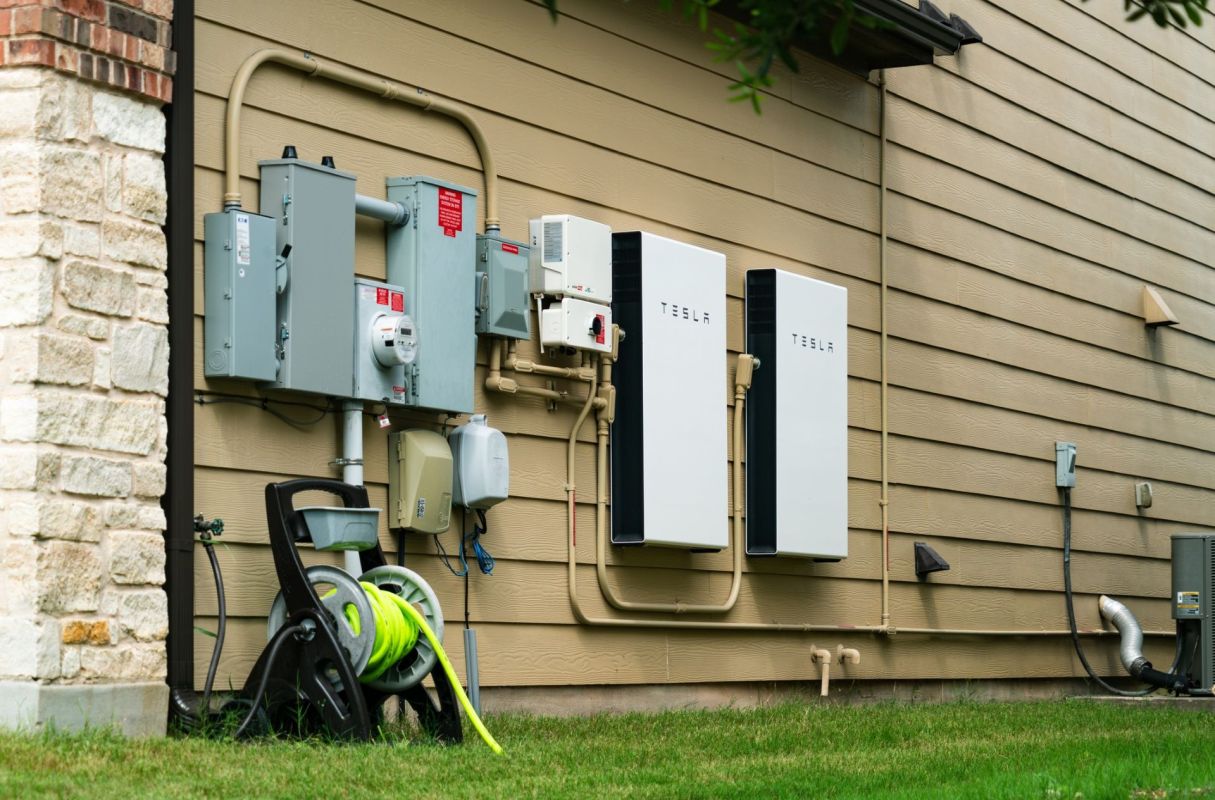
A New York homeowner paid a $70 permit fee after discovering their installer had submitted paperwork for replacement batteries without payment. After a months-long wait for functioning Powerwalls, the homeowner didn't want to add wait time.
Here's what to know
Home battery storage can help homeowners save a significant amount of money on energy. However, Tesla deactivated the homeowner's batteries in August, and two Powerwall+ batteries equipped with solar inverters and a Powerwall 2 were affected, according to the homeowner's Reddit post.
Nothing happened for a few months, until the beginning of November, when the app's support status showed "in review" rather than the earlier "waiting for parts."
At the same time, the homeowner also received a call from their Village Clerk, who informed him of a battery replacement building permit application that was submitted by Tesla. The permit detailed Powerwall 3s, meaning the homeowner would be getting their old Powerwalls replaced with an upgrade. However, there was one issue with that building permit application: it was not paid for yet.
For consumers weighing battery options, EnergySage offers a free resource for exploring products and comparing competitive installation estimates. EnergySage also partners with electrification company Qmerit to help homeowners secure the best available battery storage pricing.
More background
To keep the permit application from being returned to the installer, the homeowner opted to cover the fee. "Knowing how Tesla operates, if I waited for the permit to be pushed back to Tesla for payment," the homeowner wrote about the potential delay. "It might add another month or two before the permit gets approved."
Until then, the homeowner can't turn to the batteries after sunset or during an outage, despite continued electricity production from the rooftop panels.
Working batteries can store solar electricity for use after sunset, helping households become less dependent on the grid. An appropriately configured system can also support off-grid use.
Crushed by your bills? See instant solar savings from vetted installers in just a few clicks With energy prices through the roof, there's never been a better time to go solar — and EasyHome can help you find the best prices from the best installers in your area. EasyHome takes the guesswork and headaches out of energy upgrades by showing you estimated savings from a network of vetted local partners. To get started, just enter your ZIP and share a few details about your home — seeing your estimate is really that easy. |

Beyond backup power, battery storage can offer potential electricity savings by shifting when a household draws power from the grid.
What can be done?
The missing fee issue was resolved through the homeowner's $70 payment after the call with the village clerk. A potential reduction in the system's rated capacity also had the homeowner planning to contact the utility.
They estimated that lowering the rating to 11.4 kilowatts could reduce the charge by around $10 a month, or roughly $120 a year. Their monthly solar fee is based on a 15.2-kilowatt system.
For households seeking a smaller backup option, Pila offers a plug-and-play alternative at a substantially lower price point than whole-home backup systems.
Other owners shared different experiences with their replacements. One commenter reported waiting since early September with two disabled Powerwall+ units, while another said a replacement was installed after roughly eight weeks without a working battery.
Some commenters also reported a good experience: "Our replacement took just about one month from discharge to install," another commenter wrote.
Where can I learn more?
Other homeowners have also reported disabled Powerwalls, unexpected bills, and permitting delays involving home energy equipment. Their stories cover service waits, a battery failure after a firmware update, installation compliance problems, a stalled solar permit, and a recall-related troubleshooting charge.
• In Arizona, a homeowner said the company scheduled service four months out after disabling their Powerwall.
• A firmware update knocked one Powerwall offline, leaving its owner with an installer bill.
• An inspector ordered Powerwalls removed from a basement after a homeowner bought the property.
• In Virginia, a homeowner said their installer's solar project stalled at permitting for five months.
• A Texas Powerwall owner received a $450 troubleshooting bill after a recall notice.

Get TCD's free newsletters for easy tips, smart advice, and a chance to earn $5,000 toward home upgrades. To see more stories like this one, change your Google preferences here.






