


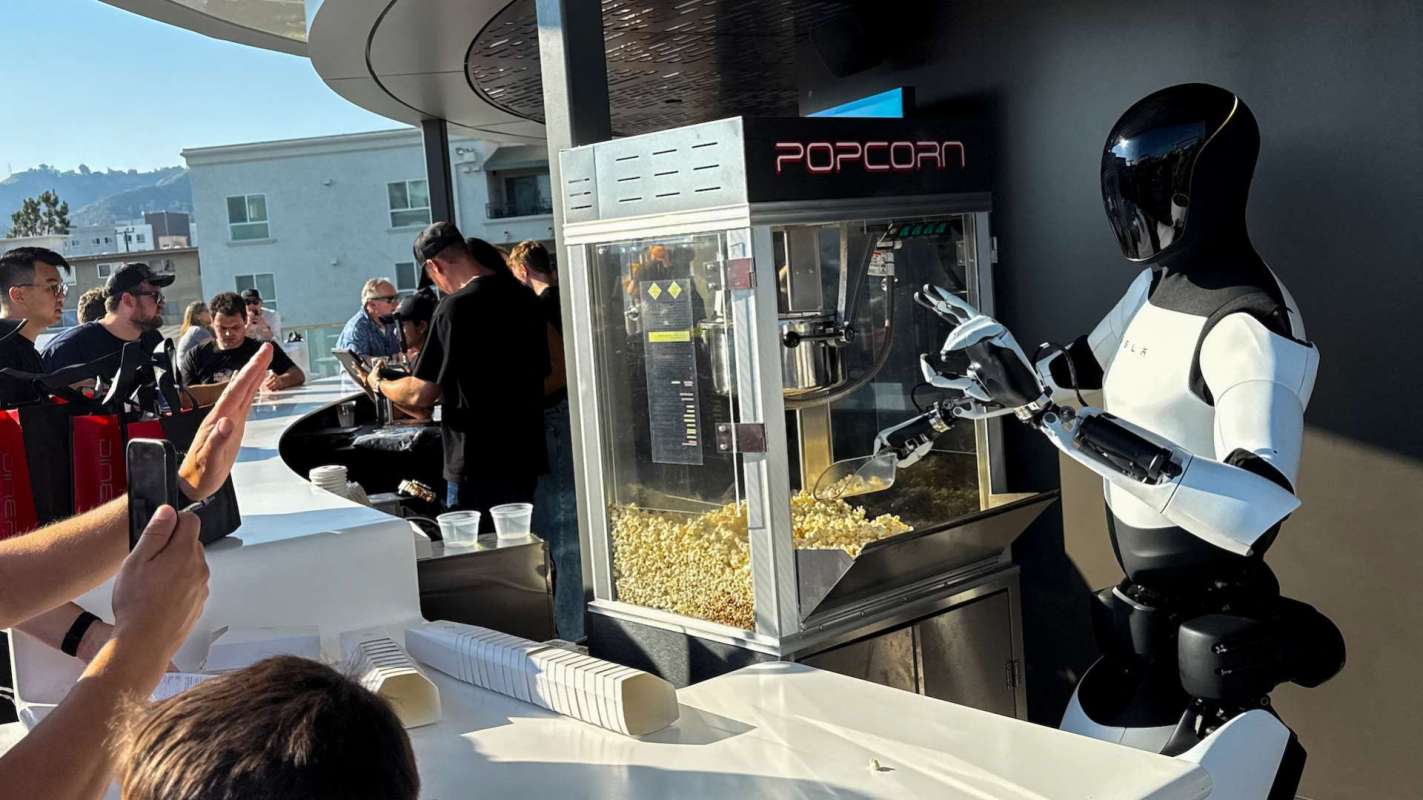
Production of Tesla's Optimus humanoid robot has climbed sharply from a few dozen units a week in the second quarter to several hundred per week in August.
However, the bigger challenge remains making a version that can consistently deliver on the jobs Tesla CEO Elon Musk has laid out for it.
As production increases, weak points are becoming more visible, especially around the robot's hands, factory equipment, and parts sourcing, according to The Information.
Here's what to know
The Optimus V3 machines coming off the line are still used mainly for internal testing, training, and related work rather than commercial deployment.
Tesla aims to produce more than 1,000 Optimus robots a week, with a longer-term goal of about 20,000.
According to The Information, Musk has portrayed Optimus as a key part of Tesla's future, saying the robot could eventually take on work in factories and data centers as well as chores in the home. For now, though, the version in production is still being adjusted and must meet durability and reliability requirements before Tesla rolls it out commercially.
TCD Picks » Quince Spotlight
💡These best-sellers from Quince deliver affordable, sustainable luxury for all




Rather than sell the robots first, Tesla intends to place them with outside commercial customers through leases.
More background
The robot's hand is one of the hardest pieces to scale. Tesla wants it to have humanlike dexterity, but that ambition has made it difficult to manufacture. The hand and forearm contain more than 100 screws and other tiny parts, and workers still assemble much of the system by hand.
The production line is also running into precision problems. Equipment at stations does not always align parts correctly, and robots often have to leave the line for repair.
Optimus can also act unpredictably on certain tasks.
What's being done?
Tesla is updating the robot's hardware and software in parallel. It has reportedly created a replaceable "sensing glove" that contains the hand's touch sensors, and the company plans to add it to the model so a problem would not require replacing the whole hand.
Tesla is also revising its supply chain approach. The company depends on outside suppliers for parts including motors and precision gears, and much of that manufacturing is connected to China. Tesla is evaluating more suppliers, urging some to produce outside China, and offering larger orders to those that can.
On the AI side, The Information reported that Tesla has collected more than 500,000 hours of training data and aims to double that total. To build a library of basic movements, workers and dedicated data collectors have been recording actions such as sorting parts, folding a T-shirt, and wiping a table.
Musk has acknowledged the challenge, saying in July that manufacturing Optimus "is a very complex problem to solve" and that "the production scaling challenge is very substantial."
Where can I learn more?
Other Optimus stories highlight the same gap between Tesla's ambitions for the robot and the practical issues slowing it down.
• Tesla drew criticism after a bizarre robot demo exposed lingering problems with Optimus' performance.
• A newly surfaced Optimus clip quickly raised eyebrows online as viewers questioned the robot's reliability.
• Tesla faced a major setback in Optimus production as China-linked magnet sourcing drew concern.

Get TCD's free newsletters for easy tips, smart advice, and a chance to earn $5,000 toward home upgrades. To see more stories like this one, change your Google preferences here.






