


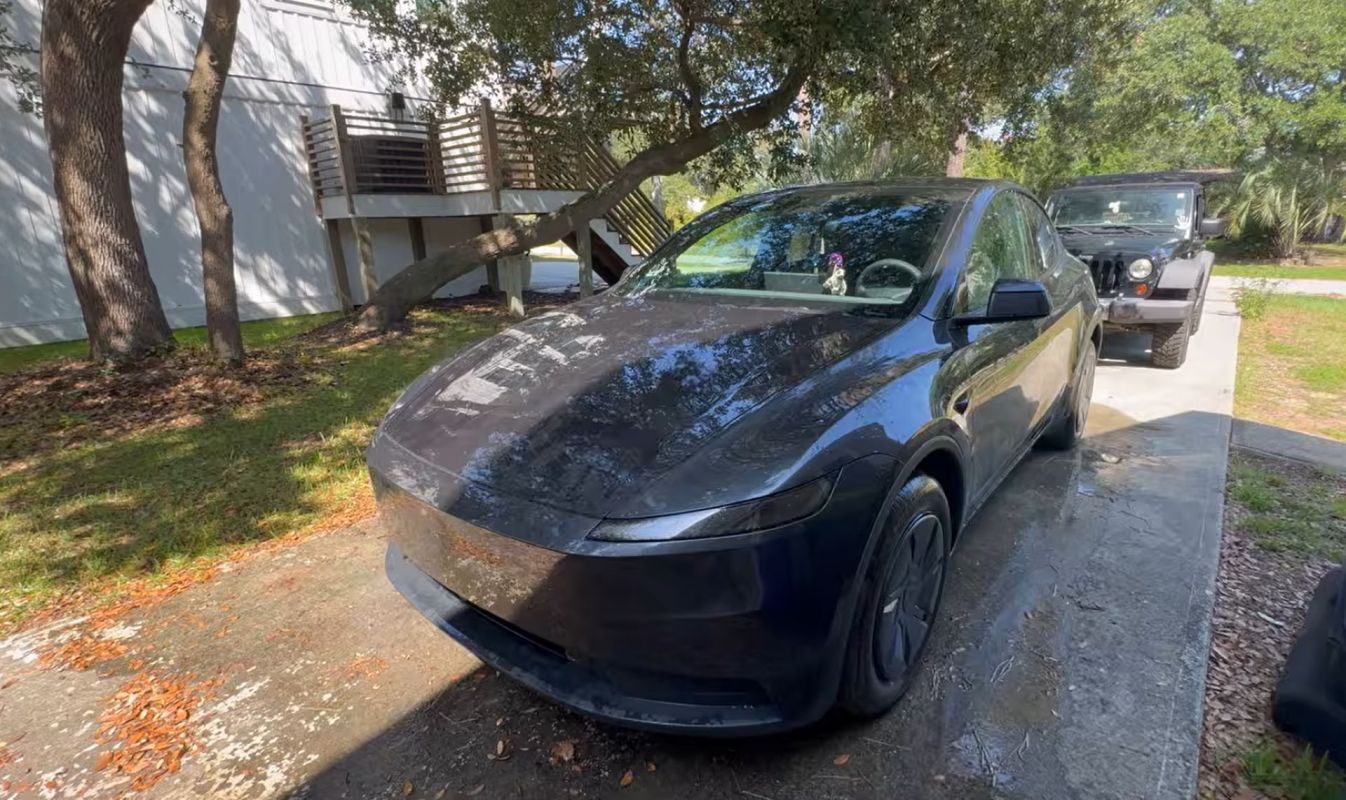
A North Carolina Tesla owner set out to answer a question many electric vehicle shoppers still ponder. What does long-distance electric driving really look like when you stop relying on the official range estimate?
Over more than 1,600 miles of driving between North Carolina and Florida, the Tesla Model Y Standard made six Supercharger stops, racked up $104.65 in charging, and left creator projectMac (@projectMac03) saying the experience was easier than some doubters assume.
Here's what to know
The YouTube video follows a new Tesla Model Y Standard on a road trip of more than 1,600 miles, with the creator using the drive to check highway range, charging-stop frequency, and overall energy consumption.
Tesla rates the vehicle at 321 miles per full charge, but the creator said the car frequently arrived with more battery than Tesla's navigation initially predicted, even while spending most of the trip at about 75 mph.
For the round trip between North Carolina and Florida, the video says the car stopped at Superchargers three times on the way down and three times on the return. On the opening leg alone, the estimated arrival charge of 13% turned into an actual arrival of 22%.
The creator also compared Tesla's drive settings and said "hurry" mode used more battery while reducing travel time, yet didn't substantially change how many times the car needed to charge.
TCD Picks » Quince Spotlight
💡These best-sellers from Quince deliver affordable, sustainable luxury for all




One commenter summed up the takeaway this way: "No but seriously that is actually extremely insane range and efficiency for an electric SUV."
More background
Supercharging for the entire trip cost $104.65, and projectMac was "very confident we would have spent more money in a gas car."
EVs can also reduce routine maintenance costs because they do not need oil changes and generally have fewer moving parts than gas-powered cars. For many drivers, that can mean lower ownership costs over time, in addition to avoiding tailpipe pollution.
The creator said the charging sessions themselves rarely felt like a burden because they lined up with normal stops for food, bathroom breaks, and taking the dog out.
What can be done?
Because efficiency changes with factors such as speed, weather, and drive mode, one road trip won't solve the issue for every driver. Still, this run suggests the lower-cost Model Y can handle long highway travel without unusually long charging breaks.
As described in the video, standard mode delivered the strongest overall efficiency, while hurry mode sacrificed some battery to reach the next stop sooner. One caveat applied to some of the data.
"I admittedly used the estimated navigation percentage and the actual rated miles interchangeably in this video, so I apologize for that!" projectMac wrote in the comments. "But you have all the data to see that we definitely did get great efficiency especially when I was driving on Standard mode and going 75."
Where can I learn more?
This Model Y trip offers a useful snapshot of highway charging costs, stop timing, and how Tesla's route planning holds up in real driving. Other experiences add a larger perspective, ranging from a public charger that cost much more than a nearby Supercharger to what many Tesla and EV owners pay when most charging happens at home.
• A public charger costs nearly double the Tesla charger price nearby.
• At home, Tesla owners say charging at home keeps long-term fueling costs especially low.
• Across the US, drivers paying 5 to 6 cents a mile still beat gas.
• One Tesla owner's cheap at-home alternative sparked arguments about whether electric bills would jump.
Those comparisons show how much EV travel costs can change depending on where and how drivers charge. With that in mind, a 1,600-mile Tesla trip with six stops and a $104.65 charging bill is easier to put in perspective.

Get TCD's free newsletters for easy tips, smart advice, and a chance to earn $5,000 toward home upgrades. To see more stories like this one, change your Google preferences here.






