


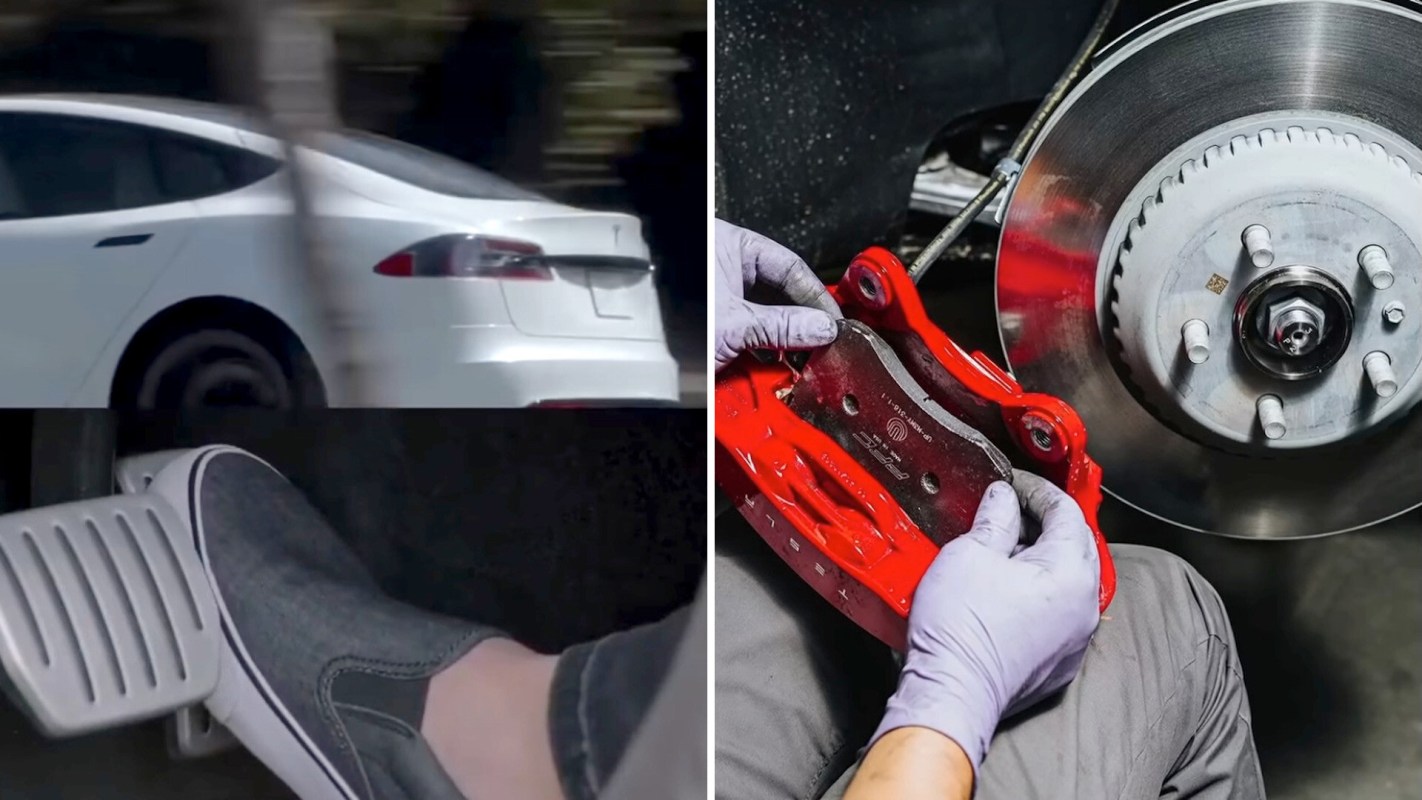
An Australian Tesla Model 3 was still using its factory brake pads when it passed a roadworthy inspection at nearly 300,000 miles. Remarkably, the front pads were only 0.04 inches (1 millimeter) thinner than when new.
Here's what to know
Sam of The Electric Viking (@electricviking) revealed in a YouTube video that Tesla owner Nathan Merritt has averaged roughly 59,000 miles (95,000 kilometers) annually over five years in a 2021 Standard Range Plus Model 3 he bought new.
His total mileage reached about 297,000 miles (478,252 kilometers), which definitely points to the potential for substantially fewer brake replacements.
Even after that much driving, the front pads measured 0.35 inches (9 millimeters), compared with their original thickness of 0.39 inches (10 millimeters). Sam reported 86% remaining capacity for the car's original lithium iron phosphate (LFP) battery, even with frequent Supercharging.
More background
"So, what has gone wrong? Well, not nothing," the creator said. The car needed suspension repairs at approximately 222,000 miles (358,000 kilometers).
The factory steering wheel remained in place, while the seat coverings showed some wear. Tesla's nickel-based long-range batteries also showed durability, according to fleet data Sam cited.
TCD Picks » Quince Spotlight
💡These best-sellers from Quince deliver affordable, sustainable luxury for all




In that survey, the batteries retained 85% of their capacity after approximately 200,000 miles (322,000 kilometers). He used that finding to challenge the idea that only LFP batteries can achieve such longevity.
A Swedish analysis of 10,000 battery tests put nickel-based Model 3 batteries roughly two percentage points behind LFP versions, he added.
What can be done?
Regenerative braking can reduce brake wear for shoppers considering making their next car an EV. In Merritt's Tesla, lifting off the accelerator sends energy back to the battery as the car slows, reducing the work required of the friction brakes.
"If you use full regen, you may never change the brakes," a YouTube commenter claimed.
Still, Sam cautioned against assuming that every EV offers the same experience. He also cited other positive examples of heavily used Teslas, though.
Another Model 3 owner described in the video had replaced the air conditioning and drive unit at approximately 261,000 miles (420,000 kilometers). That car was approaching 311,000 miles (500,000 kilometers), with about 85% battery health, and its owner reported little additional battery degradation over the preceding 50,000 miles (80,000 kilometers).
Other commenters backed up the experiences with the brakes.
"I have 262,000 miles still with original brakes," one wrote.
Where can I learn more?
Merritt's Tesla is one example of how an EV can hold up after years of heavy use.
• A $13,000 Tesla Model S with 140,000 miles still delivered 221 miles of range.
• A Chevrolet Bolt reached 471,000 miles after a used battery swap 330,000 miles earlier.
• In Australia, EVs over five years old averaged 93% battery health in used-car testing.

Get TCD's free newsletters for easy tips, smart advice, and a chance to earn $5,000 toward home upgrades. To see more stories like this one, change your Google preferences here.






