


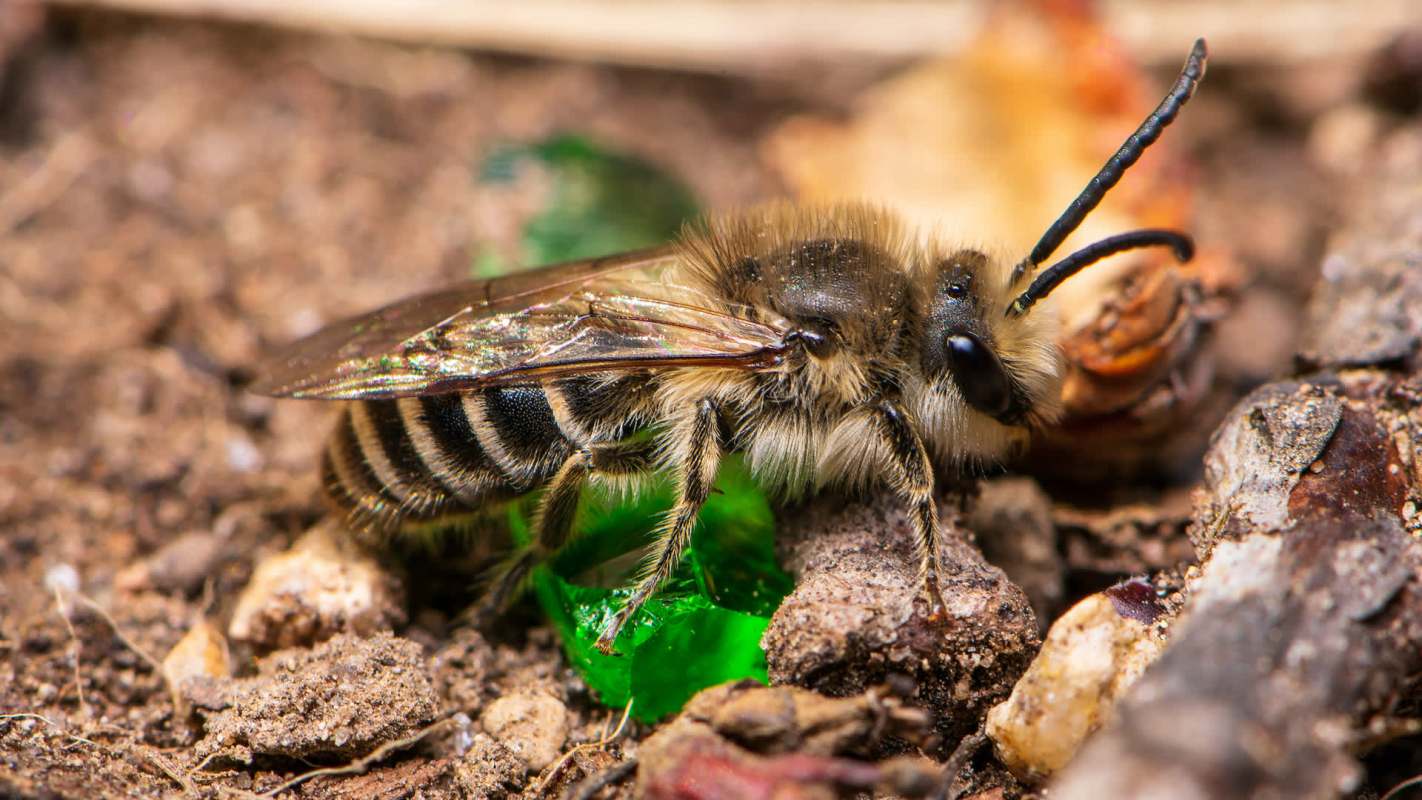
Scientists could learn a lot from a tiny Tennessee bee as they look for ways to keep discarded plastic packaging from lingering in the environment.
The insect appears to make a kind of natural plastic-like material to line its underground nests and protect young bees developing inside.
Here's what to know
Researchers collected nests of Colletes inaequalis bees — or cellophane bees — in Hamblen County, Tennessee, in March 2023 and tracked changes in their nest linings over the next year.
Their study was published in Proceedings of the National Academy of Sciences in November.
Researcher and professor Jonathan Coote led the team, which found signs that the natural "plastic" broke down faster than the silk components of the nest linings.
Despite beginning to break down in soil, the linings remained flexible and retained their form four months later. Cracks appeared by about seven months, and by 11 months, rough handling caused the material to crumble, Earth.com noted in its coverage of the study.
TCD Picks » Quince Spotlight
💡These best-sellers from Quince deliver affordable, sustainable luxury for all




Cellophane bees are solitary insects whose young spend over nine-tenths of their lives inside underground nursery rooms. The bees coat these spaces with a clear lining that likely protects their young and food from fungus and water, according to Earth.com.
More background
The bees' material resembles the common packaging plastic called polyethylene. But polyethylene's strong carbon chains resist breaking down, even in industrial compost.
That resistance is one reason to consider choosing plastic-free products. The bee research also points to another approach: leveraging what we can learn from nature to design materials that break down in soil without spreading contamination or causing harm.
Scientists have already tried adding weaker links to plastic chains so that water or enzymes can break them apart. However, plastics' tightly packed chains can complicate matters.
The bees' material also contains tightly packed links, yet it can break down in soil.
What's being done?
Coote's team wants to uncover the production process behind the bees' durable, degradable material.
It may involve weaker points between its building blocks that leave it more vulnerable to breaking down after being exposed to water or enzymes.
The researchers are also examining whether an enzyme in bee saliva helps both build and dismantle the material, according to Earth.com.
"The goal is to be able to answer that and then engineer it into something that we can make at scale," Coote said in a press release.
Where can I learn more?
Other efforts to tackle plastic waste focus on replacing conventional plastics or finding ways to break them down:
• German biologists identified a "Pac-Man" enzyme that breaks down bioplastics and antibiotics.
• A Maine mother created dissolvable kelp film for laundry pods amid microplastic concerns.
• Researchers turned discarded lobster shells into golf tees, exploring a new revenue stream.

Get TCD's free newsletters for easy tips, smart advice, and a chance to earn $5,000 toward home upgrades. To see more stories like this one, change your Google preferences here.
Cool Picks






