


Archaeologists in Southwestern Spain have made a head-turning discovery dating back to the 5th Century BC.
What happened?
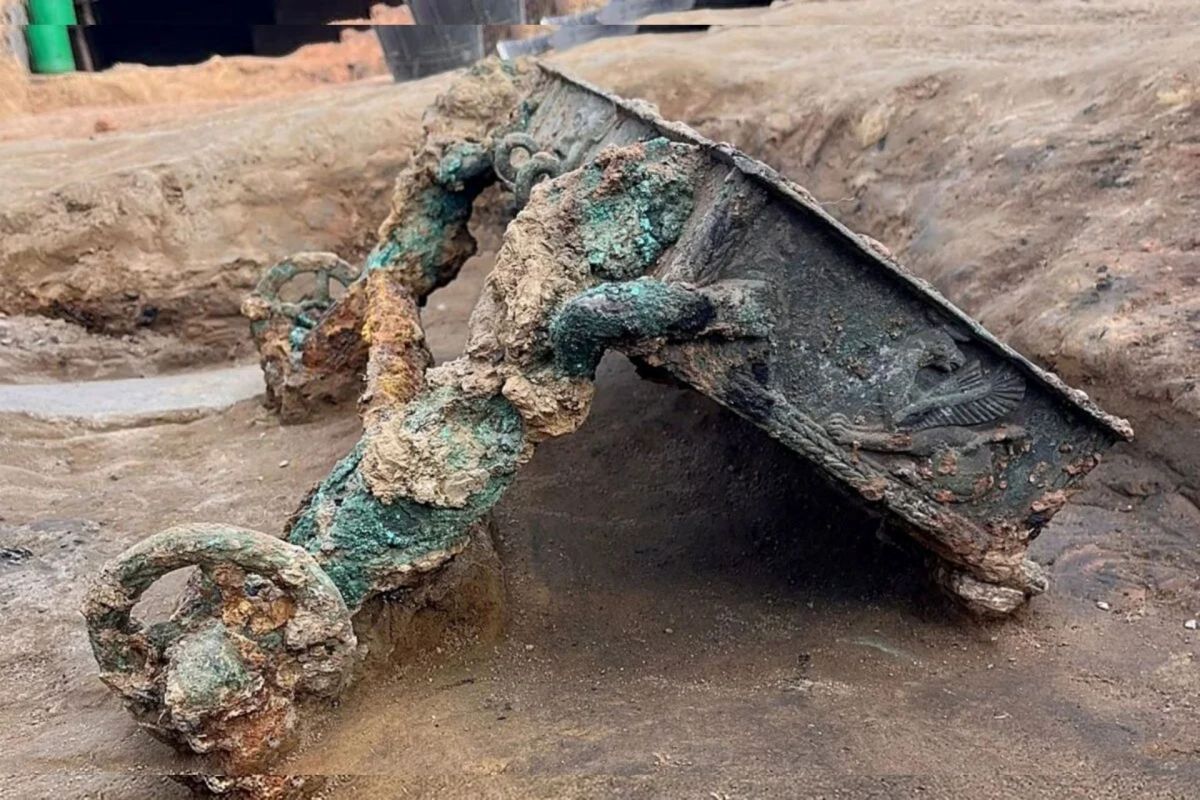
According to Heritage Daily, ongoing excavations of the ancient Tartessian settlement of Casas del Turuñuelo have revealed a bronze chariot. The outlet noted that the "exceptionally rare" item reveals more information about one of the region's most mysterious ancient cultures.
"This is one of the most significant finds made to date at this Tartessian site," said Esther Rodríguez, co-director of the excavation project, as reported by Heritage Daily.
The researchers excavating the site noted that the item is unique in the region, saying it was likely a ceremonial item. While, as Heritage Daily reported, only half of the item survived over time, what is left preserves an extreme level of detailed and decorative metalworking.
Why does it matter?
Researchers also noted that no comparable object has ever been found in the region. Similar ceremonial chariots have only been discovered in central Italy, which, according to Heritage Daily, suggests this example may have originated there or was heavily influenced by the area's craftsmanship.
"The only similar pieces currently known come from the Etruscan world," said Sebastián Celestino, co-director of the project, as reported by the outlet. "This reinforces the existence of trade networks linking Tartessos with different regions across the Mediterranean."
TCD Picks » Quince Spotlight
💡These best-sellers from Quince deliver affordable, sustainable luxury for all




Researchers claim that the object was likely dedicated to a deity and could have been used during feasting ceremonies based on its decorative markings.
Aside from the chariot, Heritage Daily reported that the excavation has uncovered an impressive collection of likely imported goods, including items from Ancient Greek and Egyptian cultures.
"These materials are providing extraordinary information for understanding trade relations between the East and the Iberian Peninsula," Rodríguez said, as reported by the outlet. "We are documenting imports and unique objects that help reconstruct these exchange networks."

Get TCD's free newsletters for easy tips, smart advice, and a chance to earn $5,000 toward home upgrades. To see more stories like this one, change your Google preferences here.






