


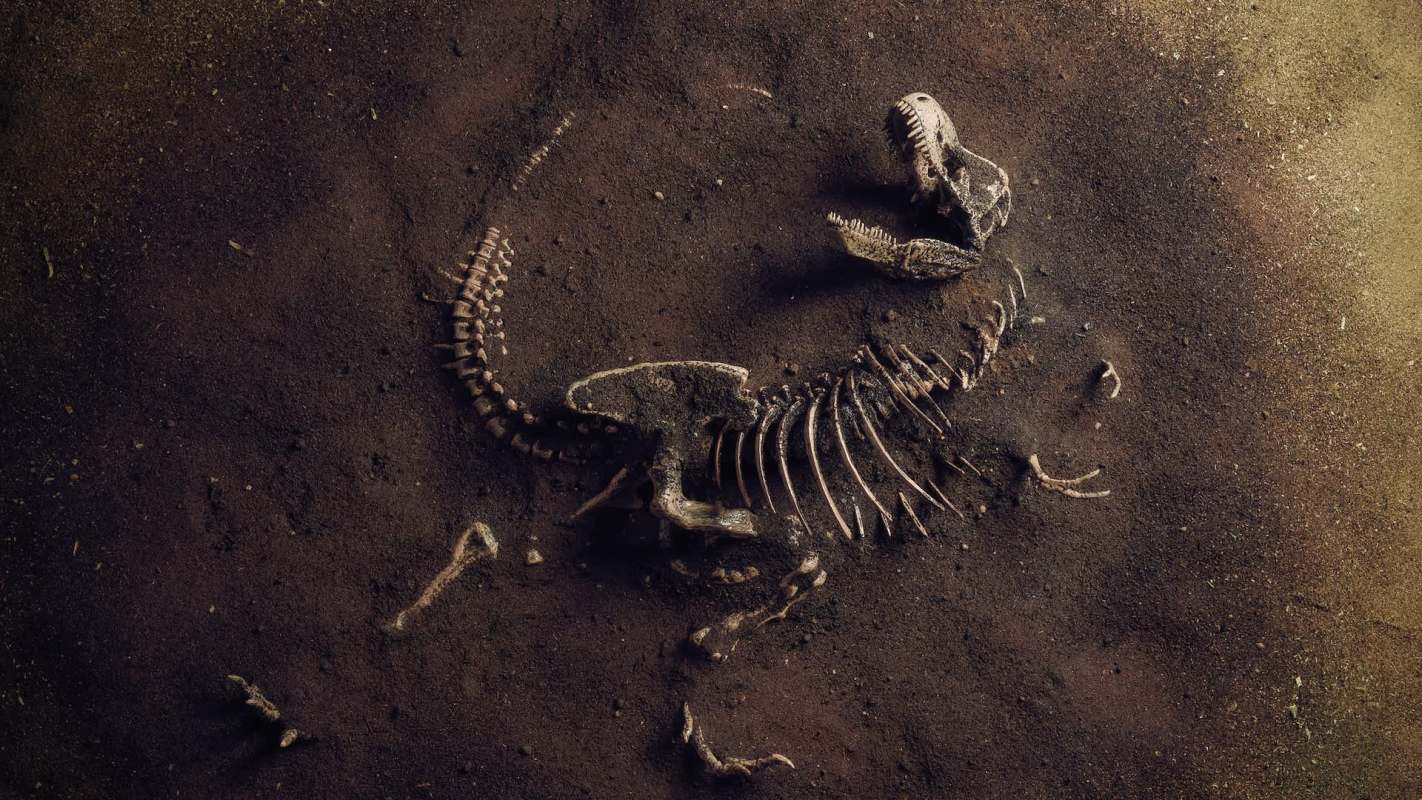
Tyrannosaurus rex was once assumed to be a slow, lumbering reptile that needed the warmth of the sun to move. However, research has since suggested the creature was more active, though whether it needed warm blood to move remained a question.
Fossil teeth may now help sort out which version is more correct, after scientists used dental thermometry to measure the body heat of the T. rex.
Here's what to know
Using chemical traces preserved in T. rex teeth from Montana, researchers calculated a body temperature of about 96.8 degrees Fahrenheit (36 degrees Celsius), according to Ars Technica. That estimate, which is similar to an elephant's body temperature, adds another piece of evidence to suggest that T. rex was warm-blooded.
UCLA geochemists Randon J. Flores and Robert A. Eagle led a study of three T. rex teeth to measure the dinosaur's body temperature.
In older reconstructions, T. rex was often treated as a reptile that needed warmth from its surroundings before it could become active. However, more recent work has recast it as a much more energetic, bird-like animal, like the version popularized in Jurassic Park.
What remained unclear was whether that newer version reflected true endothermy. Did the dinosaur produce body heat internally, as birds and mammals do? Researchers have also argued that different dinosaur groups may have relied on different thermal strategies.
TCD Picks » Quince Spotlight
💡These best-sellers from Quince deliver affordable, sustainable luxury for all




Surprisingly, teeth can provide an answer. Enamel forms while the animal is alive, offering a temperature record tied directly to the body rather than an estimate inferred from bone growth or fossil geography.
More background
As Ars Technica detailed, past efforts to estimate T. rex body temperature often used oxygen-isotope data from bones and teeth. But those readings are also influenced by the chemistry of water in the animal's body, something scientists cannot directly determine in an extinct species.
Flores, Eagle, and their colleagues instead used clumped isotope thermometry. This approach examines how often heavy forms of carbon and oxygen bond together in tooth enamel, with that "clumping" changing according to temperature. Because the enamel formed inside the body, those bonds preserve how warm the animal was when the tooth developed.
All three specimens came from Montana's Hell Creek Formation, a fossil-rich deposit from the period just before the asteroid impact that ended the age of non-avian dinosaurs. Two belonged to a young adult T. rex estimated to weigh more than three tons, while the third was a partial tooth from another individual.
What's being done?
The three teeth examined for the study were provided by the Natural History Museum of Los Angeles County.
The result does not, by itself, completely settle the warm-blooded debate. It does, however, give scientists a more precise measurement and even more evidence that the T. rex was not slow or cold-blooded.
Where can I learn more?
As technology advances, scientists can develop new theories that help explain planet Earth's history.
• Scientists found tiny arms may have evolved as giant predators hunted with their heads.
• The auction of a T. rex fossil alarmed scientists over a lack of access.
• In New Mexico, a buried bone sparked a surprising dinosaur mystery during excavation.
• In Antarctica, an unremarkable fossil proved to be the continent's first dinosaur bone.

Get TCD's free newsletters for easy tips, smart advice, and a chance to earn $5,000 toward home upgrades. To see more stories like this one, change your Google preferences here.






