


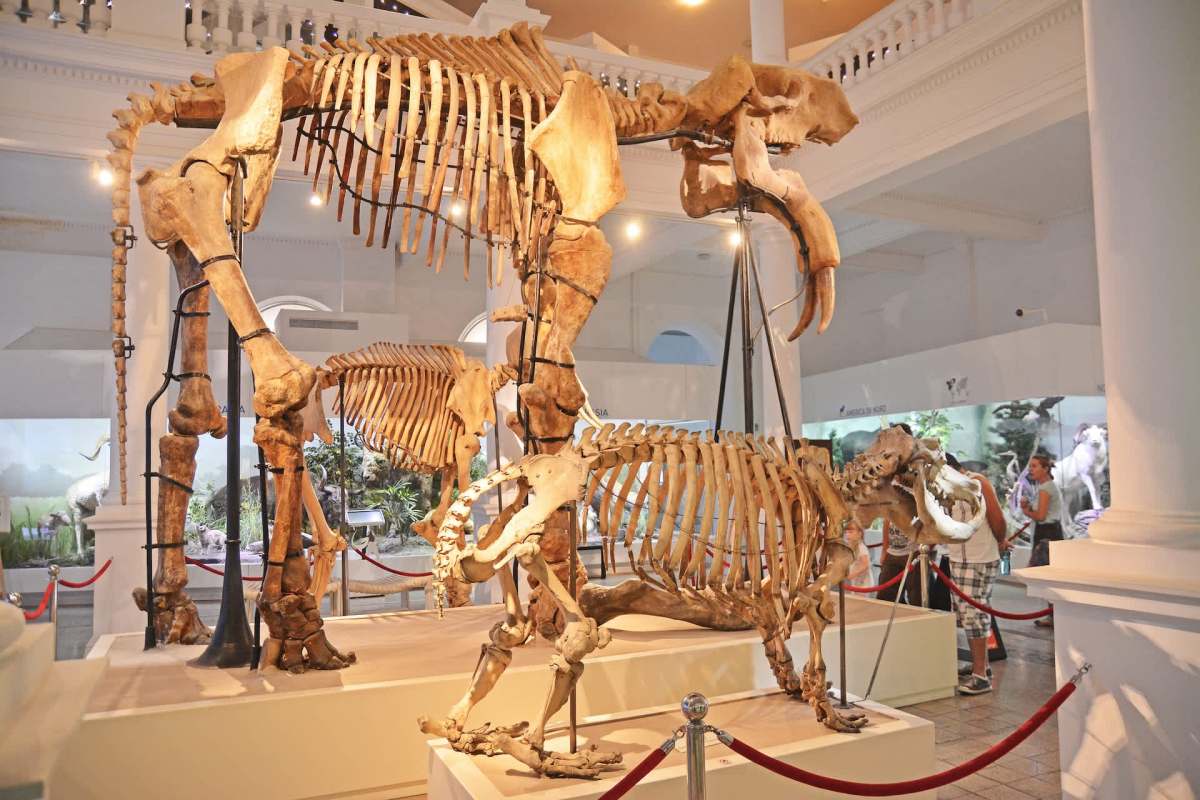
Museum workers may have a new, unlikely candidate for one of the least glamorous jobs in science: stripping flesh from skeletons without damaging the bones underneath.
Researchers in Germany say "superworms" can do that work in hours to days, potentially giving museums and labs a faster, lower-maintenance alternative to more traditional cleaning methods, Smithsonian Magazine reported.
Here's what to know
A study, published July 1 in the journal PLOS One, detailed experiments in which researchers used Zophobas morio larvae — better known as superworms — to clean animal remains.
The research found that the insects could efficiently strip away soft tissue while leaving the bones unharmed.
"Superworms are really fast compared to other traditional methods. They are more environmentally friendly and their maintenance is super easy," study co-author Niloofar Alaei Kakhki, a bioinformatician at the State Museum of Natural History Stuttgart in Germany, told Science magazine.
Working with the remains of eight species — including a gray wolf, an Egyptian fruit bat, a Eurasian eagle owl, a house mouse, and an alligator gar — Alaei Kakhki and her colleagues first skinned the carcasses and removed the organs.
TCD Picks » Quince Spotlight
💡These best-sellers from Quince deliver affordable, sustainable luxury for all




For larger specimens, they also boiled the remains to soften the tissue. Their tests suggested that the best results were obtained using 283 to 425 superworms per ounce of carcass.
For museums, avoiding damage to fragile skeletons is critical since rough handling, excessive boiling, or loose insects can all ruin specimens.
In the study, that preferred density let the larvae clean in anywhere from hours to days, depending on size, without harming bones.
More background
Existing ways of preparing skeletons all involve compromises.
As Smithsonian Magazine noted, museums use chemicals, boiling, and dermestid beetle colonies, but those methods can add labor and energy use or pose risks to the specimens themselves.
The superworm finding appears to stem from an improvised feeding choice.
Researchers were already keeping the larvae to feed injured wild birds and normally gave them vegetable scraps, but when those ran out, they offered a leftover chicken bone.
According to Smithsonian Magazine and Live Science, the speed at which the worms removed the remaining meat suggested a possible application in museums.
One reason the larvae may appeal to museums is that, unlike dermestid beetles, they can stay in their larval form for months when kept in groups, as Smithsonian Magazine noted. That may lower the chances of a breeding colony spreading through a collection.
Mike Rutherford, curator of zoology and anatomy at the Hunterian Museum & Art Gallery at the University of Glasgow, posited that superworms might be "a less risky way of having insects," per Science.
If that proves practical, museums may not need the kind of specialized beetle colony kept in secure housing.
A simpler setup for superworms could be easier to manage and less likely to threaten other preserved specimens.
What's being done?
Researchers are presenting superworms as an option, not a replacement, for established methods.
They also found that the larvae can be reused — after each cleaning cycle, the insects went back to a vegetable-based diet and were given time to recover before being used again.
"You can reuse the same larvae for almost six months," Alaei Kakhki told NPR.
In a video shared by the journal, Alaei Kakhki said: "The first step is just trusting the new approach. As soon as they just try once, even on a very small scale, they can see the big differences between this approach and the traditional approach."
In an email to Live Science, Alaei Kakhki and study co-author Morteza Monfared, a zoologist at the Ferdowsi University of Mashhad in Iran, summarized their findings.
"Every preparation method has its own strengths and limitations, and the best choice depends on the type of specimen and the goals of the researcher," they noted, adding, "Based on our experience, we believe it offers an excellent balance between cost, efficiency, safety, and specimen quality."
Where can I learn more?
These articles follow a similar thread across biology, preservation, and the strange ways in which unusual specimens can prove useful.
Superworms are showing up in other research because of what they can consume, while finds in Poland and Pennsylvania highlight how remains and artifacts can yield unexpected clues.
• Scientists found that superworms with an unusual diet may also help break down plastic waste.
• In Poland, archaeologists showed cremated teeth are unreadable far less commonly than once assumed.
• In Pennsylvania, a dumpster diver discovered a disturbing find inside aging medical equipment.
Museum and research work often moves forward through evidence that seems odd at first. The willingness to follow unexpected leads is part of what makes the superworm approach so interesting.

Get TCD's free newsletters for easy tips, smart advice, and a chance to earn $5,000 toward home upgrades. To see more stories like this one, change your Google preferences here.






