


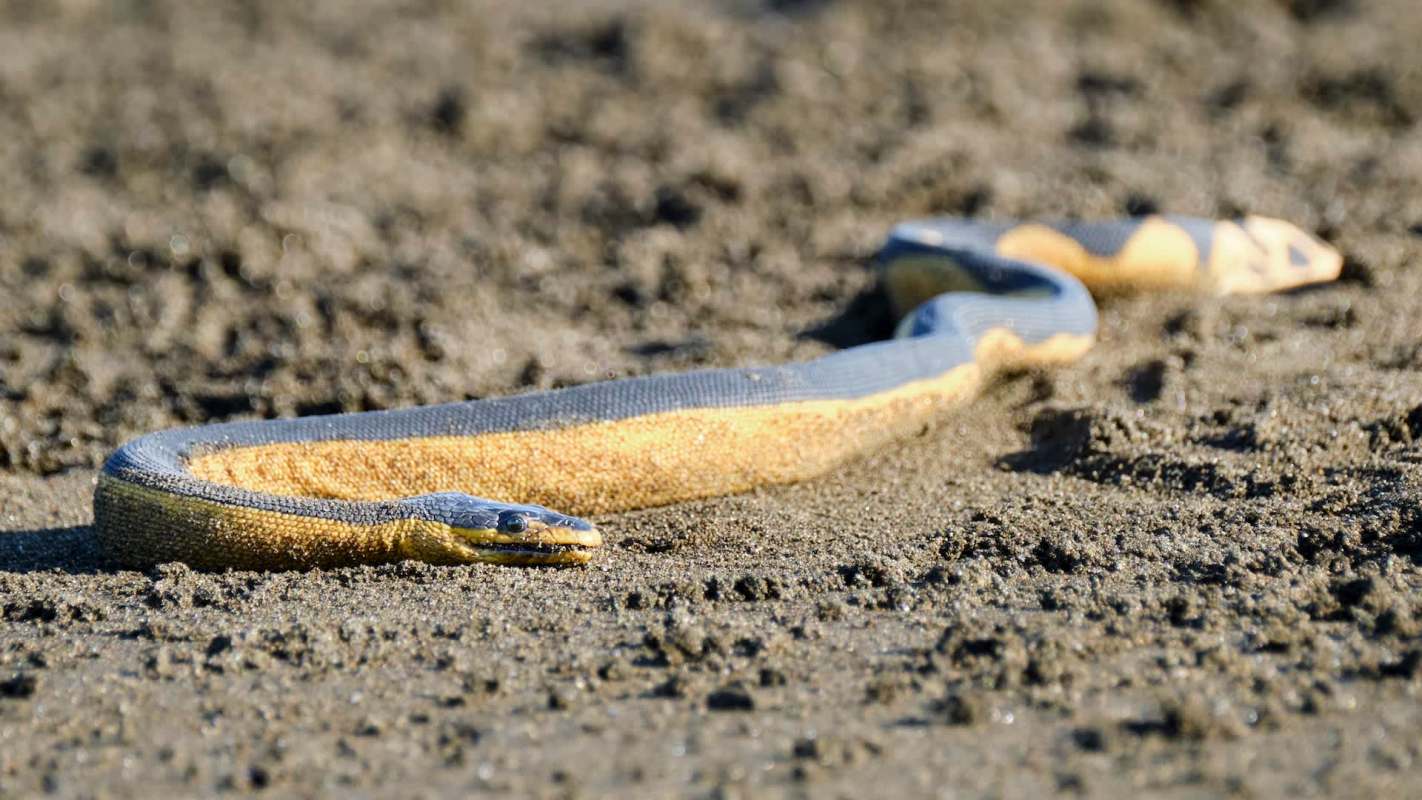
A Super El Niño may warm Pacific waters enough to bring an unusual animal into Southern California surf: the highly venomous yellow-bellied sea snake. Scientists say the tropical species could be carried far outside the waters where it is usually found.
Here's what to know
Normally associated with tropical parts of the Pacific and Indian oceans, the yellow-bellied sea snake may drift north as coastal waters warm, according to Surfer. Douglas McCauley of UC Santa Barbara said that same temporary shift toward more tropical conditions could also bring hammerhead sharks and other warm-water species to the region.
Documented appearances of the venomous reptile in Southern California are scarce. Surfer reported that the snake found in Newport Beach in January 2018 was only the fifth recorded case in the region since 1972, and three of the earlier sightings happened during the strong 2015-16 El Niño.
When ocean temperatures surge, animals that usually stay much farther south can be swept or drawn into unfamiliar habitat, including heavily trafficked beaches used by swimmers, surfers, paddleboarders, and anglers.
More background
El Niño is a natural climate pattern, but it is unfolding in an ocean already heated by human activity. Pollution from burning coal, oil, and gas has raised baseline sea temperatures, which can make temporary warm phases more disruptive and increase the chances of unusual marine visitors reaching populated coastlines.
Yellow-bellied sea snakes are not part of the region's expected beach wildlife, so even a small number of sightings could alter shoreline safety during unusual warm-water seasons.
TCD Picks » Quince Spotlight
💡These best-sellers from Quince deliver affordable, sustainable luxury for all




Warm-water arrivals can also have effects beyond the beach. They may shift predator-prey relationships, disrupt local food webs, and serve as a warning that marine ecosystems are being pushed beyond their historic norms.
As warming and habitat disruption reshape where animals can live, human-wildlife encounters can become more common.
What can be done?
If tropical species do appear along the coast, quick reporting by surfers, fishers, and beachgoers can help lifeguards and wildlife officials track where they are showing up and determine whether public warnings are needed.
Anyone who spots an unfamiliar snake or other marine animal near shore should keep a safe distance and avoid trying to touch, capture, or relocate it. Animals pushed outside their normal ranges may be stressed or disoriented, and handling them can put both people and wildlife at risk.
Reducing the heat-trapping pollution that is warming oceans and scrambling species ranges would address the underlying conditions over time. Cleaner energy choices, less wasted electricity, and support for climate-ready coastal planning can help limit the conditions that make these encounters more likely.

Get TCD's free newsletters for easy tips, smart advice, and a chance to earn $5,000 toward home upgrades. To see more stories like this one, change your Google preferences here.






