


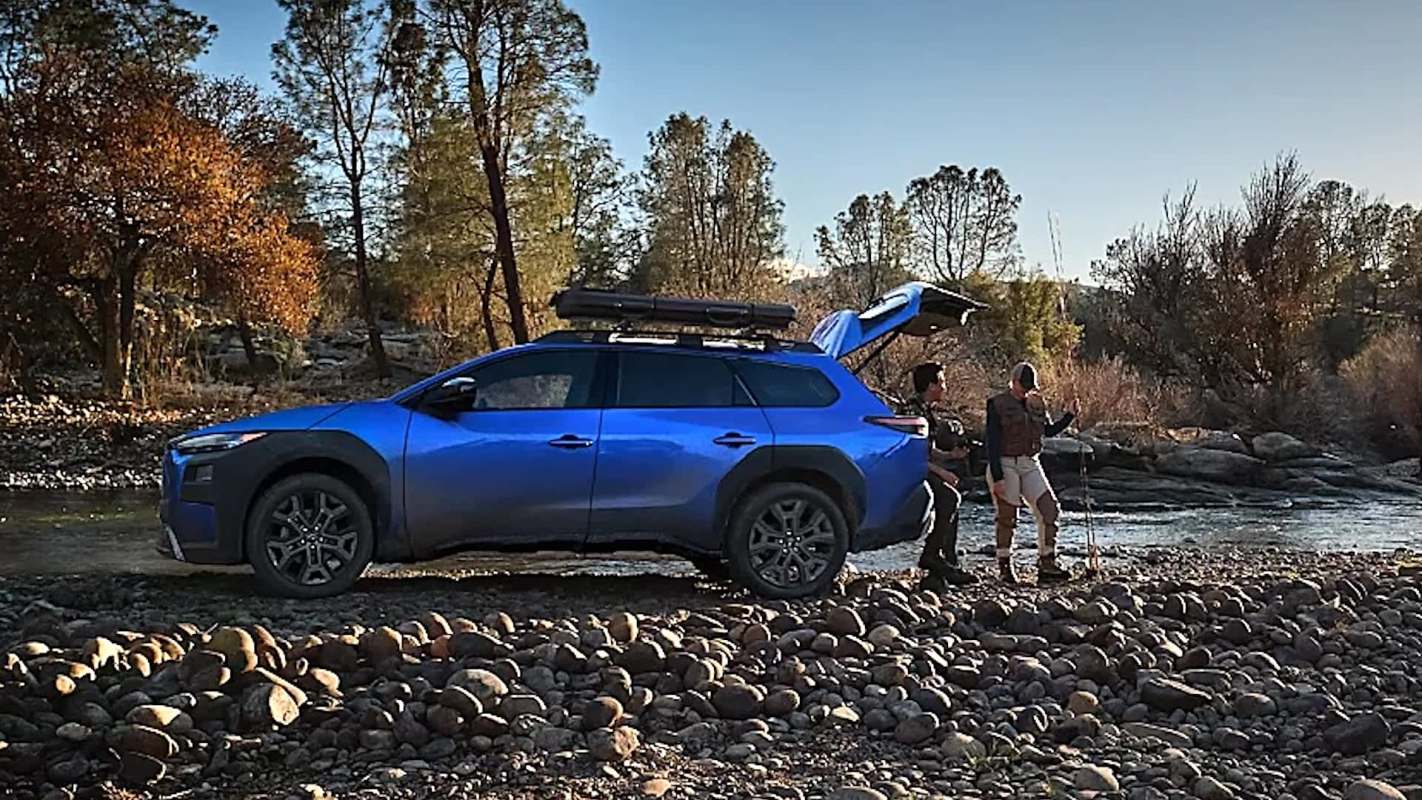
Subaru's upcoming Trailseeker EV faced a demanding early showcase in Australia, where a 1,243-mile (2,000-kilometer) road trip was used to see whether the electric wagon could handle the kind of off-the-beaten-path driving that many buyers still do not automatically link with battery-powered cars.
For drivers comparing EVs, the exercise was about more than how far the vehicle could travel. It also spotlighted Subaru's attempt to sell electric adventure capability as a defining strength, particularly in situations where a Tesla Model Y might feel less suited.
What's happening?
In a road trip review published on YouTube, the 2026 Subaru Trailseeker was presented as a very different proposition from Tesla's best-selling Model Y.
Instead of focusing solely on pavement manners, the reviewer emphasized equipment designed for rougher use.
The Trailseeker was described as an all-electric successor to the Outback, with 8.3 inches (211 millimeters) of ground clearance, Subaru's symmetrical all-wheel drive, X-Mode settings for slippery surfaces, downhill assist, and a terrain-view monitor.
The review also spent significant time on cost. In the United States, the Trailseeker starts at about $40,000, the reviewer said, compared with roughly $49,000 for the Model Y Long Range before fees.
TCD Picks » Quince Spotlight
💡These best-sellers from Quince deliver affordable, sustainable luxury for all




In Australia, a recent price cut brought the Trailseeker all-wheel-drive model to 64,000 Australian dollars, while the Model Y Long Range all-wheel-drive is listed at 69,000 Australian dollars before added order and delivery fees.
The video said Subaru couples that lower price with a 74.7-kilowatt-hour CATL battery rated for up to 331 miles (533 kilometers), then used the trip to examine highway efficiency, fast charging, and real-world usability.
Why does it matter?
One of the biggest barriers to EV adoption is the belief that buyers have to give up practicality or versatility.
A model with extra clearance and off-road traction could help widen the market for people who want electric driving without sacrificing camping, snow travel, or rough-road capability.
It also adds pressure in a segment Tesla has long dominated. If Subaru can offer more space, greater ruggedness, and a lower entry price, some buyers may decide they no longer need the default option.
EVs already offer major day-to-day benefits, including lower fuel costs and reduced routine maintenance, as they do not require oil changes and generally have fewer moving parts than gas-powered vehicles.
A vehicle that combines those savings with genuine adventure utility could be especially appealing for families that want one do-it-all car.
That broader shift has been evident across the industry, as automakers roll out more specialized electric models rather than treating EVs as niche commuter cars.
What can I do?
Switching to an electric vehicle can result in significant long-term savings on fuel and maintenance, making it a smart financial choice for many drivers.
Public fast charging is useful for road trips, but charging an EV at home is usually much cheaper than relying on public chargers.
If home charging is an option, Qmerit provides free, instant installation estimates for faster Level 2 chargers.
Tire choice, clearance, traction software, and vehicle height can matter just as much as battery size when the pavement ends.
As the reviewer put it, these are "two electric SUVs and two completely different philosophies," and the most striking difference may be that "the Subaru undercuts the Tesla, even though it's a bigger car, by roughly 9,000."

Get TCD's free newsletters for easy tips, smart advice, and a chance to earn $5,000 toward home upgrades. To see more stories like this one, change your Google preferences here.






