


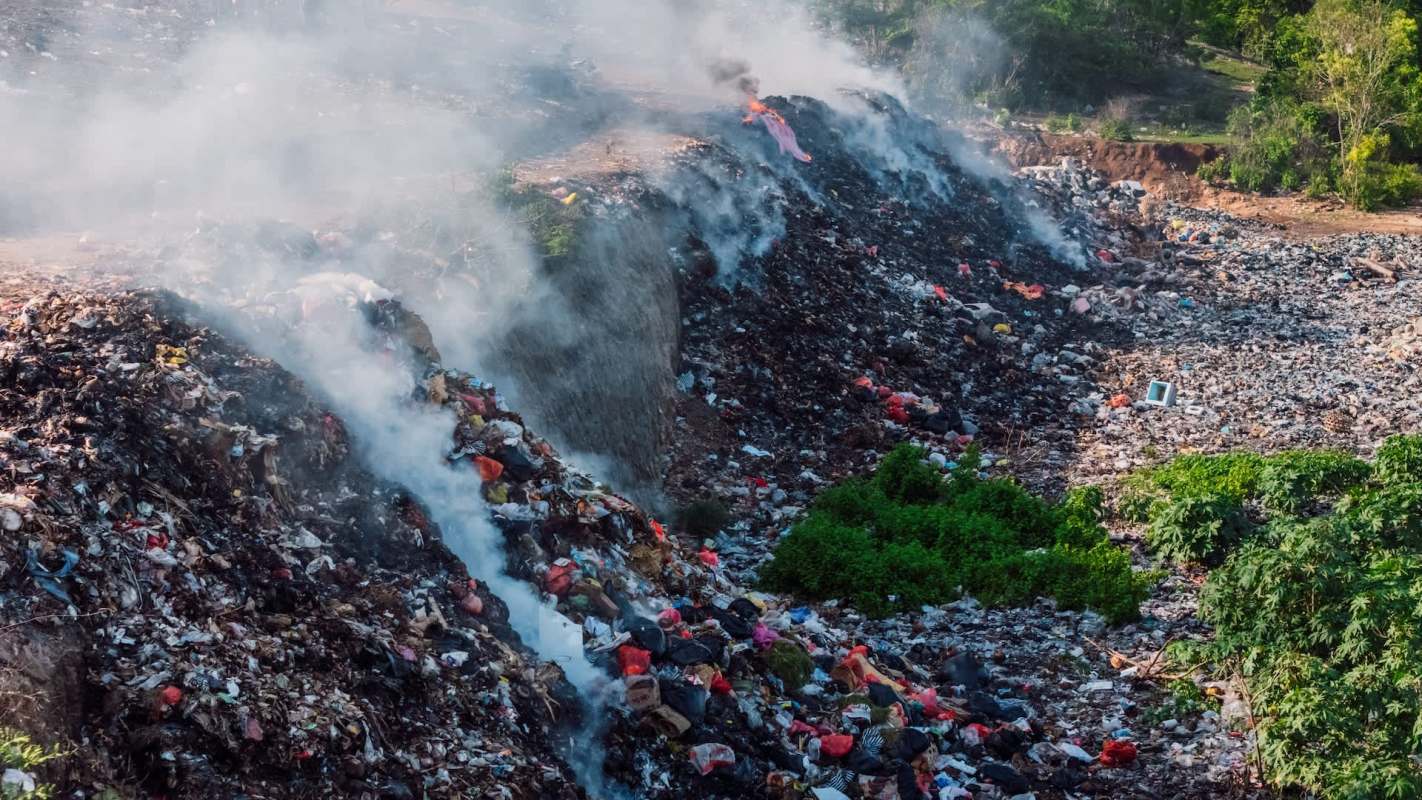
A new study is casting fresh scrutiny on what happened after China stopped accepting the world's plastic waste in 2018 — and the findings are grim.
Rather than slowing exports, several wealthy countries appear to have redirected their trash to Indonesia, where researchers said the air grew more dangerous to breathe, reported Phys.org.
The research was led by Ellen Considine of the University of Colorado Boulder's Cooperative Institute for Research in Environmental Sciences.
Using satellite data, Considine and co-author Rachel Nethery of Harvard's T.H. Chan School of Public Health examined 356 Indonesian open dump sites before and after China's ban.
They found that average fine particulate levels at those sites were 3.3% higher in 2018 and 2019 than they were from 2012 to 2017.
The study suggested wealthier nations may relieve a waste problem at home by shifting it elsewhere.
TCD Picks » Quince Spotlight
💡These best-sellers from Quince deliver affordable, sustainable luxury for all




In this case, it suggested the consequences fell on communities with fewer resources to manage the additional trash safely.
"When high-income countries ship plastic waste to low- and middle-income countries, more plastic waste tends to be burned," Considine said, per Phys.org. "This releases air pollutants that can cause respiratory disease, cancer, or even death to local residents."
Fine particulate matter, often called PM2.5, is especially dangerous because the particles are small enough to enter the lungs and bloodstream.
Researchers said it is the pollutant of greatest concern for human health.
The rise in pollution was tied to roughly 1.9% higher lung-cancer mortality risk and about 3.5% greater risk of death from lower respiratory infections.
Indonesia has patchy municipal waste collection, and solid waste is often burned in the open. That means plastic shipped from abroad may be more likely to end up dumped and burned, sending toxic pollution into nearby neighborhoods.
Researchers said the chain reaction appears to have started with China's policy shift and then continued as exporting countries rerouted waste elsewhere.
Considine said earlier research was often limited to a small number of places over a short period.
"Our approach is powerful," she said, because it made it possible to track air pollution changes across a much larger region and time frame.
The findings also align with import-ban steps taken by Indonesia and Malaysia.

Get TCD's free newsletters for easy tips, smart advice, and a chance to earn $5,000 toward home upgrades. To see more stories like this one, change your Google preferences here.






