


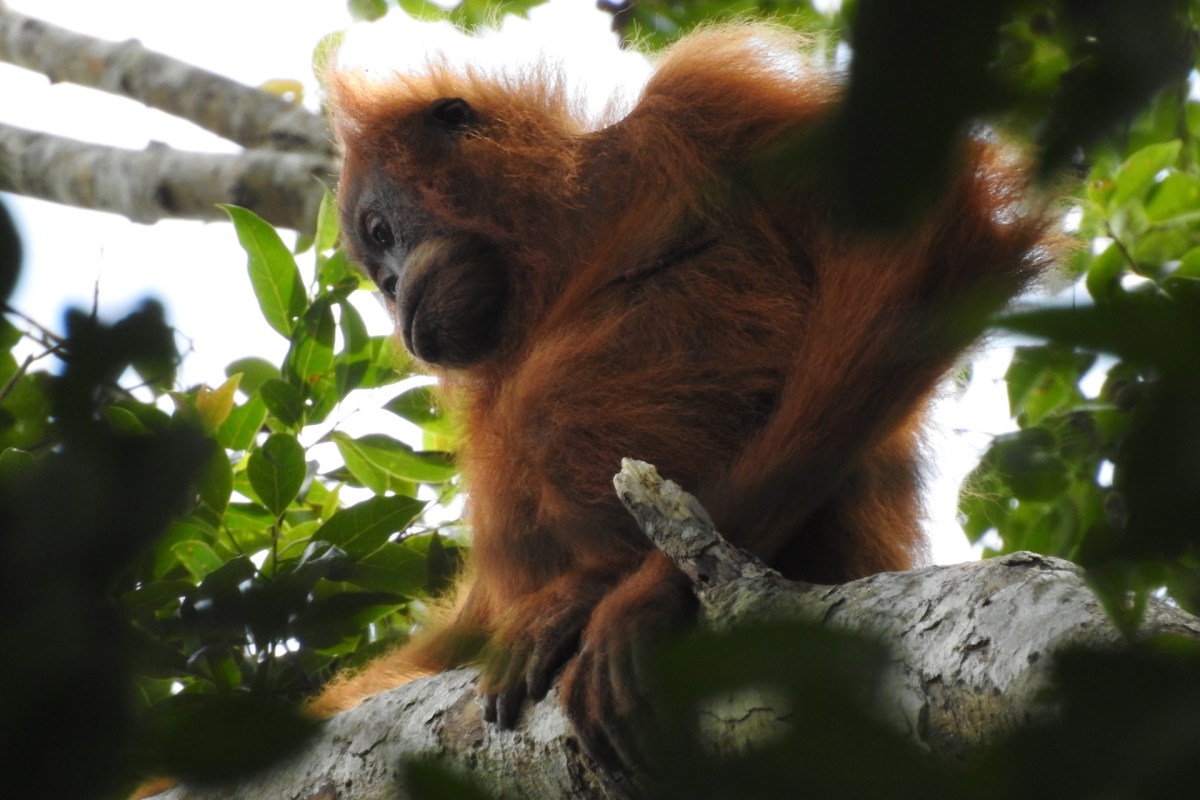
Researchers say storm damage in Indonesia may have killed 58 Tapanuli orangutans, about 7% of the species worldwide.
According to Mongabay, the event could be an early documented example of rising global temperatures creating an immediate threat to an entire species' survival.
The same steep region, prone to floods and landslides, is also home to nearby communities that become more vulnerable when extreme rainfall overwhelms even healthy forests.
What happened?
In November 2025, Cyclone Senyar brought heavy rain to North Sumatra's Batang Toru ecosystem, the only place on Earth where Tapanuli orangutans live.
A new study published in Current Biology found that the storm triggered landslides across the area.
The critically endangered great ape has fewer than 800 individuals left.
TCD Picks » Quince Spotlight
💡These best-sellers from Quince deliver affordable, sustainable luxury for all




Satellite analysis identified more than 50,000 landslide scars and suggested that around 8,300 hectares of forest were affected in Batang Toru's western block, the species' main stronghold.
The study authors said the landslides likely killed about 11% of the orangutans in that area alone.
Erik Meijaard, managing director of Borneo Futures and a co-author of the study, told Mongabay: "If you get caught as an orangutan or any wildlife, and it's a very steep, dissected area, so if anything comes down, it comes down at great speeds, survival chances are going to be very minimal."
Why does it matter?
Researchers said human-caused rising global temperatures likely made Cyclone Senyar's rainfall 9% to 50% more intense, turning a rare weather event into a much deadlier one.
The estimate of 58 deaths may be conservative because the study did not include possible deaths caused by canopy collapse outside mapped landslides, starvation, injuries, or longer-term habitat damage.
Tapanuli orangutans reproduce very slowly, with females giving birth only once every six to nine years.
Even sustained annual losses of more than 1% can push orangutan populations closer to extinction, Mongabay reported, summarizing prior studies.
Once rainfall crosses a critical threshold, even intact forests may be unable to prevent slopes from collapsing.
Healthy forests are often seen as natural protection against floods and landslides for nearby communities.
Friederike Otto, a professor of climate science at Imperial College London and a study co-author, said: "This just shows how closely linked the climate crisis and biodiversity loss [are], and that we cannot stop the latter if we're not addressing the former."
What are people saying?
Serge Wich, a primatologist at Liverpool John Moores University and a study co-author, said the deaths are especially alarming because they come "on top of mortality that's already so high that they're under threat already."
The Indonesian forest ministry told Mongabay it "appreciates and is taking into consideration" the research and added that stronger collaboration is needed to restore damaged habitat and protect the remaining forest.
Others are calling for more immediate action.
Amanda Hurowitz, forest commodities lead at Mighty Earth, criticized the decision to allow major industrial projects to move forward in the area, saying it "makes no sense and completely contradicts President Prabowo [Subianto]'s stated goal to end deforestation and protect nature."

Get TCD's free newsletters for easy tips, smart advice, and a chance to earn $5,000 toward home upgrades. To see more stories like this one, change your Google preferences here.






