


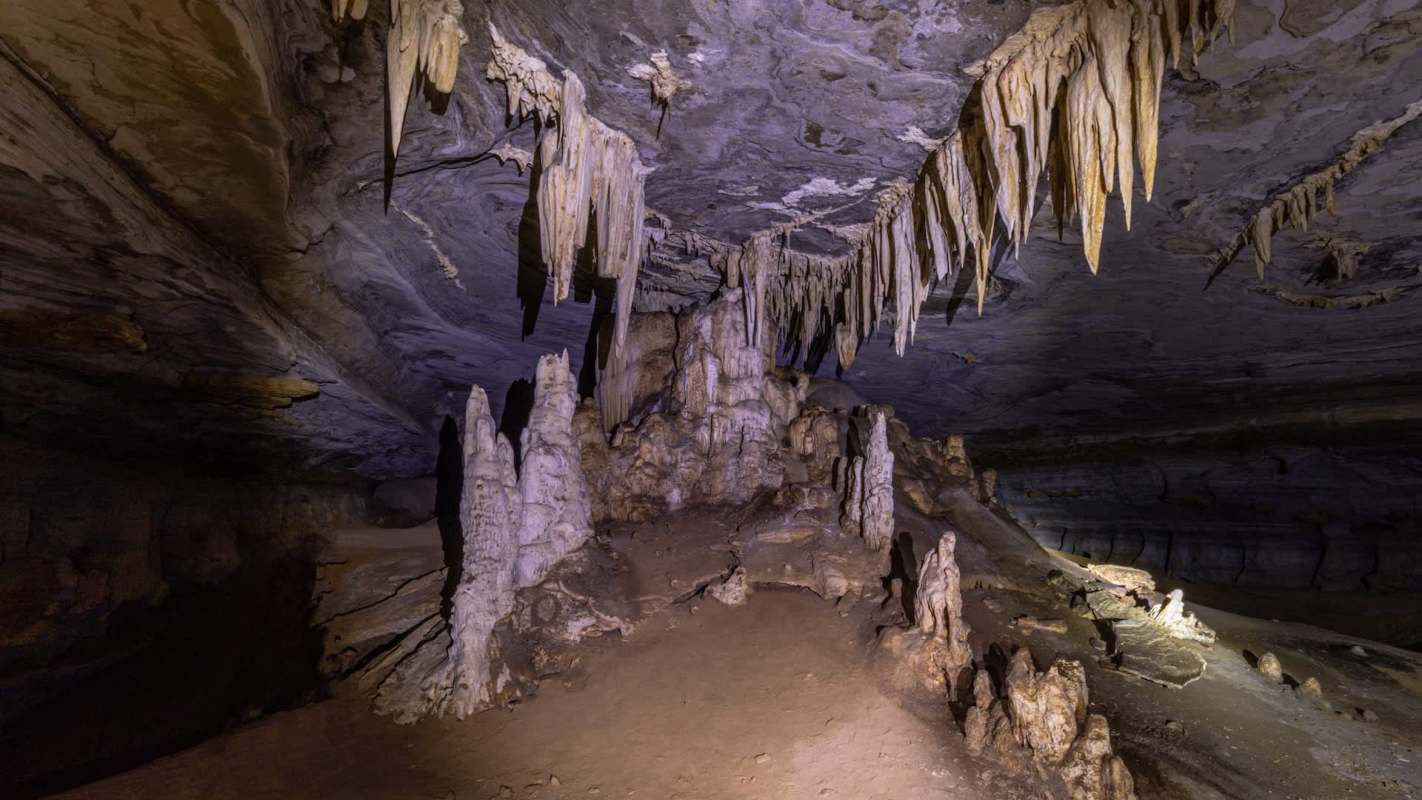
A snapped stalagmite in Brazil is helping scientists gauge how quickly Earth warmed after the last ice age — while also showing how much faster today's human-driven warming is happening.
In this region, modern warming has progressed at nearly three times the pace of the most abrupt natural warming that followed the ice age.
What happened?
Scientists used a broken stalagmite from Rei do Mato cave in Minas Gerais, Brazil, to reconstruct temperatures from about 22,500 to 9,300 years ago, according to Earth.com. Published in Nature Communications, the study traces conditions from the coldest stretch of the last ice age into the early Holocene.
The study was led by Angela Ampuero, a paleoclimate researcher at the University of São Paulo, whose team examined tiny pockets of ancient water preserved inside the stone.
By working with those trapped droplets, the researchers were able to estimate past cave temperatures directly, producing unusually precise measurements rather than relying solely on indirect climate clues.
Over the full period, the record indicates about 10 degrees Fahrenheit of warming, with temperatures moving from roughly 58 degrees during the coldest part of the ice age to about 68 degrees later on. However, the warming did not happen at a constant rate.
TCD Picks » Quince Spotlight
💡These best-sellers from Quince deliver affordable, sustainable luxury for all




Around 13,000 years ago, the cave record shows its sharpest jump: more than 2 degrees Fahrenheit in roughly 200 years. That burst happened during the Younger Dryas, when the Northern Hemisphere cooled dramatically, and it suggests that changes in Atlantic Ocean circulation helped trigger rapid warming in this part of South America.
Why does it matter?
According to Earth.com, even the fastest warming preserved in the cave record was still much slower than the warming this region has experienced since 1980. That is especially concerning because the cave sits in the Cerrado, a vast tropical savanna already under pressure from rising temperatures and severe drought.
The study also helps clarify a long-standing climate question in the tropics. Scientists often assume that warmer periods there also mean wetter conditions, but this stalagmite suggested that temperature and rainfall did not always move together.
A hotter future does not necessarily mean predictable rainfall patterns, so planning for farming, reservoirs, and drought resilience can be more difficult.
What's being done?
By extracting temperature data from fluid inclusions — tiny droplets trapped in the stalagmite as it grew — researchers are improving the climate record for a region where older estimates often carried greater uncertainty.
The team also compared the cave data with a climate model to better understand what was driving the changes.
Their findings pointed to carbon dioxide as the main force behind the long-term warming trend, while shifts in the Atlantic Meridional Overturning Circulation, or AMOC, appeared to explain the shorter, more abrupt swings.
What once seemed like extreme warming in this Brazilian cave record has already been surpassed in recent decades. As Earth.com reported, the region has outpaced the stalagmite's fastest natural warming, with more warming still ahead.

Get TCD's free newsletters for easy tips, smart advice, and a chance to earn $5,000 toward home upgrades. To see more stories like this one, change your Google preferences here.






