


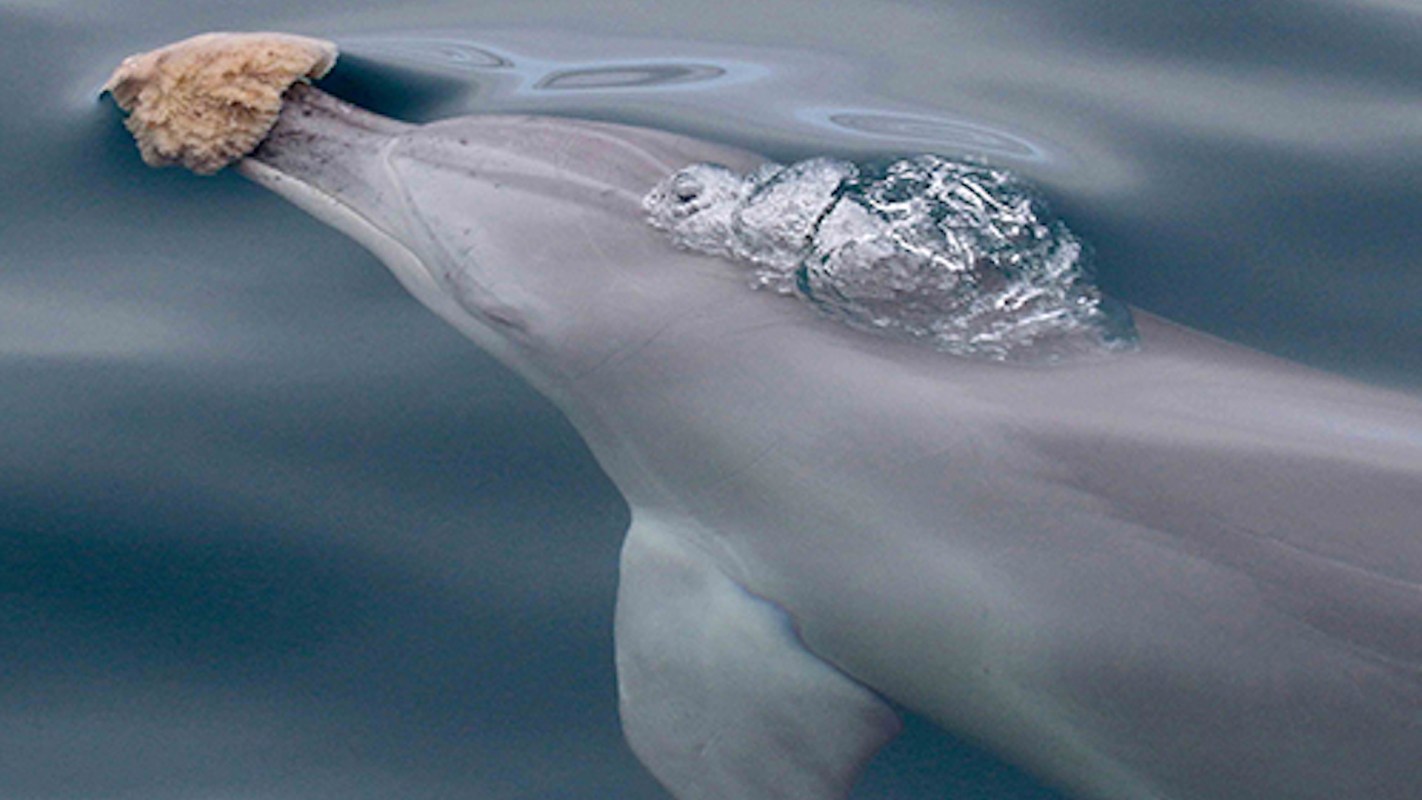
Some dolphins have drawn years of scientific attention for an unusual hunting tactic.
In Shark Bay, Australia, the dolphins put marine sponges over their snouts while feeling along the seafloor for fish. The habit may go hand in hand with subtle biological differences.
What's happening?
Dolphins that engage in "sponging" carry epigenomic signatures distinct from those seen in other dolphins in the same population, according to ScienceAlert, which reported on a new analysis of Shark Bay's Indo-Pacific bottlenose dolphins.
The epigenome is the set of reversible chemical marks that can affect gene activity without changing the DNA sequence itself.
Scientists have documented sponging in Shark Bay for more than 25 years, though only some dolphins, mainly females, use it. The technique involves covering the snout with a marine sponge — or sea sponge — while searching sandy seafloors for prey. The strategy appears to reduce abrasion and let the animals forage across wider areas in deeper water.
A team led by Michael Krützen, an evolutionary biologist at the University of Zurich, used skin samples collected from 96 dolphins over more than 20 years to examine whether the learned habit might coincide with biological differences. The samples included 23 confirmed "spongers" and 73 dolphins that did not use the technique, according to ScienceAlert.
The researchers examined almost 30,000 genomic locations for DNA methylation, which the science outlet described as "a common epigenetic modification." Studying these patterns alone, they were able to tell spongers and non-spongers apart with moderate accuracy.
TCD Picks » Quince Spotlight
💡These best-sellers from Quince deliver affordable, sustainable luxury for all




Why does it matter?
These findings suggest animal culture may shape bodies as well as behavior. Biologists have long known that culture can steer genetics across generations, but this work suggests epigenetic shifts could offer a faster, more flexible route.
That could matter in a changing ocean.
Sponging is energetically costly: Dolphins that use it spend more time foraging, get less rest, and often hunt alone. They also target different prey, though, and may be better positioned when marine heat waves disrupt typical food supplies.
What's next?
The team relied on skin samples, the only material that can safely be taken from wild dolphins, and used machine learning to look for patterns across the data.
The researchers, whose paper was published last month, still can't tell whether adopting sponging impacts DNA methylation during a dolphin's life, whether earlier epigenetic variation makes the behavior more likely, or whether outside influences — such as diet, stress, social networks, or environmental pressures — shape both.

Get TCD's free newsletters for easy tips, smart advice, and a chance to earn $5,000 toward home upgrades. To see more stories like this one, change your Google preferences here.







