


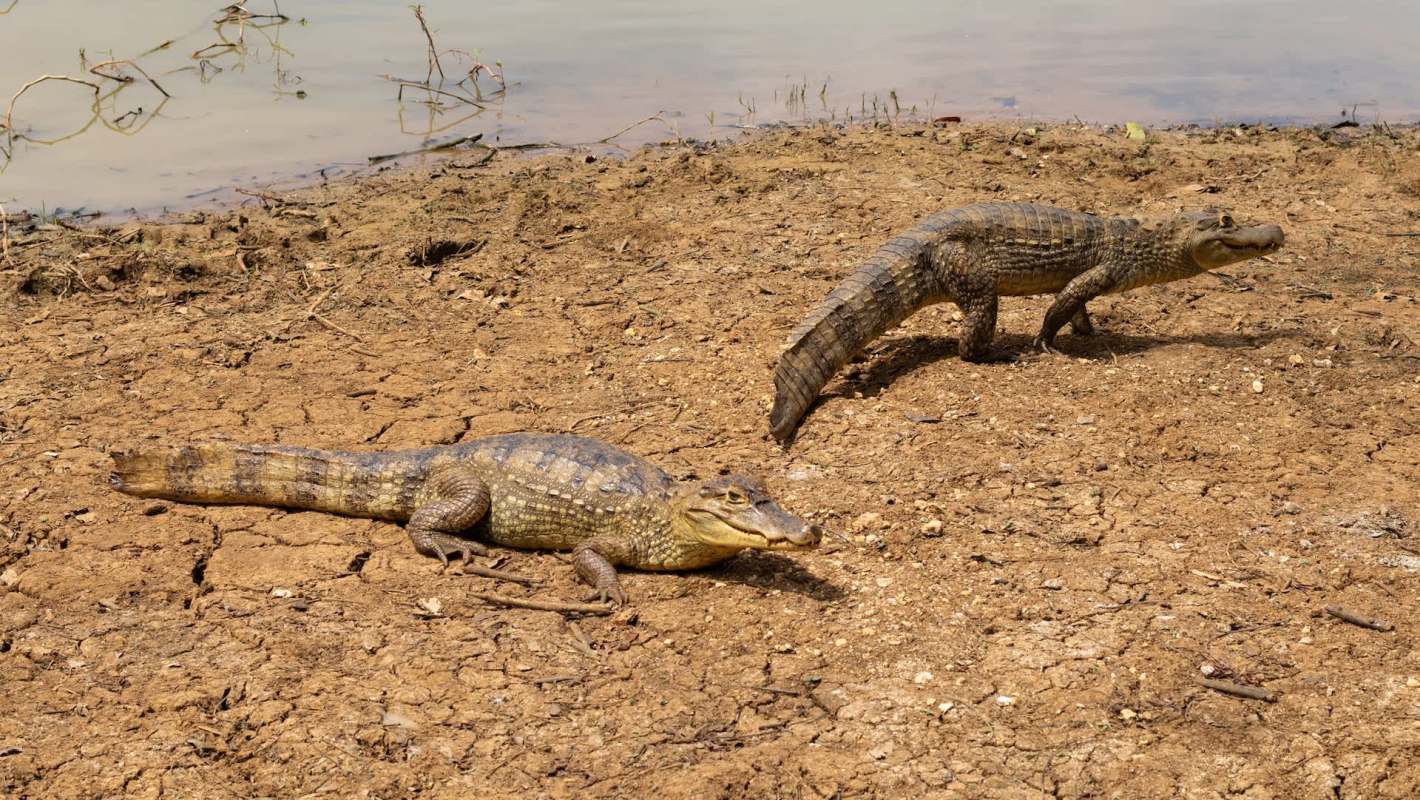
An invasive reptile introduced to South Florida through the pet trade is posing a growing concern for one of the nation's most important environmental restoration efforts.
As the Tallahassee Democrat noted, a University of Florida review found that the spectacled caiman is established across more of the Everglades than previously understood, raising fresh questions about how it could affect wildlife, water systems, and the region's long-term recovery.
What's happening?
At the University of Florida's Institute of Food and Agricultural Sciences, researchers reviewed more than 70 years of published work on the spectacled caiman, a reptile native to Central and South America that has been documented in Florida since the 1980s.
That research indicates the species has expanded through Everglades canals, marshes, and wetlands, and may be better able to adjust to the region than scientists had once thought.
Sergio Balaguera-Reina, lead author of the study, a co-lead of The Croc Docs, and research assistant scientist at the UF/IFAS Fort Lauderdale Research and Education Center, said: "We now know the spectacled caiman is established in more areas than we previously thought. We also know that spectacled caimans are more adaptable than we previously understood."
Researchers also found signs that the reptiles in Florida may come from a mix of genetic backgrounds linked to Colombia, Brazil, and the Guayana region, a factor that could make management more difficult.
TCD Picks » Quince Spotlight
💡These best-sellers from Quince deliver affordable, sustainable luxury for all




Why does it matter?
Those findings could create another obstacle for the Comprehensive Everglades Restoration Plan, the multibillion-dollar initiative aimed at reviving, conserving, and safeguarding Florida's most sensitive ecosystem.
The Everglades is vital not only for wildlife. It also supports drinking water supplies and flood protection. The project is already costly and complicated, and it could become harder to carry out if restoration ends up creating conditions that help caimans spread or if the species interferes with native alligators, crocodiles, and other animals.
Scientists have also said they are still missing basic information, including how spectacled caimans nest, how far they travel, and how they respond to restored waterways.
Balaguera-Reina said, "We think caimans in Florida may move more than populations in their native range because of dry-down conditions in the Everglades."
What's being done?
Continued management, along with more research, will be necessary before the species becomes even more difficult to control.
To address some of those gaps, researchers are tracking spectacled caimans to learn more about their movements and the habitats they use.
Planned work also includes satellite-tagging female caimans to locate nesting areas and developing environmental DNA tools that could identify new populations before they become firmly established.
Public sightings are another part of the response. People who spot a spectacled caiman can report it through the IVEGOT1 app, by calling 1-888-IVEGOT1 (483-4681), or through the EDDMaps website.
Those reports can give wildlife agencies faster notice and help build a clearer picture of where the reptiles are spreading.
"We want people to be aware that this species is present in the Everglades," Balaguera-Reina said. "Reporting sightings can help agencies and researchers respond quickly and better understand where populations are expanding."

Get TCD's free newsletters for easy tips, smart advice, and a chance to earn $5,000 toward home upgrades. To see more stories like this one, change your Google preferences here.






