


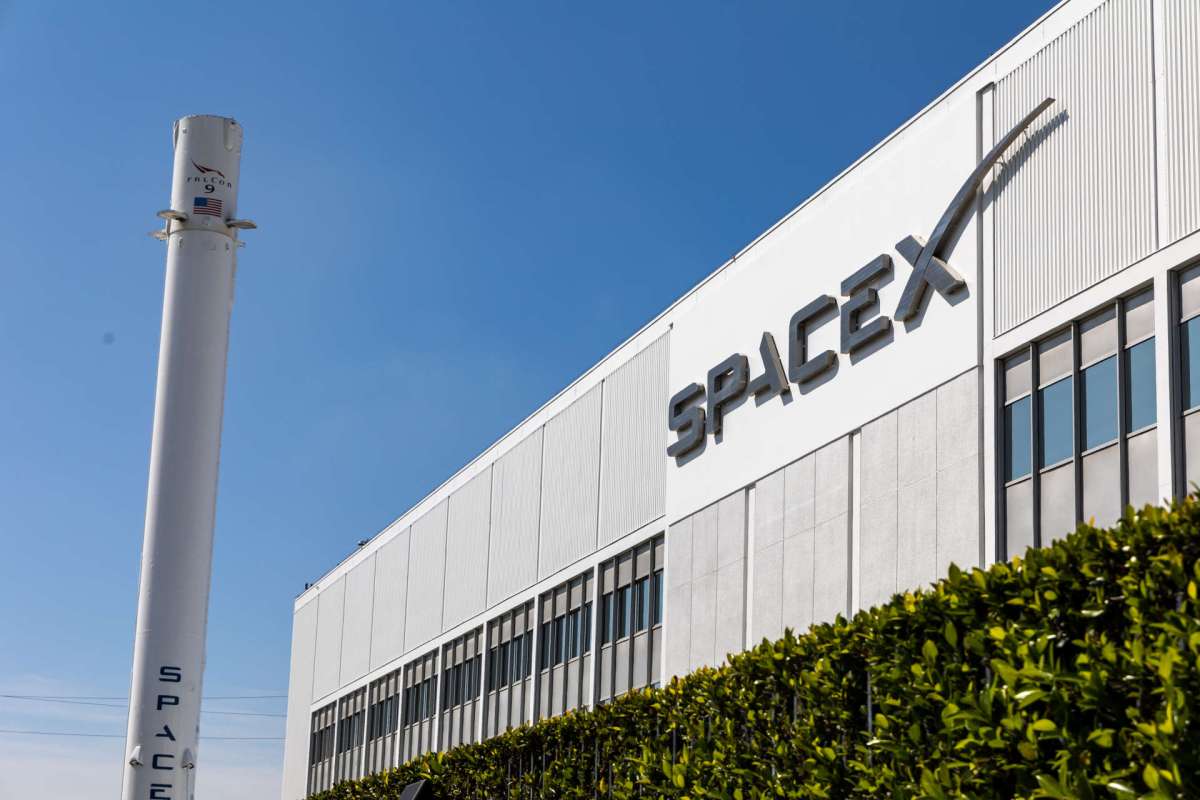
Scientists got an unusual lunar impact case study when a SpaceX rocket stage hit the moon, leaving a crater and sending up a visible dust cloud, ProtoThema reported.
What happened?
On Jan. 15, 2025, SpaceX launched a Falcon 9 carrying Firefly Aerospace's Blue Ghost-1 and ispace's Resilience lander. The upper portion was unable to enter Earth's atmosphere.
On Wednesday, the Korea Aerospace Research Institute observed the roughly school-bus-size upper stage, with a mass of about four tons, hit the lunar surface at nearly 5,400 mph, according to ProtoThema.
Because researchers started watching the area about 30 minutes before the crash, South Korea's Danuri lunar orbiter captured images of the site before and after impact. Those views revealed altered terrain and debris patterns from material flung outward by the collision.
For about five to 10 minutes after the strike, a dust plume remained visible, and the European Southern Observatory's Very Large Telescope detected sodium and lithium within it.
The ESO said the sodium likely came from the lunar surface, while the lithium may have originated from the rocket itself. Reuters reported that the impact also briefly reflected sunlight, but the glint could not be seen from Earth without specialized instruments, ProtoThema noted.
TCD Picks » Quince Spotlight
💡These best-sellers from Quince deliver affordable, sustainable luxury for all




Why does it matter?
Human space activity is leaving behind hardware, and when missions end, those objects do not always have a clear disposal path.
SpaceX said in a statement that the upper stage was not intended to hit the moon, per ProtoThema. However, after it failed to reenter Earth's atmosphere, solar conditions and gravitational effects altered its path.
Satellites support navigation, weather forecasting, communications, disaster response, and scientific research. This episode shows how easily abandoned equipment can become a hazard in deep space.
If companies normalize weak end-of-life planning for spacecraft, the public could bear the cost. Leaving discarded hardware on unstable trajectories also risks cluttering an environment that future moon missions — and potentially lunar bases — may depend on.
What's being done?
While the rocket's collision was unintentional, NASA Administrator Jared Isaacman said this type of impact on the moon isn't without precedent, per ProtoThema, pointing to the Apollo program's scientific and seismic experiments. The last Apollo mission took place in 1972. Now, scientists are turning this crash into a research opportunity.
According to ProtoThema, researchers will pair Danuri data with NASA's Lunar Reconnaissance Orbiter observations to study crater formation, dust behavior, and how large artificial objects interact with the moon's surface. SpaceX is also working with NASA on improved ways to handle and dispose of spacecraft. Meanwhile, it's developing Starship as a reusable alternative.

Get TCD's free newsletters for easy tips, smart advice, and a chance to earn $5,000 toward home upgrades. To see more stories like this one, change your Google preferences here.







