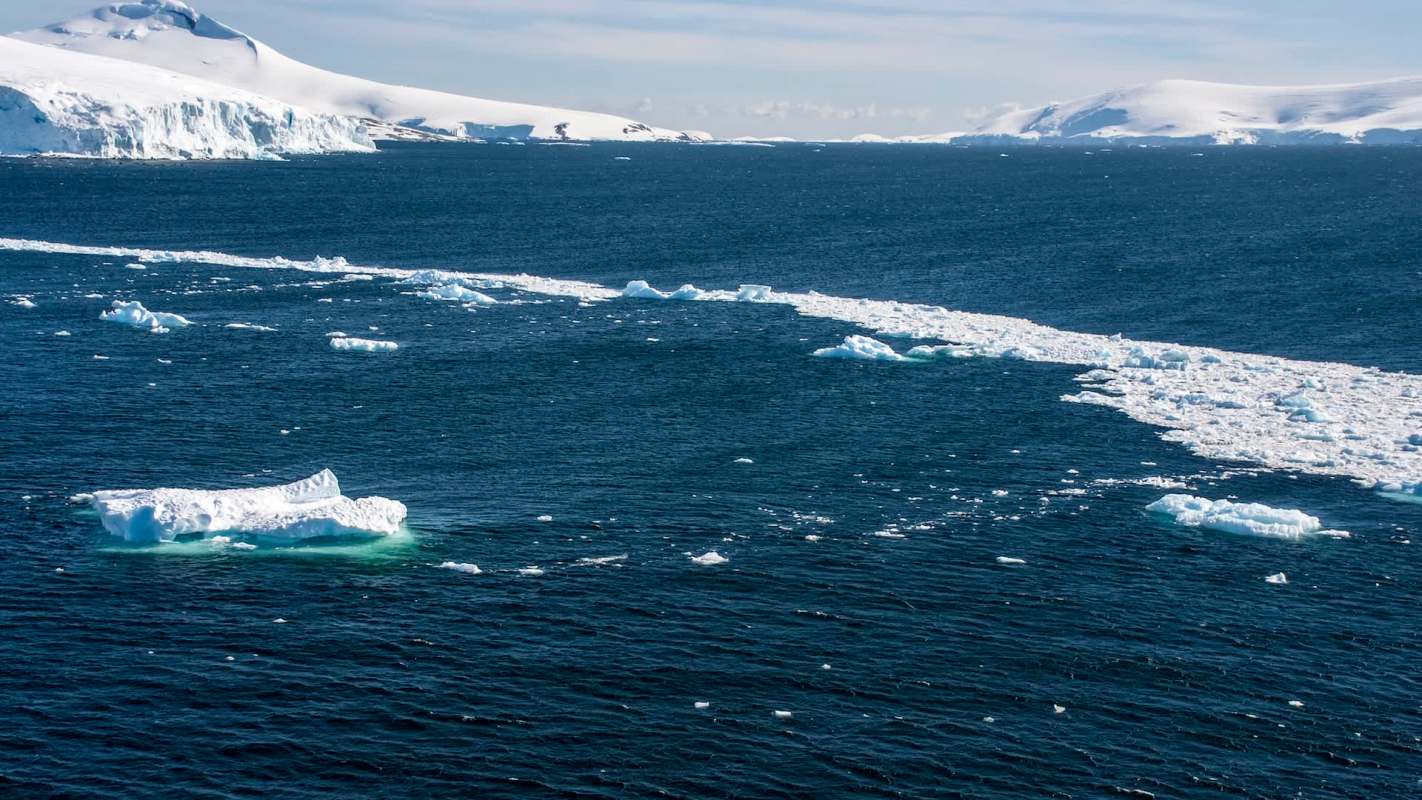
Currents around Antarctica carry oxygen into the deep sea and help store carbon for centuries.
But as warming disrupts this crucial circulation, the consequences could extend far beyond the ice, affecting fisheries, food supplies, and coastal communities worldwide, the BBC's Discover Wildlife reported.
Here's what to know
Water, heat, nutrients, and carbon move between the world's oceans through an interconnected network of currents.
Inside that network, the Southern Ocean Overturning Circulation connects surface waters with the deep ocean.
Deep water rises with its valuable nutrients to replace surface water pushed northward by westerly winds. Once at the surface, the water can travel north or south through the Antarctic system's two branches, known as the upper and lower cells.
Water in the upper cell warms as it approaches the equator and then continues north. This branch carries water toward the Pacific, Atlantic, and Indian Ocean basins.
TCD Picks » Quince Spotlight
💡These best-sellers from Quince deliver affordable, sustainable luxury for all




The water sinks back into the deep ocean after cooling near Greenland and Norway, completing another stage of the oceans' interconnected circulation.
More background
The British Antarctic Survey warns that "the deep Southern Ocean is warming faster than in any other region."
Stronger winds driven by a widening thermal contrast between the Antarctic region and midlatitude areas could pull more deep water upward through the upper cell. Meanwhile, warmer water and freshwater from melting ice could slow circulation in the lower cell.
That fresher, lighter water can remain at the surface, making it harder for surface and deep waters to mix. As a result, less oxygen can reach the deep sea.
Because these currents connect with other oceans, disruptions could accelerate global warming and sea level rise, Discover Wildlife noted.
Shifts in where marine animals live could also threaten fisheries and food supplies, while coastal communities could face greater exposure to floods and increasingly severe storms.
What can be done?
Sea ice forms from some of the water that the lower cell carries south toward Antarctica.
This freezing releases salty brine into the surrounding seawater.
Antarctic Bottom Water forms when that added salt increases the water's density, causing it to sink to the seabed. This bottom water stirs the deep ocean as it flows north, unable to travel farther south because Antarctica blocks its path.
The ESA Climate Office explained that Antarctic Bottom Water "[replenishes] the global abyss (below about 2000m depth) and [allows] oceanic carbon storage for centuries, thus regulating Earth's climate on long timescales."
"Rapid changes are currently ongoing in the Southern Ocean in response to global climate change, which raises questions about whether the global services provided by its circulation will continue in the future," the British Antarctic Survey cautioned.
Where can I learn more?
Antarctic circulation is connected to changes in sea ice, salinity, and ocean heat. These stories cover Antarctic sea ice loss and warming in the Mediterranean.
• Antarctic sea ice loss is making a vital ocean layer saltier, denser, and deeper.
• Antarctic sea ice reached its third-smallest winter peak in 48 years, raising concerns.
• The Mediterranean is getting warmer and saltier, with changes reaching the sea floor.

Get TCD's free newsletters for easy tips, smart advice, and a chance to earn $5,000 toward home upgrades. To see more stories like this one, change your Google preferences here.
Cool Picks