


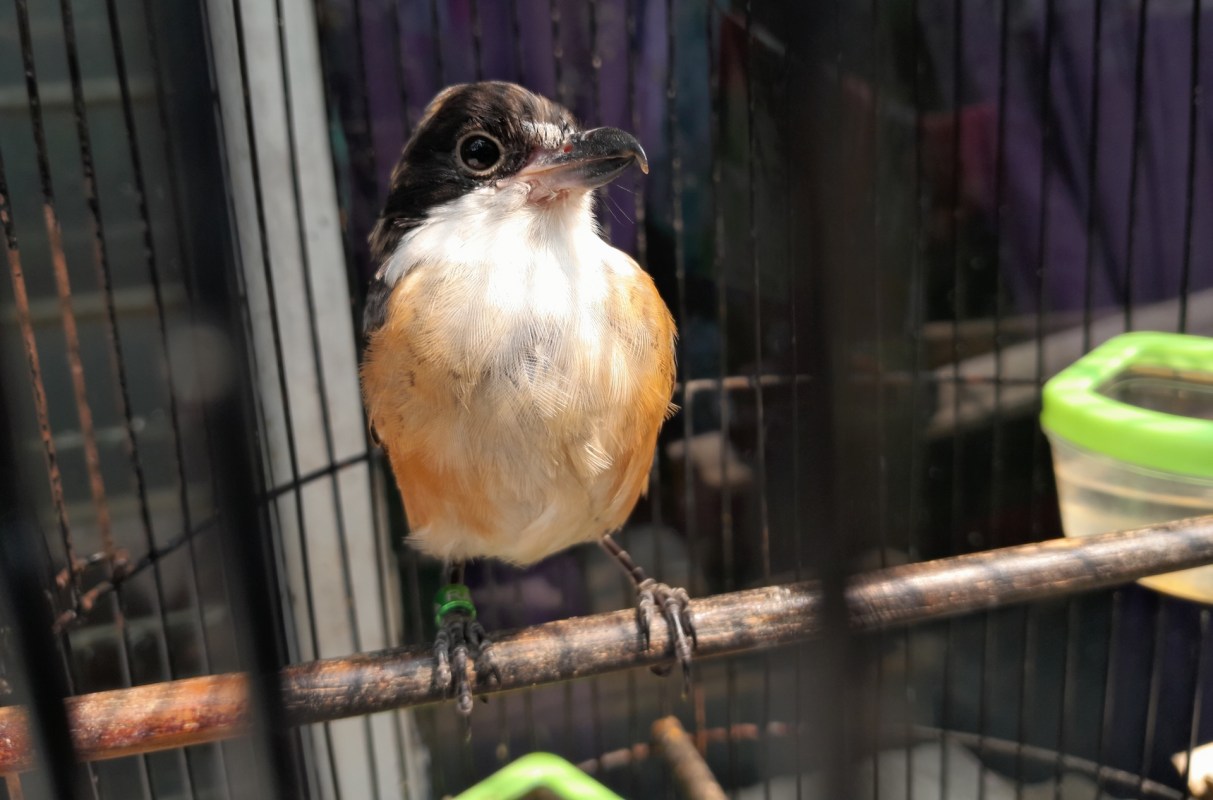
A prized white-rumped shama named Baby White recently won a bird-singing contest in Sukabumi, Indonesia, and a motorbike for its owner. But behind the applause is a deepening conservation crisis that experts say is leaving Indonesia's forests without birdsong.
What's happening?
The appeal of these events is widespread: caged birds are scored on elements such as song quality, loudness, consistency, and showmanship, and competitions can attract large crowds across Indonesia. As Live Science reported, that enthusiasm is helping drive a vast trade in wild-caught songbirds.
According to that report, homes on Java hold an estimated 66 million to 84 million caged birds, including more than 3 million white-rumped shamas and 2 million oriental magpie-robins. Nationwide, it suggests that as many as 30% of Indonesians keep 164 million to 187 million wild-caught songbirds.
Much of the pressure comes from the belief that birds taken from the wild sing better than those bred in captivity. That preference helps sustain poaching, cruel transport, and steep death rates before many birds ever reach the market.
"Indonesia's songbird trade is one of the world's most prolific," Chris Shepherd, a wildlife trade expert at the Center for Biological Diversity in Canada, warned. "It's terrifying."
Why does it matter?
Birds help pollinate plants, disperse seeds, and control insects, meaning their disappearance can weaken ecosystems that people depend on for food security, forest health, and climate resilience.
TCD Picks » Quince Spotlight
💡These best-sellers from Quince deliver affordable, sustainable luxury for all




Forests can remain outwardly lush even as their wildlife disappears, a pattern conservation biologist Alexander Lees has described as "empty forest syndrome," according to Live Science. At the Wak Gatak Songbird Rescue and Rehabilitation Center, Agung Nur Haq, who oversees conservation, said, "The silent forest is really happening."
As ecosystems begin to break down, the effects can spread outward, affecting biodiversity, tourism, and the natural systems that support local livelihoods.
Some of the species under pressure are already hovering on the brink of collapse in the wild. Fewer than 250 black-winged mynas and fewer than 100 Javan green magpies are thought to remain, and several species have already disappeared locally.
What's being done?
Planet Indonesia established the Wak Gatak sanctuary in West Kalimantan to care for birds seized from the illegal trade, Live Science reported. There, staff works with BKSDA, Indonesia's natural resources and conservation agency, to rescue birds, place them in quarantine, rehabilitate them, and release them when possible.
The first days are often the hardest. "A lot of them, 70 to 80 percent, die within the first two weeks. Their condition is very poor," said Happy Ferdiansyah, Wak Gatak's head veterinarian. Birds that make it through are treated, checked for disease, and later moved to larger aviaries where they can relearn flying and foraging.
Since it opened in 2022, the center has received almost 3,000 birds from 45 species and has helped 348 go back to the wild. It also recently completed what Live Science described as its biggest release so far, sending 130 birds to a nature reserve.
Even so, conservationists say rehabilitation centers cannot solve the problem on their own. They argue that the bigger task is reducing demand through tougher enforcement, public education, and behavior-change campaigns aimed at discouraging poaching and bird buying tied to competitions.
For acoustic biologist Benjamin Mirin, the popularity and profits attached to these competitions are a major driver of the damage.
"They're so popular and financially beneficial that they're accelerating the poaching of birds to the point where now the forests are falling silent," he said, according to Live Science. Lees offered a similar warning about what comes next, saying, "If we don't recuperate some of those populations, then we can expect maybe similar sorts of downstream impacts."

Get TCD's free newsletters for easy tips, smart advice, and a chance to earn $5,000 toward home upgrades. To see more stories like this one, change your Google preferences here.






