


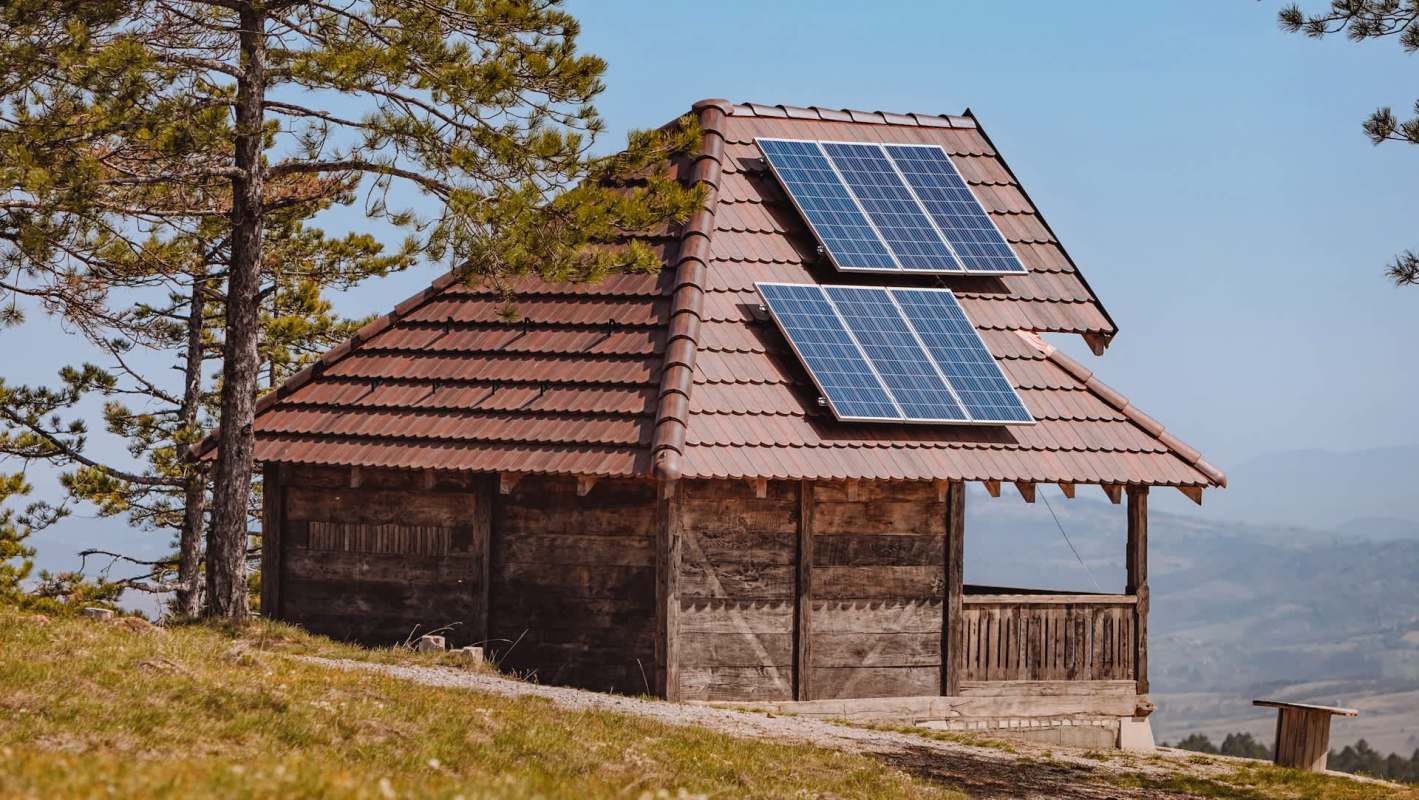
For off-grid solar users, winter can turn a comfortably sized summer setup into a system that still needs backup.
A Reddit discussion on the r/OffGrid subreddit about powering a small cabin shows why. In some cloudy regions, even doubling an array may not be enough.
Here's what to know
The post on Reddit centered on a small cabin expected to use about 3,500 watt-hours a day for Starlink, lights, refrigeration, and a small pump. With roughly 5.5 peak sun hours in summer but only about 2.5 to 3 in winter, the poster wanted to know how much extra solar capacity people really plan for.
As it turns out, location and weather matter a lot.
Crushed by your bills? See instant solar savings from vetted installers in just a few clicks With energy prices through the roof, there's never been a better time to go solar — and EasyHome can help you find the best prices from the best installers in your area. EasyHome takes the guesswork and headaches out of energy upgrades by showing you estimated savings from a network of vetted local partners. To get started, just enter your ZIP and share a few details about your home — seeing your estimate is really that easy. |

A commenter from the Pacific Northwest described just how uneven seasonal output can be, saying their setup makes "20+ kW easily in summer" yet only "we get a max of 2 kW a day" during rainy winter periods.
In that user's view, building enough solar to cover those stretches does not pencil out. They wrote that "adding 5-6x our current array would be ridiculous," so "running a generator regularly during rainy winter weeks is the only logical solution."
That doesn't mean an initial buildout is bad. In fact, going solar is still one of the best ways to save money on home energy, especially for households that do not need a fully off-grid setup. If you're weighing costs, it can help to explore EnergySage to get free solar installation estimates and compare quotes.
More background
A common assumption is that adding more panels always solves low production. Several commenters said that on dark, misty, or rainy winter days, output can fall so sharply that even a larger array produces very little.
A different cabin owner said they had already overhauled the system, including, in their words, moving "48v from 24v, added a huge amount of additional battery and more than doubled our array." Even after that, they wrote that they "burn a little diesel then rather than doubling our panel size."
Rooftop solar can still be a smart investment, but full energy independence in a cloudy climate can be elusive. Off-grid living is not a one-size-fits-all goal.
What can be done?
Systems need to be modeled around real winter conditions.
Commenters pointed to a few ways to make winter solar more resilient, including larger battery banks, steeper panel angles, and clearing snow. They also stressed that those steps only go so far.
More From EnergySage
💡Go deep on the latest news and trends shaping the residential solar landscape




"it really doesn't matter how much solar you have if there is no sun," a Redditor noted.
If you are considering rooftop solar, EnergySage can also help you curate competitive bids from local installers without them getting your contact information unless you decide to move forward. Its free services can be especially valuable because, with EnergySage's help, the average person can save up to $10,000 on solar purchases and installations.
You can also use EnergySage's solar map, which shows the average cost of a home solar panel system on a state-by-state level, plus details on solar panel incentives in each state, helping readers get the best price and access available savings.
Adding battery storage to a solar setup is also one of the best ways to protect your home during outages, save money on energy, and go off-grid. If that is part of your plan, explore EnergySage for information about home battery storage options, including competitive installation estimates.
Where can I learn more?
These stories show how sharply winter solar performance can vary based on climate, equipment, and what you expect from a fully off-grid setup. They also reveal the trade-offs between building for rare stretches of terrible weather and leaning on batteries or a generator when storms drag on.
• One off-grid homeowner said solar carried winter loads after two years away from the grid.
• Across the U.S., homeowners are ditching aging backup generators for solar-plus-battery systems.
• In the Rockies, a family of five used 1,000 watts of solar off-grid.
• EnergySage COO Charlie Hadlow helped demystify solar installation costs for homeowners.
Reading through them can help clarify whether winter reliability comes down to panel capacity, storage, or just a lack of sun. They also offer a clearer sense of when full energy independence is worth the cost, and when backup power is the more practical call.

Get TCD's free newsletters for easy tips, smart advice, and a chance to earn $5,000 toward home upgrades. To see more stories like this one, change your Google preferences here.






