


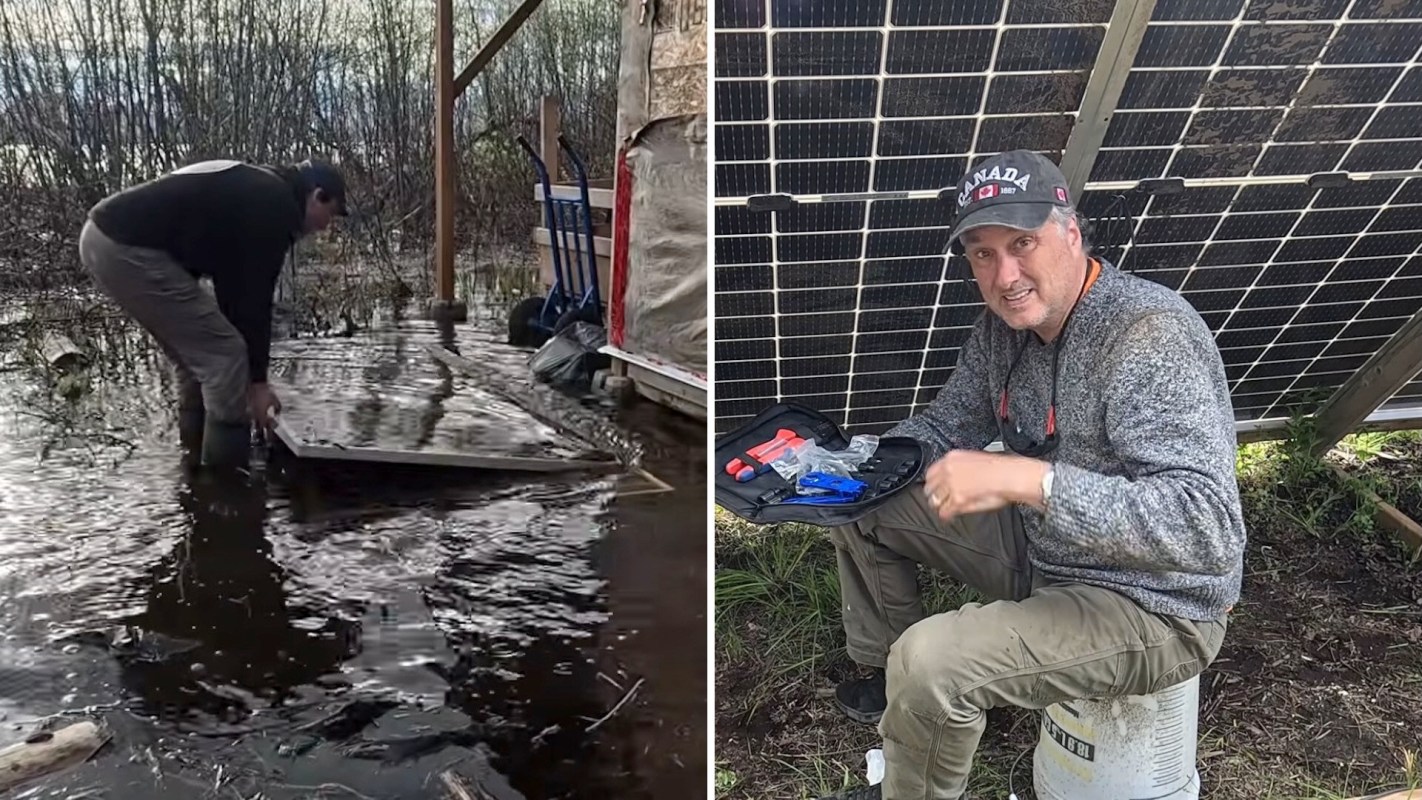
An off-grid couple who rely on solar power had reason to celebrate after recovering four panels from a Canadian lake. The equipment could still generate electricity despite spending months underwater.
Here's what to know
Ryan and Melodi of My Wild Holm (@mywildholm) revealed that the trouble began with panels propped against an array shed. Melting snow sent them flat, and roughly 12 inches of water covered them. The couple documented the recovery at their Bird Island homestead in northern British Columbia in a longform YouTube video.
The inverter registered incoming voltage of about 160 to 165 volts once switched on. Before that, a measurement Ryan took after retrieving the panels and repairing their corroded connections showed 185 volts. That was slightly higher than the roughly 180 he expected.
"Those Solar panels passed the Bird Island high water test with flying colours," one commenter wrote.
For homeowners of all living situations, going solar is one of the best ways to save money on home energy, and solar leases can deliver hundreds of dollars in monthly savings without upfront costs. EasyHome's free explorer tool lets homeowners check potential savings from vetted installers in their area.
More background
The recovered panels were not the homestead's only source of solar power. Ryan showed separate disconnects for four-panel and eight-panel arrays, while Melodi explained that they needed the additional panels back in service.
The recovery was part of a broader effort to improve the homestead's electrical setup, including finishing a battery bunker.
Ryan eventually wants to turn the inverter shed behind the cabin into a room for their water system. Temporary lines run there from the array. He plans to bury them once the battery bunker is finished.
Crushed by your bills? See instant solar savings from vetted installers in just a few clicks With energy prices through the roof, there's never been a better time to go solar — and EasyHome can help you find the best prices from the best installers in your area. EasyHome takes the guesswork and headaches out of energy upgrades by showing you estimated savings from a network of vetted local partners. To get started, just enter your ZIP and share a few details about your home — seeing your estimate is really that easy. |

A larger opening, along with sloping and benching, was part of Ryan's plan before proceeding. He described soil falling away at the edges and intended to move the excavated material farther back.
What can be done?
The damaged connector components were replaced as part of Ryan's preparations for testing. He also cleaned corrosion from the connections and straightened the damaged support structure.
His warning was not to connect or disconnect the lines while they were live. During his own work, he emphasized, they were disconnected from the inverter. Once testing had succeeded, Ryan removed the remaining grime with a hose and squeegee.
He said, "Well, they're a little scratched. But, they work. And they're clean. I'd call that a success."
For homeowners considering their own system, EasyHome can help compare solar options and explore backup battery storage. Pairing solar with a battery allows homeowners to maximize savings and power their home with solar when the grid goes down, provided the system is configured for backup power.
Where can I learn more?
Getting submerged panels working again is one example of the repairs that can come with running an off-grid solar setup. Here are a few more examples.
• A cracked solar panel still works, though DIYers warn it may not last.
• A DIY solar owner recovered 1.5 kilowatts after removing one failed panel from a string.
• An off-grid solar creator challenged three-year lifespan claims, distinguishing individual components from the whole setup.
• An off-grid solar user facing minus 20 degrees Fahrenheit received DC wiring advice for a 100-foot run.

Get TCD's free newsletters for easy tips, smart advice, and a chance to earn $5,000 toward home upgrades. To see more stories like this one, change your Google preferences here.






