


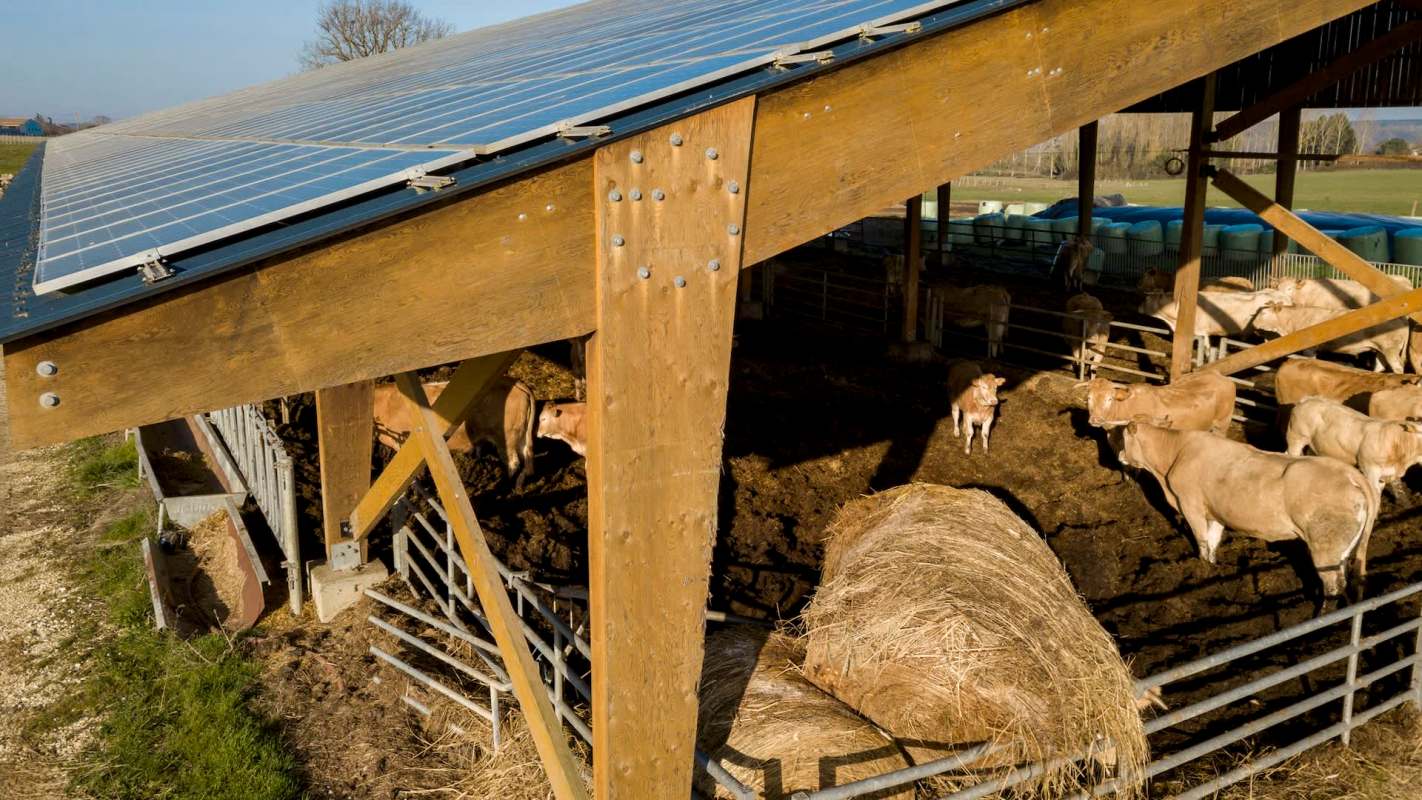
One TikTok creator is challenging an AI-generated meme that contrasts "real farms rebuild the earth" with "vegan solar farms" that supposedly "wreck ecosystems," saying it leaves out the resource burden of cattle production and solar's potential to share land with agriculture.
Here's what to know
In a TikTok video, renewable-energy content creator bonusmoles (@bonusmoles) argued that memes like this can be brushed aside because "it is not based in reality at all."
@bonusmoles Horrible takes about solar are everywhere these days. Here's why they can be disregarded. #solar #farming ♬ original sound - bonusmoles
At the center of the response was a simple argument that farmland and solar development are not automatically at odds.
Rather than excluding grazing, some solar sites can include cattle, with the panels providing shade and the animals helping manage the grass beneath and around them.
The creator also pushed back on the idea that cattle operations are inherently restorative, arguing that many modern cattle farms put enormous pressure on land and water resources.
"Cattle are the biggest source of water usage in the United States by an insanely huge margin and are actively draining the Colorado River dry," bonusmoles declared.
TCD Picks » Quince Spotlight
💡These best-sellers from Quince deliver affordable, sustainable luxury for all




Some commenters also pointed to the appeal of solar infrastructure that works with existing spaces and landscapes.
One commenter wrote: "Those elevated solar panels are so cool I want them everywhere."
More background
The debate touches on a growing area often described as agrivoltaics, where solar panels and farming or grazing share the same land.
Bonusmoles noted, "it's actually been proven time and time again that cattle and solar can coexist peacefully." The video added that the same has been shown with other livestock, not just cows.
The creator also pointed to places where cattle are not especially practical, such as deserts, as settings where solar can still be useful. In those environments, panel shade can help smaller animals by giving them protection from predators and harsh conditions.
That framing can also distract from larger questions about how land and water are actually being used.
Several commenters took that point a step further, noting that built environments could host more clean energy without competing with farmland at all.
What can be done?
At the community level, one clear opportunity is to expand solar in places people already use every day.
A commenter captured that frustration clearly.
"Every warehouse, parking lot, and large retail store should be covered in panels and we'd be gucci," they wrote.
Solar does not have to mean clearing untouched land or choosing energy over food production. It can also mean using parking lots and dual-use agricultural sites more effectively.
Where can I learn more?
Solar projects can fit into working farms, as many stories around the country show.
• Ranchers are finding that cows and solar panels can thrive on the same acres.
• On grazing sites, sheep raised beside panels are showing unexpected gains in wool quality.
• Across working farms, solar panels on cropland are helping fields stay productive.
• Vegetable growers are uncovering the groundbreaking potential of solar to support food production.
• At a Texas solar farm, pairing sheep with panels is cutting mowing needs.

Get TCD's free newsletters for easy tips, smart advice, and a chance to earn $5,000 toward home upgrades. To see more stories like this one, change your Google preferences here.






