


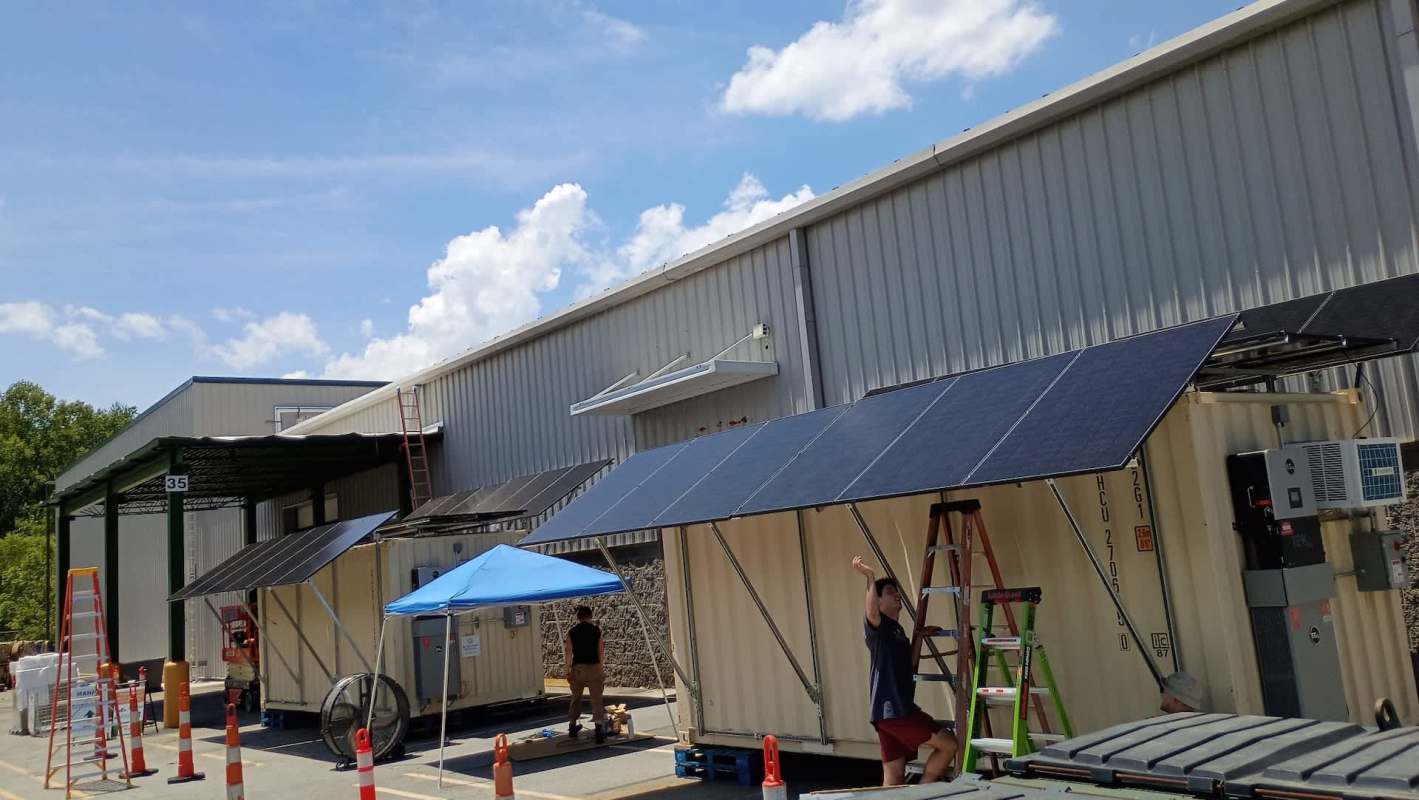
Two years after Hurricane Helene, communities like Burnsville, North Carolina, are installing solar panels and battery storage as part of a statewide microgrid project to protect residents from suffering through post-hurricane issues like blackouts and extreme flooding.
The hope is that, should another natural disaster like Helene hit, residents will be protected by backup power that can help keep critical services and needs available.
What's happening?
In August 2025, the North Carolina Department of Environmental Quality set aside $5 million for 26 microgrid projects in partnership with nonprofits focused on cleaner energy, Grist reported. Those plans include 24 permanent microgrids and two mobile systems. Five locations were announced in June, and construction at those sites is expected to start this summer.
Footprint Project, a renewable energy nonprofit, calls these mobile units "beehives." Built on trailers and equipped with solar power and batteries, the beehives can support needs such as device charging, cold storage, and water filtration.
"Because they are mobile, these bees can be towed immediately to communities hardest hit in disasters," Footprint Project CEO Will Heegaard told Grist.
Why does it matter?
Backup power means much more than keeping the lights on. Microgrids can help preserve refrigerated food and medicine, keep phones charged for emergency communication, and support community spaces such as libraries, fire stations, and food banks when the larger grid goes down, according to the Carolina Press.
TCD Picks » Quince Spotlight
💡These best-sellers from Quince deliver affordable, sustainable luxury for all




They reduces reliance on fuel deliveries for generators, which can become costly and unreliable during floods or road closures. In a prolonged outage, that added resilience saves money, reduces stress, and make it easier for first responders and neighbors to support one another.
While western North Carolina is not considered a danger zone for hurricanes, it is still highly vulnerable to catastrophic tropical storms. During Helene in 2024, a Duke Energy microgrid in Hot Springs was reported to have kept electricity flowing across the entire town.
These systems can lower daily energy costs in some settings while also providing potentially lifesaving backup power during emergencies.
What's being done?
To make high-cost microgrid systems available to communities that might otherwise be priced out, North Carolina is pairing state money with nonprofit help. Of the five stationary microgrids planned for western North Carolina, four are expected to cost more than $100,000, putting them out of reach for many smaller local organizations, Grist reported.
The trailer-based "bees" come in several forms, including "cooler bees" for storing food and medicine, "power bees" for charging devices, and "water bees" for filtering drinking water. They can deliver as much as 100 kilowatt-hours of energy, enough to operate a large building for up to 10 hours.
State officials and local partners hope the project can serve as a model for broader adoption.
"We are essentially setting the model and the precedent for what we hope will be a much bigger statewide and national project to duplicate," Sara Nichols, part of the economic development group Land of Sky Regional Council, told Grist.

Get TCD's free newsletters for easy tips, smart advice, and a chance to earn $5,000 toward home upgrades. To see more stories like this one, change your Google preferences here.






