


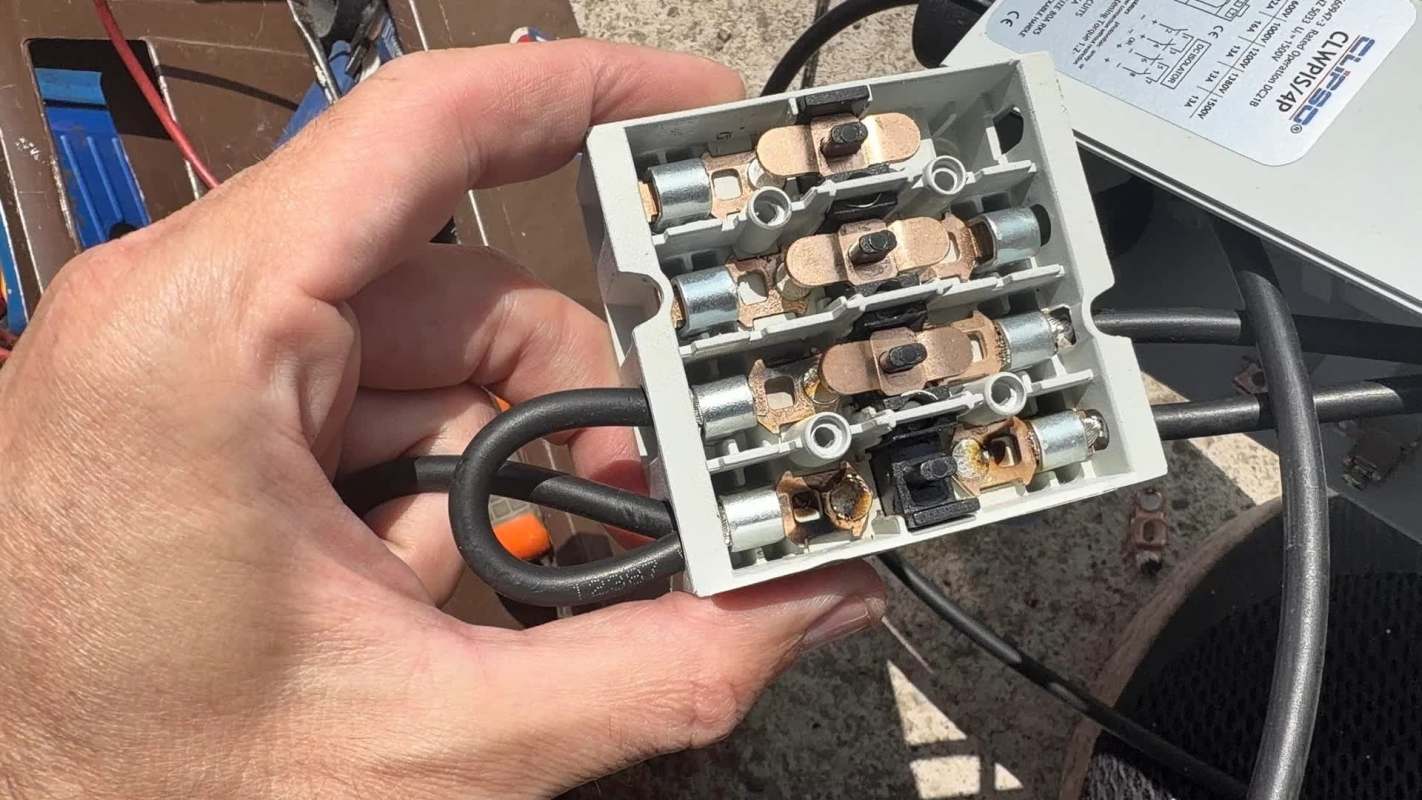
A solar installer in the U.K. shared a stark example of how cheap hardware can backfire in rooftop solar: A DC isolator labeled for 32 amps at 600 volts destroyed itself while opening under just 16 amps at 300 volts.
The installer said the failure came with "a couple of seconds of fizzy arc noises" — not exactly what anyone wants hidden inside a rooftop solar system.
Here's what to know
Photos shared on r/SolarUK highlighted a DC isolator that appeared to fail well below its printed rating. According to Reddit, the unit was labeled 32A at 600V, and the original poster wrote, "Rated for 32A at 600V, ruined (with a couple of seconds of fizzy arc noises) opening while carrying 16A at 300V."
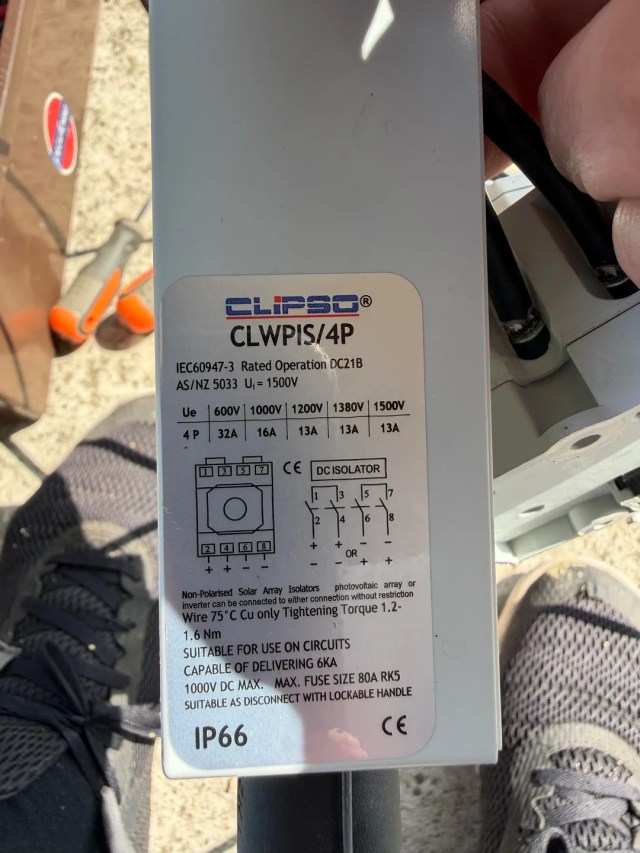
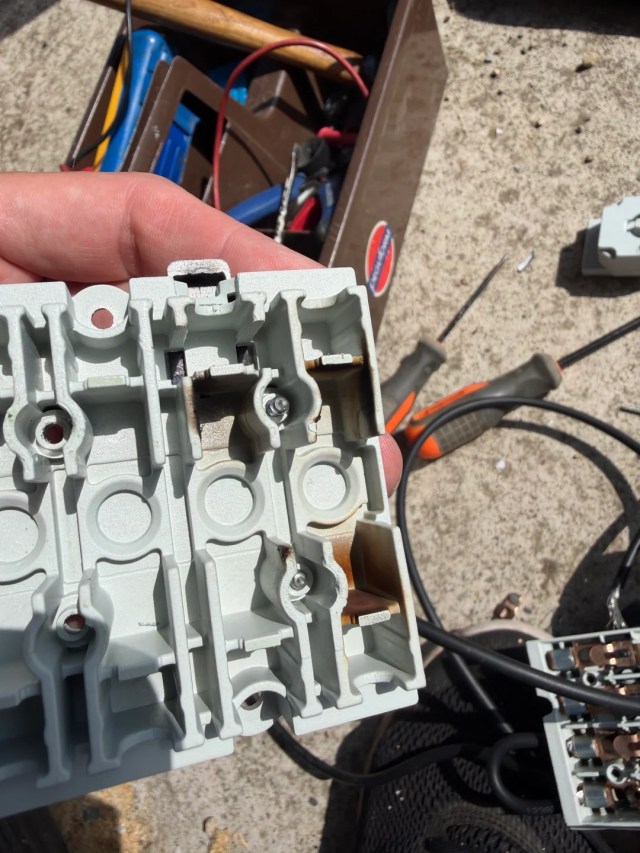
Before the failure, the installer said the component was already difficult to work with. "It was also completely impractical to use in the real world because there wasn't room inside the casing to route and attach cables," they wrote.
They also criticized the branding: "The 'PIS' in the part number should perhaps have been a sign."
For shoppers reviewing a quote after seeing a 32A, 600V switch fail at 16A and 300V, going solar is still one of the best ways to save money on home energy. Solar leases, in particular, can deliver hundreds of dollars in monthly savings with no upfront costs, and readers can use EasyHome to see pricing and savings from vetted installers in their area.
More background
To show why some better-known parts cost more, the installer compared the failed unit with Kraus and Naimer hardware: "There is a reason why the Kraus and Naimer ones are 4x the price and 2x the size."
Some users said they have stopped using DC isolators altogether because they view them as a failure point.
Crushed by your bills? See instant solar savings from vetted installers in just a few clicks With energy prices through the roof, there's never been a better time to go solar — and EasyHome can help you find the best prices from the best installers in your area. EasyHome takes the guesswork and headaches out of energy upgrades by showing you estimated savings from a network of vetted local partners. To get started, just enter your ZIP and share a few details about your home — seeing your estimate is really that easy. |

Parts like an isolator rarely headline a sales pitch. A quote may list panel wattage or inverter brand, while a smaller disconnect switch remains buried in the parts list — even though this post focused on a unit that arced, failed, and was described as difficult to wire inside its casing.
What can be done?
One useful question is which isolator brand and model a solar installation actually includes. In the r/SolarUK example, the concern involved a specific 32A, 600V unit that reportedly failed at half that current and did not leave enough room inside the casing for practical cable routing.
If one installer specifies a larger, pricier Kraus and Naimer component and another uses a no-name alternative, that gap may reflect durability and serviceability rather than markup alone.
That is where EasyHome's free explorer tool can be especially useful, because it helps homeowners compare vetted installers and pressure-test whether a lower bid may be cutting corners on components. EasyHome can also help readers explore backup battery storage options, and pairing solar with a battery lets homeowners maximize savings and keep the lights on when the grid goes down.
Where can I learn more?
If this failed isolator has you taking a closer look at solar reliability, these stories explore similar questions from contracts to component durability. They cover buying mistakes, fragile next-gen cells, durability advances, and basic maintenance.
• Homeowners can avoid common contract pitfalls by slowing down before signing a solar deal.
• Researchers found temperature swings can wreck next-generation perovskite cells before they reach rooftops.
• Scientists reported that adding FA increases the durability of promising perovskite solar cells.
• Regular maintenance helps homeowners tackle cleaning and repairs before systems lose performance.

Get TCD's free newsletters for easy tips, smart advice, and a chance to earn $5,000 toward home upgrades. To see more stories like this one, change your Google preferences here.






