


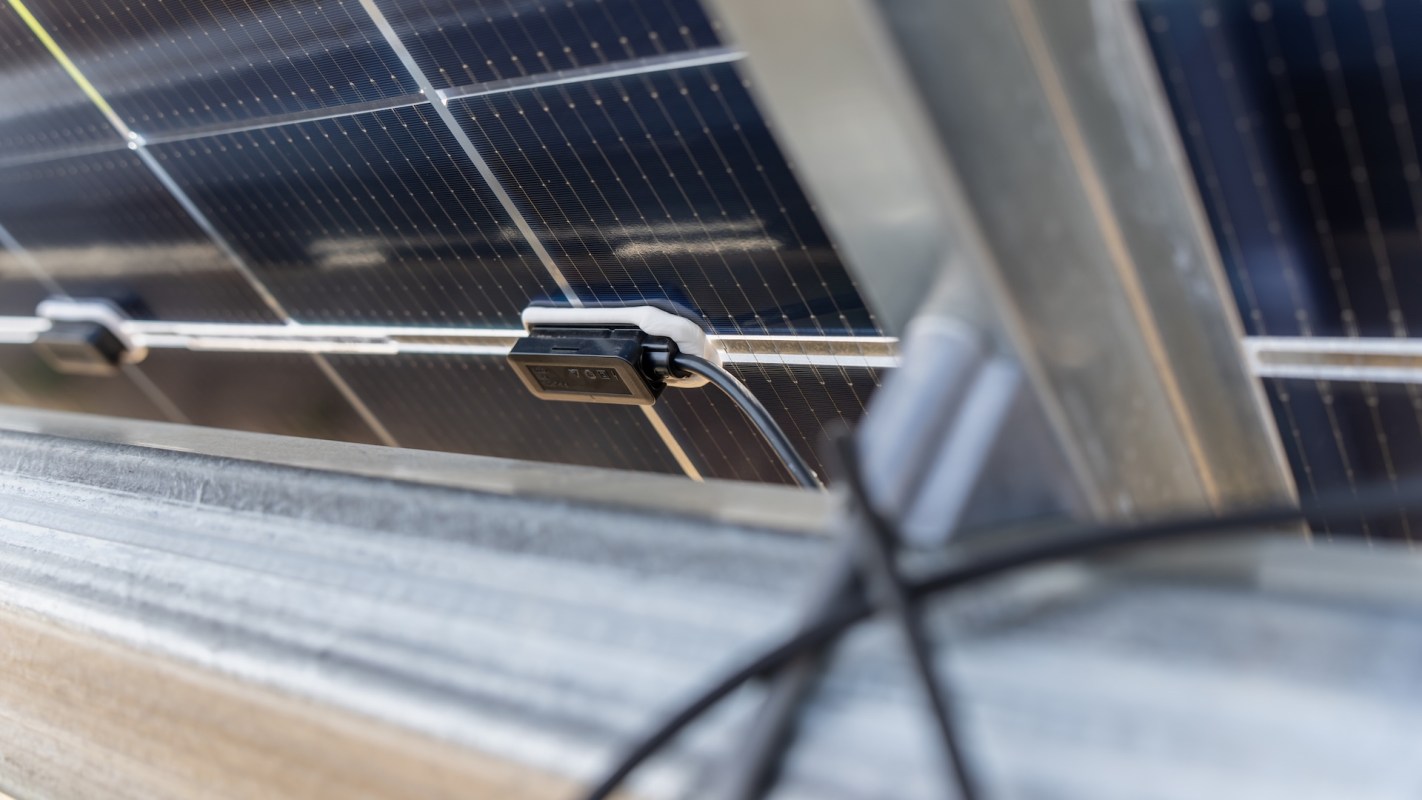
A DIY solar setup can look perfect on paper and still go mysteriously dark when one wire run refuses to deliver power. That was the frustrating situation facing a new solar owner who was trying to figure out why one of two nearly identical panel strings worked while the other showed nothing.
Here's what to know
According to a Reddit post, the setup used four 590-watt panels wired in series, with power sent toward the house through separate 120-foot 10-AWG lines connected to an Anker Solix F3800 Plus in the basement.
To the original poster's confusion, one string was showing about 100 volts at the basement end, while the other showed that expected voltage when measured near the panels but not from inside the house.
While troubleshooting, the OP replaced the MC4 connectors and checked continuity on the long cable run. Based on this testing, the wiring did not appear to be the issue.
However, the OP did get a lead when conducting a different test.
"If I attach a small MC4 five-foot extender cable between the outside ends and conduct the same test — Pass! I get tone," they wrote in an update. Without the extender, though, the continuity test did not pass.
That led one commenter to a straightforward conclusion: "You have a bad connection or bad wire. It is very uncommon for new wire to be bad internally; it is almost certainly a connector/join somewhere."
Going solar is one of the best ways to save money on home energy, but even small installation mistakes can cut into those savings. If you're considering rooftop panels, trying EnergySage can help you get free solar installation estimates and compare quotes before committing.
Save $10,000 on solar panels without even sharing your phone number Want to go solar but not sure who to trust? EnergySage has your back with free and transparent quotes from fully vetted providers that can help you save as much as $10k on installation. To get started, just answer a few questions about your home — no phone number required. Within a day or two, EnergySage will email you the best local options for your needs, and their expert advisers can help you compare quotes and pick a winner. |

More background
A hidden bad connection can mean lost generation, slower battery charging, and wasted money on a system that should reduce utility bills. It can also create safety concerns if a damaged connector heats up under load.
The commenter cautioned that the tool the OP used to measure voltage could be an issue, as well.
"The multimeter is a poor test over such lengths — it puts out only a tiny voltage," they wrote. "You'd want a proper 500V megger type of tester. I'm sure that would quickly show the whole run is high resistance or intermittently so."
What can be done?
Users' advice was to verify the path section by section. Commenters suggested checking the run from inverter to disconnect, then disconnect to junction box, and then the panel-to-panel links themselves while looking for shorts and tug-testing every MC4 connection.
More From EnergySage
💡Go deep on the latest news and trends shaping the residential solar landscape




"It's 100% going to be something making poor contact or mixed up along the way," one Redditor said. "Energy doesn't just vanish midway down continuous conductors."
If you're shopping for solar, EnergySage's free tools can save you time and money. With EnergySage's help, the average person can save up to $10,000 on a solar purchase and installation.
EnergySage's solar map shows the average cost of a home solar panel system by state along with details on solar panel incentives in each state. Together, those resources can help homeowners get the best price for rooftop solar panels and access to available incentives.
Adding battery storage to a solar setup is one of the best ways to protect your home during outages, save money on energy, and go off-grid. Homeowners who want to compare battery options and competitive installation estimates can also explore EnergySage for information about home battery storage.

Get TCD's free newsletters for easy tips, smart advice, and a chance to earn $5,000 toward home upgrades. To see more stories like this one, change your Google preferences here.






