


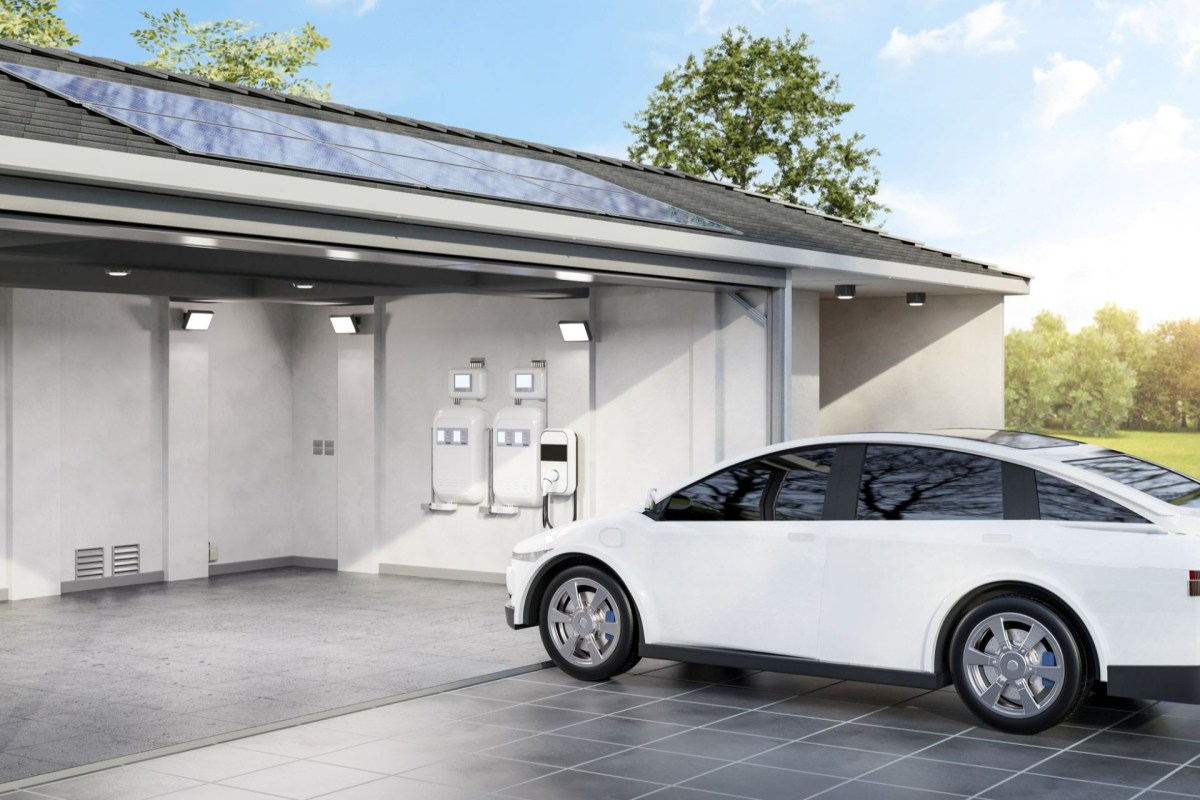
For homeowners investing in solar, battery storage, and an EV charger at the same time, one sizing decision can shape years of savings: Is an 8-kilowatt inverter enough, or is it worth paying a little more to go bigger?
The issue surfaced in a Reddit discussion from a buyer who had already expanded a planned battery setup from two units to three and began rethinking whether to upsize the inverter as well.
Here's what to know
The original poster wrote, "We have now decided on 3 batteries due to where I live and the lack of much sunlight during winter. Should we also move to a 10kW inverter — I'm unsure on what the deciding factors are here and wanted the group think responses."
The original poster also wrote, "I do have an EV charger and want to ensure that if I am charging the car during the day it doesn't draw from the battery or grid, just from Solar (if available). What do I need my installer to do to make sure this is the case."
Commenters largely focused on flexibility as a reason to go larger, especially for homes with panels on different roof aspects.
One user wrote, "The larger inverters have more MPPTs so give better flexibility if you have panels on different roof aspects … maybe not now, but you may need them in the future."
Others said the real limit is often whatever the DNO will approve, with one commenter writing, "Biggest inverter the DNO will allow."
Adding battery storage is one of the best ways to protect a home during outages, since it can keep essential appliances running when grid power goes down. It can also help lower electricity costs by storing cheap or excess power for later use, while moving households closer to off-grid energy independence.
Save $10,000 on solar panels without even sharing your phone number Want to go solar but not sure who to trust? EnergySage has your back with free and transparent quotes from fully vetted providers in your area. To get started, just answer a few questions about your home — no phone number required. Within a day or two, EnergySage will email you the best options for your needs, and their expert advisers can help you compare quotes and pick a winner. Solar panels can save you more than $50k over their 25-year lifespan, and EnergySage can help you save as much as $10k on installation. Which begs the question — isn't that worth an email or two? |

If you're weighing battery options, explore EnergySage for information on home battery storage systems and competitive installation estimates. EnergySage has also teamed up with the electrification brand Qmerit to guarantee you get the best price on home battery storage solutions. Another option is Pila, whose plug-and-play batteries cost a fraction of what a whole-home backup system would.
More background
Beyond solar production alone, inverter capacity changes how the whole setup performs. It affects how much power can be exported back to the grid, how quickly batteries can charge or discharge, and how well the system can cover several large loads at the same time, such as EV charging, ovens, heat pumps, or air-conditioning.
Some users said the extra upfront cost for a larger unit can be small enough to make the decision easy.
One commenter said, "When we had ours installed the difference was about £150 (~$202 USD) no brainer."
People in the thread also pointed out that larger inverters can handle more panel strings and may suit a bigger battery setup better over time, especially if more panels are added later or additional flexibility is needed.
Not everyone felt an upgrade was necessary, though. One commenter highlighted a drawback of an 8-kW export setup, writing, "My export is 8 but it means house load detracts from my maximum power draw, so if I'm pulling 1kw from the house, I can only export 7kw."
Another took the view that an 8-kW inverter should still work for many households: "So unless you're a super high energy user with a heat pump, I think you'll be fine with an 8."
What can be done?
Installer modeling should reflect real-world usage instead of focusing only on panel capacity. That includes checking the home's largest simultaneous loads, EV charging habits, battery size, roof layout, and any export cap set by the DNO.
Daytime EV charging adds another variable because solar output is not perfectly steady. As one commenter noted, EVs require a steady minimum supply of power, so short dips in generation may still trigger support from the battery or grid unless settings are carefully tuned.
Upgrading later can be far more expensive than getting the sizing right during installation.
Where can I learn more?
Inverter size is only one piece of the calculation. Upfront cost, financing options, and panel design can all affect whether a larger system is actually worth it.
• Homeowners weighing roof layout can begin with powering a home with solar before sizing batteries.
• Sunrun is pushing solar subscriptions with batteries, widening access for households avoiding upfront costs.
• EnergySage helps homeowners compare solar installation costs when bigger inverters or extra batteries raise budgets.
• Federal incentives still save thousands on rooftop solar, easing the sting of upsized equipment.

Get TCD's free newsletters for easy tips, smart advice, and a chance to earn $5,000 toward home upgrades. To see more stories like this one, change your Google preferences here.






