


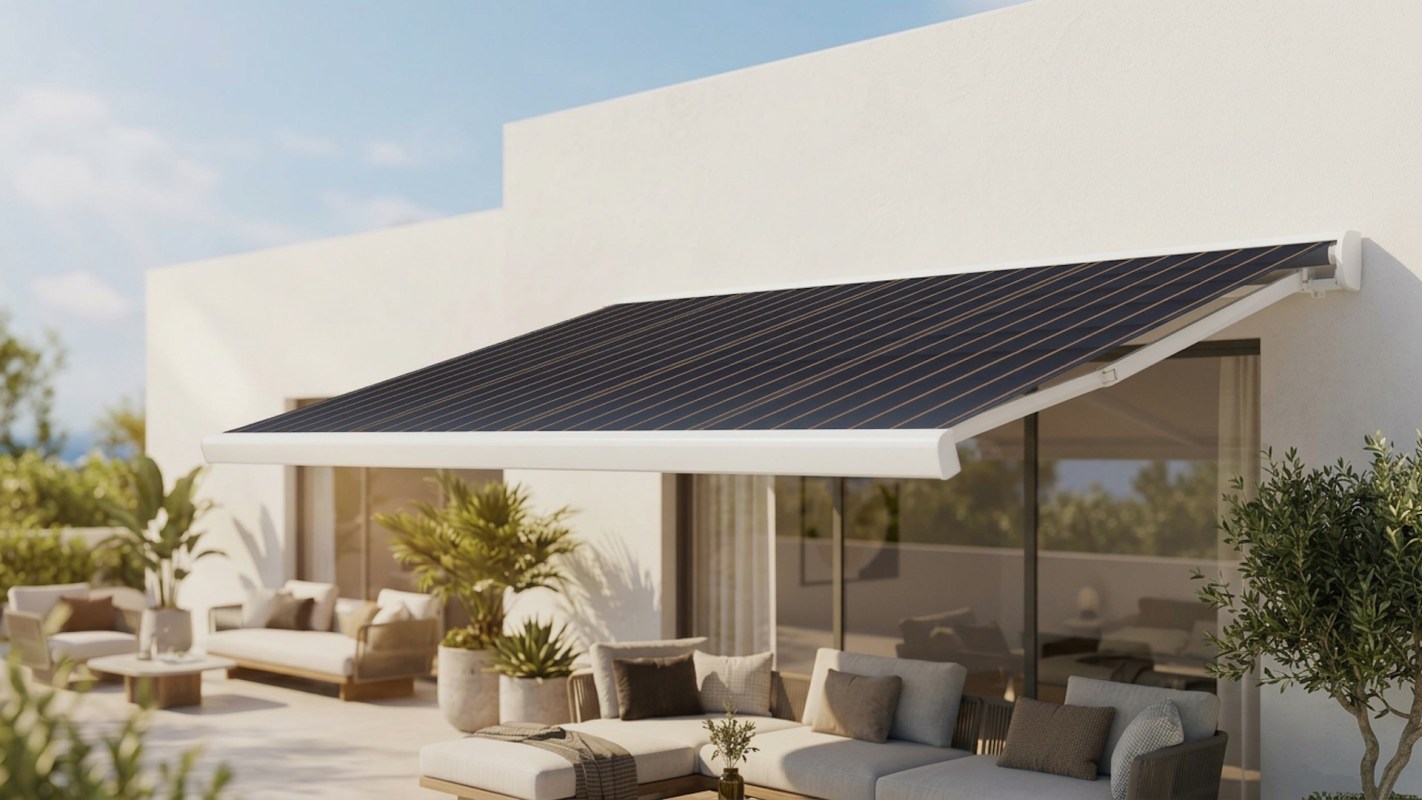
Whether attached to a building or a recreational vehicle, awnings have long been an easy, low-tech way to create shade and beat the heat. However, German company SolarMarkise is trying to push the utility of awnings even further with built-in solar panels.
If successful, the technology could transform awnings into a source of clean electricity for homes, cafes, storefronts, and more.
The concept surfaced recently in a Reddit post linking to an article from pv magazine.
What's happening?
At the center of the discussion is a retractable awning fitted with photovoltaic material, allowing the awnings to cast shade while also producing power, potentially leading to lower energy costs.
On Reddit, much of the discussion focused on a photo showing one of the solar awnings installed above the outdoor seating at a cafe. One commenter pointed out that the awning "covers a decent stretch of sidewalk," emphasizing that the coverage would likely allow for steady solar exposure.
Unlike traditional rooftop solar panels, the solar awnings can do two jobs at once by providing both shade and electricity. The solar awnings could be particularly useful on buildings that lack adequate space for rooftop panels.
TCD Picks » Quince Spotlight
💡These best-sellers from Quince deliver affordable, sustainable luxury for all




However, some Redditors expressed skepticism, particularly as to the longevity of the solar awnings. One skeptical commenter warned that flexible solar may have "a shorter useful lifespan," raising questions about how well the material would age over time, particularly when exposed to the elements.
Why does it matter?
If successful, solar awnings could be an innovative and affordable way of increasing renewable energy production without occupying additional space. Creating additional shade can help lower heat stress for customers, workers, and residents, while also lowering energy costs by reducing the need for air conditioning. Meanwhile, the electricity produced could reduce utility bills over time.
Solar awnings also align with a broader push to get more value out of built spaces. Instead of treating shade structures as passive equipment, solar awnings could turn them into energy assets.
However, questions over the product's durability and reliability remain.
For example, the skeptical Redditor warned that the flexible plastic covering can "degrade in UV light" and become "hazy and milky after a few years." If that proves true, buyers may find that the upfront benefits do not outweigh the subpar long-term performance.
What do supporters say?
While skeptics tended to focus on potential durability and performance issues, supporters focused on the economic benefits.
For example, one commenter argued that the added cost was only a "10% to 15% premium over a high-quality conventional awning." If that estimate holds up, the product may look more attractive to shoppers who were already planning to buy a premium awning anyway.
This points to the potential appeal of solar awnings and similar innovations, which would not necessarily replace large-scale solar projects but would instead give homeowners and businesses another way to generate power from surfaces they were already planning to install.
Similarly, the technology could prove ideal for renters, apartment dwellers, or small businesses that lack ideal roof access or the ability to make permanent alterations to their spaces.
Additionally, some supporters of the technology cited the company's warranty coverage to push back on opponents' durability claims. One commenter noted that the product reportedly comes with a "10-year warranty," which could help ease some consumers' concerns about wear and tear.
Regardless of whether or not this specific solar-awning product succeeds, it is yet another indication that solar production is spreading beyond rooftops and into more parts of daily life, from carports to balcony systems to shaded outdoor spaces.

Get TCD's free newsletters for easy tips, smart advice, and a chance to earn $5,000 toward home upgrades. To see more stories like this one, change your Google preferences here.






